The 10 Best Anime Stories, Ranked by the Codex Rubric — Not by Vibes
Most "best anime" lists rank by overall vibe. This one isolates a single axis — story & narrative — and lets the rubric pick the winners.
Most "best anime" lists rank by overall vibe. This one isolates a single axis — story & narrative — and lets the rubric pick the winners.
The story & narrative criterion is the one most "best anime" lists collapse into everything else. A show with great fights and a mediocre plot scores well on overall lists because the fights drown out the plot. The Anime Codex rubric separates the two. What follows is the ten anime that score highest on story & narrative specifically — not character, not animation, not cultural impact. The scores below are pulled from the same six-criterion grading used across the catalogue, weighted per genre. Where a Codex composite is lower than a story score, the difference is the rubric admitting the show wins one axis and pays tax on others.
What the Consensus Gets Wrong
MyAnimeList's top ranks blur narrative quality into a generalized "good show" score. Frieren currently sits at 9.26 on MAL, higher than Brotherhood's 9.11, despite Frieren being a fundamentally less ambitious narrative engine. Brotherhood is structured; Frieren is episodic, contemplative, and built around vignette pacing. Both are excellent shows. They are not equivalently strong on story. The Codex rubric makes that distinction explicit, and the resulting ranking — story-only — diverges sharply from MAL's overall list and from the standard r/anime canon. The ten below are the ones that earned their narrative score on structure: setup, payoff, escalation, thematic coherence across runtime.
The 9.5 Tier: Three Shows That Set the Ceiling
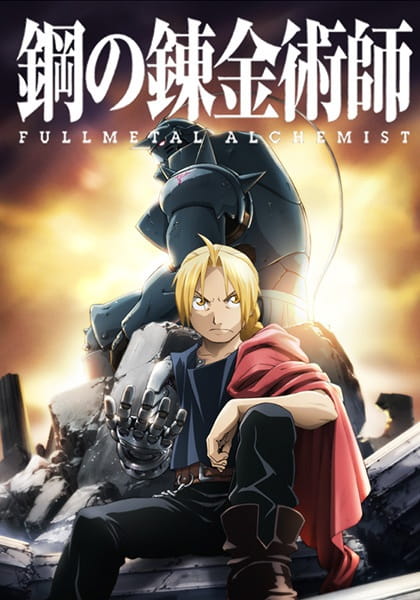
Fullmetal Alchemist: Brotherhood — Story 9.5 (Codex 9.25)
Bones' 64-episode 2009 adaptation earns its 9.5 on story by being one of the few long-form shonen that plants every payoff in advance. The Promised Day works because Hohenheim's cross-country journey is set up forty episodes earlier; Mustang's confrontation with Envy works because the Ishval flashback re-contextualizes every earlier interaction. The MAL 9.11 reflects the show's near-universal regard, but the rubric's story score is what isolates Brotherhood's specific virtue: a thirteen-volume manga adapted into a 64-episode anime without padding, without filler, and without dropping a single Chekhov's gun. The full case for why it's still underrated even at the top of MAL lives elsewhere on the site; here it's enough to say the structure is the reason.
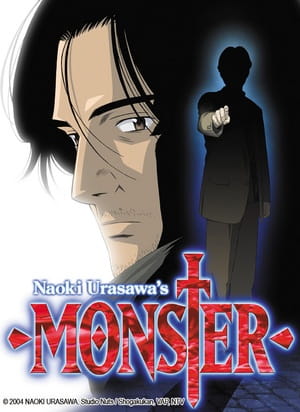
Monster — Story 9.5 (Codex 9.24)
Madhouse's 74-episode 2004 adaptation of Urasawa scores 9.5 on story because almost no anime sustains a single narrative throughline for that runtime without sagging. Tenma's pursuit of Johan is the spine; every Prague side-arc, every Czech orphanage flashback, every detour through 511 Kinderheim feeds back into it. The MAL 8.89 underrates Monster precisely because casual viewers bounce off episode 30 — but the 74 episodes are the point. The rubric grades runtime utilization, and Urasawa wastes almost none of it. The longer Codex verdict on Monster handles the question of who should and shouldn't attempt it.
Hunter × Hunter (2011) — Story 9.5 (Codex 9.23)
Madhouse's 148-episode adaptation gets 9.5 on story not because every arc is great — Greed Island drags — but because Yorknew, Chimera Ant, and Election are three of the most structurally distinct long-form arcs in the genre, and Togashi escalates the show's stakes and its formal ambition simultaneously. Chimera Ant in particular abandons the shonen structure mid-arc and shifts into political tragedy, narrated, slow, devastating. The MAL 9.03 captures the affection; the story score captures what Togashi actually built. The Codex has argued HxH is misfiled rather than underrated, and the story criterion is where the misfiling shows.
The 9.2 Tier: Structural Discipline, Genre Apart
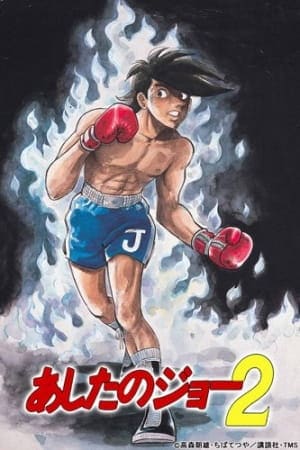
Ashita no Joe — Story 9.2 (Codex 9.02)
The 1980 Tokyo Movie Shinsha continuation lands at 9.2 because the arc from reform-school delinquent to bantamweight title contender to the final Mendoza fight is a single rising line, drawn across 47 episodes, that ends on the most earned final shot in shonen. MAL 8.83 is generous given the limited 1980 animation and brutal given the narrative. The story score is the rubric refusing to dock the writing for the era's technical ceiling.
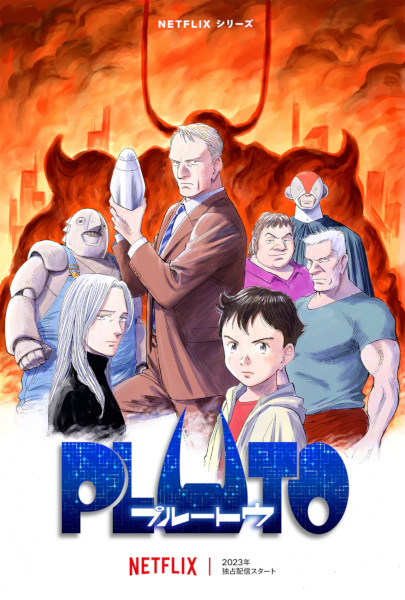
Pluto — Story 9.2 (Codex 8.96)
Studio M2's 8-episode 2023 Netflix adaptation compresses Urasawa's eight-volume manga into eight hour-long episodes, and the 9.2 reflects how rare that compression ratio is without damage. Gesicht's investigation is the present-tense; Atom, Epsilon, and North No. 2's flashbacks are the slow assembly of what the war actually cost. The MAL 8.44 reflects the cool reception to its restrained pacing. The story score reflects the architecture. The full coordinates are in the Pluto review.
The 9.0 Tier: Five Shows, Five Different Narrative Problems Solved
Mob Psycho 100 — Story 9.0 (Codex 9.05)
Bones' 13-episode 2019 third-season conclusion earns its 9.0 because ONE's central thesis — that psychic power is incidental to selfhood — is paid off in the Mogami arc and the confession arc with no wasted motion. The runtime is short, the character score (9.7) and animation score (9.5) carry the composite, but the story criterion holds because the show ends, cleanly, on its argument.
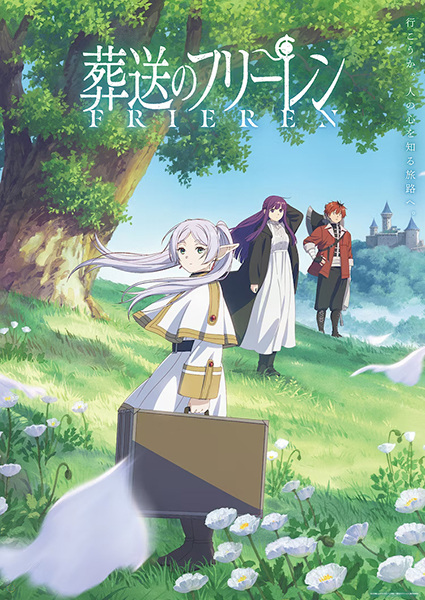
Frieren: Beyond Journey's End — Story 9.0 (Codex 9.03)
Madhouse's 28-episode 2023 adaptation earns 9.0 on story rather than higher because the show is structurally episodic by design. The first-exam arc is the only sustained narrative throughline in the run. The themes score (9.5) is the real engine; the Codex's full Frieren breakdown walks through which criteria carry it and which drag.
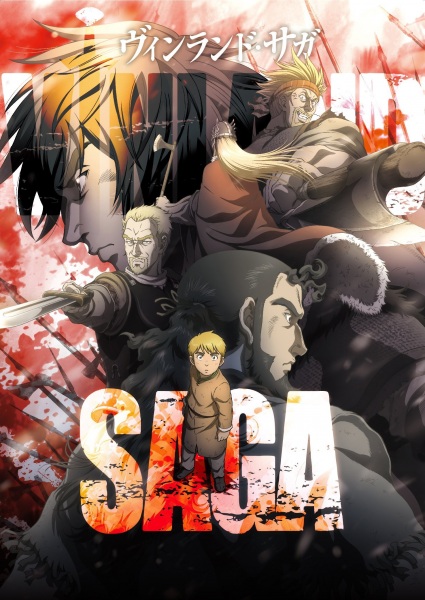
Vinland Saga — Story 9.0 (Codex 8.88)
Wit Studio's 24-episode 2019 first season scores 9.0 because the Askeladd-Thorfinn-Canute triangle resolves on episode 24 with one of the cleanest tragic structures in modern seinen. The longer argument on Vinland Saga's adaptation is that the manga's pacifist turn is brilliantly set up here and structurally compromised after the studio change. Season one alone justifies the story score.
Mushishi — Story 9.0 (Codex 8.68)
Artland's 26-episode 2005 series scores 9.0 on story despite being entirely episodic. The rubric rewards it because each 22-minute episode is a complete narrative — setup, encounter, resolution, often without catharsis — and the form is the argument. Ginko is a fixed observer; the stories are the variable. The character score (7.5) is the lowest in this top ten because there is no protagonist arc by design. The story criterion respects that decision.
Hikaru no Go — Story 9.0 (Codex 8.65)
Studio Pierrot's 75-episode 2001 adaptation earns 9.0 because Hikaru's progression from elementary-school dabbler to insei to professional is paced across the runtime with the discipline of a sports manga and the patience of a coming-of-age drama. Sai's exit at the Hokuto Cup arc is the structural fulcrum that makes the final third work. The MAL 8.08 reflects how few viewers finish; the story score reflects what they're missing.
The Counter-Argument
The obvious objection: where is Steins;Gate, where is Code Geass, where is Legend of the Galactic Heroes, where is Death Note. The first two score lower on story than reputation suggests because their final-act resolutions strain plausibility — and the Codex has made the case against Death Note's back half at length. LOGH belongs near this list and is graded under a different rubric weighting still in review. The point of isolating story as a single axis is to surface this kind of disagreement, not to suppress it. A list ranked by overall vibe would look different. This one doesn't.
Verdict
The 9.5 tier is three shows that solved long-form narrative; the 9.2 tier is two that solved compression; the 9.0 tier is five different answers to what story can do when the genre is no longer the constraint. The rubric did the ranking. The argument is that ranking on a single axis is more honest than averaging six and calling it taste.
Featured in the Codex


More from The Codex
The Seven Deadly Sins Is a 6.60 Wearing a 7.60 Costume: A One-Point Gap Earned by Groping Gags and Convenient Flashbacks
The Seven Deadly Sins scores 6.60 on the Codex against MyAnimeList's 7.60 because the crowd is grading a Netflix breakout and a Ban-and-King friendship, not the 24 episodes A-1 Pictures actually broadcast in 2014.
The 10.0 That Built a Sunday: How Sazae-san's Cultural Score Carries a 6.58 Scorecard
Sazae-san is a case study in how a single criterion — cultural — can define how a show is remembered, and the 10.0 the Codex hands Eiken's 1969 institution is doing every bit of the heavy lifting its other five scores refuse to.
The Sebastian Problem: Why Black Butler Sits 1.10 Below Its MAL Line and the Crowd Refuses to Notice
Black Butler (Kuroshitsuji) posts a 1.10-point gap between MyAnimeList's 7.65 and the Codex 6.55 because the crowd is grading Sebastian's silhouette and a Phantomhive aesthetic, not the anime-original finale A-1 Pictures actually shipped in 2009.
Discussion
Set a display name above to post.
Loading discussion…