Anime Like Re:Zero: 5 the Codex Rubric Says You'll Love
Fans of Re:Zero respond to its strongest criteria — character at 9.0, cultural weight at 9.0, story and themes at 8.5 — and these five picks deliver the same qualities, ranked by how close their critical profile sits to it, not by vibes.
Fans of Re:Zero respond to its strongest criteria — character at 9.0, cultural weight at 9.0, story and themes at 8.5 — and these five picks deliver the same qualities, ranked by how close their critical profile sits to it, not by vibes.
Re:Zero is not a time loop show. It's a character vivisection that happens to use a time loop as the scalpel — and the people recommending you "isekai with stakes" as a follow-up have missed the assignment entirely. Subaru's "From Zero" speech in episode 18 works because White Fox and Masaharu Watanabe spent thirteen prior episodes making him insufferable on purpose. You don't replicate that with another reincarnation premise. You replicate it with shows that interrogate a protagonist until something honest falls out.
What the rubric says Re:Zero actually is
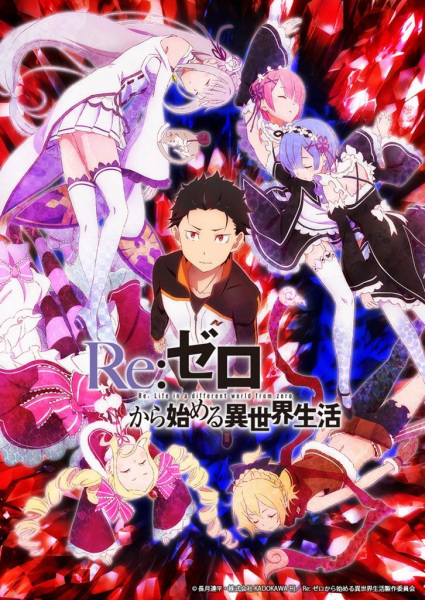
On the Codex, Re:Zero sits at 8.50, MyAnimeList 8.25, White Fox, 25 episodes, seinen. The numbers that carry it are character (9.0) and cultural impact (9.0), with story and themes tied at 8.5, animation at 8.0, and world-building lagging at 7.5. That last figure matters: the royal selection and Witch Cult are sketched rather than realized, and the show is not, by the rubric's reading, a feat of secondary-world construction. It's a psychological seinen wearing fantasy clothes.
The popular discourse treats it as the standard-bearer for "deconstructive isekai" alongside Konosuba, which flattens what makes it work. The Mansion arc's poisoning mystery, the White Whale, Betelgeuse's contortions under Kenichiro Suehiro's score — these are the load-bearing beams, and they're load-bearing because the show treats Subaru's PTSD as accumulating damage, not a respawn timer. Recommendations should match that profile. The five below are ranked by how close their criteria sit to Re:Zero's, not by surface premise.
Monster — the character ceiling Re:Zero is reaching for
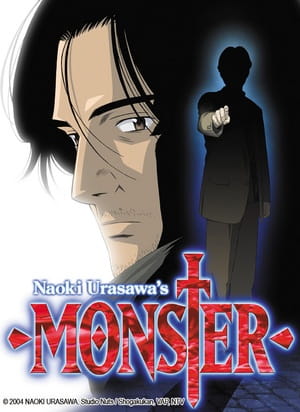
Monster is the closest critical analogue in the catalogue. Codex 9.24, Madhouse, 74 episodes, seinen, MyAnimeList 8.89. Where Re:Zero scores 9.0 on character, Monster scores 9.7, and where Re:Zero hits 8.5 on themes, Monster lands 9.3. If you came to Re:Zero for episode 18 — for the moment a protagonist is forced to confront the ugliness underneath his self-image — Monster is the eighty-hour version of that confrontation, distributed across Tenma, Johan, and a continent's worth of bystanders.
Naoki Urasawa's procedural patience does what Re:Zero's loop structure does by other means: it lets consequence accumulate. Johan's monologue at the orphanage, Tenma's choice in the surgical theater, the Kinderheim 511 reveal — these are payoffs the show earned by withholding. Monster also outperforms Re:Zero on world (8.8 vs 7.5) because Urasawa's Cold War Europe is researched into specificity. This is the rubric's clearest "if you loved that, watch this" verdict in the entire seinen drawer.
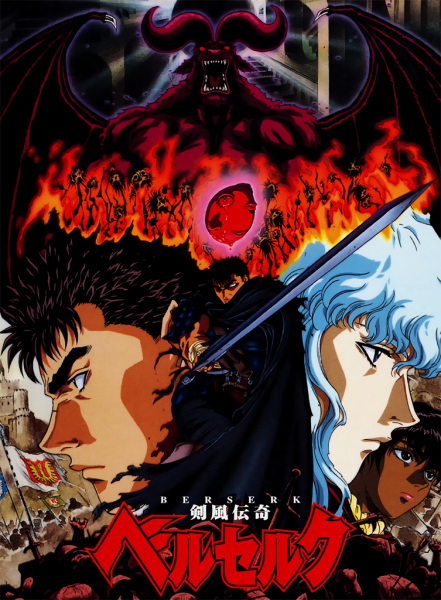
Berserk (1997) — the themes match, and the character writing matches harder
Berserk sits at Codex 8.53, OLM, 25 episodes — the same episode count as Re:Zero — MyAnimeList 8.61. The criterion overlap is almost surgical: character 9.0 (identical to Re:Zero), themes 9.0 (above Re:Zero's 8.5), story 8.5 (tied). Guts and Subaru are not the same kind of protagonist, but they're both built on the same architectural decision: make the audience watch someone get humiliated by a world bigger than they are, then see what's left.
The Golden Age arc's slow promotion of Griffith from comrade to monster mirrors the structural cruelty Re:Zero applies to Subaru — the show lets you fall for someone before it dismantles them. The trade-off is animation: OLM's 6.5 is the number that defines Berserk's legacy, and it's noticeably below White Fox's 8.0. If you can tolerate static frames and recycled cuts in exchange for the Eclipse, you'll find the back half delivers a payoff in the same emotional register as the Witch Cult assault.
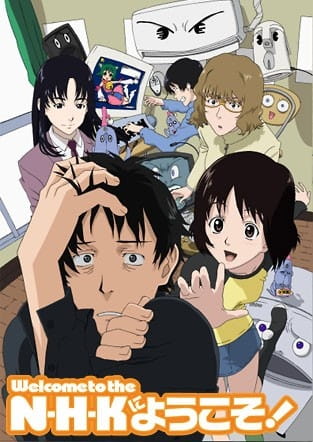
Welcome to the NHK — Subaru's interiority without the fantasy frame
Welcome to the NHK is the recommendation people don't make and should. Codex 8.22, Gonzo, 24 episodes, seinen, MyAnimeList 8.32. Character lands at 9.0 — identical to Re:Zero — themes at 8.7, story at 8.0. Tappei Nagatsuki has been explicit elsewhere that Subaru is a hikikomori transported to a fantasy world; Sato is the hikikomori the fantasy never came for.
The pyramid scheme arc, the suicide pact episode, the MMO spiral — Tatsuhiko Takimoto's source material treats self-loathing with the same refusal-to-flinch that makes Re:Zero's episode 18 land. The catch is animation: Gonzo's 6.5 is the number that caps NHK at cult classic rather than landmark, and you'll feel it. But the character work is in the same tier as White Fox's, and the thematic honesty is, if anything, sharper.
Tokyo Ghoul — the trauma-protagonist parallel, with a cultural footprint to match
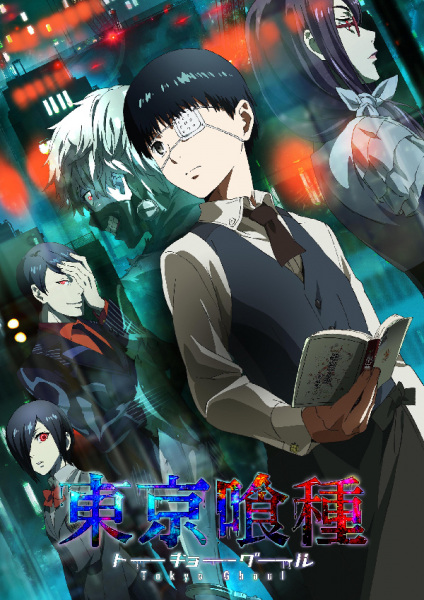
Tokyo Ghoul lands at Codex 6.93, Studio Pierrot, 12 episodes, seinen, MyAnimeList 7.79. The match here is narrower and more specific: cultural impact 8.5 (against Re:Zero's 9.0) and themes 7.5. Kaneki's torture sequence under Yamori is the closest direct analogue in 2010s seinen to what Re:Zero does to Subaru — a protagonist broken down to be rebuilt as someone who has accepted what he is.
The Codex doesn't pretend Tokyo Ghoul matches Re:Zero across the board. Story sits at 6.5, animation at 6.0, and Pierrot's adaptation choices are the reason. But if the criterion you respond to in Re:Zero is the willingness to put a protagonist through psychological collapse on screen and treat the damage as permanent, Kaneki's arc is the parallel, and the cultural conversation around both shows runs on the same fuel.
Inuyashiki — the weakest match on the list, and still worth it
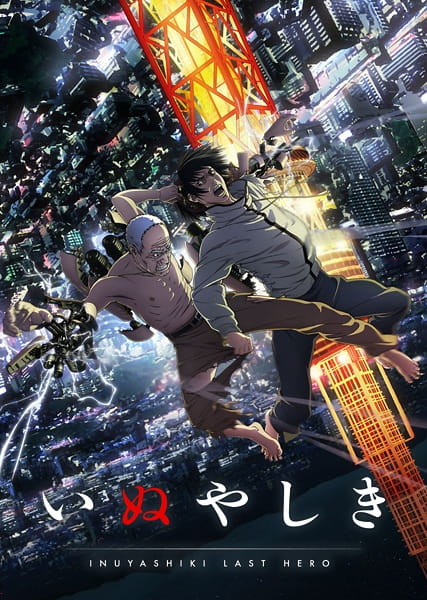
Inuyashiki is Codex 6.35, MAPPA, 11 episodes, seinen, MyAnimeList 7.62 — the lowest-ranked recommendation here, and the one with the narrowest overlap. Themes score 7.0, which is the criterion doing the work: Hiroya Oku's interrogation of what an ordinary man does when handed disproportionate power runs parallel to Re:Zero's interrogation of what an ordinary man does when handed disproportionate suffering.
Ichiro and Hiro are the two answers to the same question Subaru is asked. The show is shorter, blunter, and less psychologically rigorous than Re:Zero — character at 6.0 is well below the 9.0 standard — but the thematic spine is genuinely adjacent, and at eleven episodes the investment is minimal.
The counter-argument: none of these are isekai
The honest objection is that this list ignores the genre Re:Zero is filed under. Someone looking for "anime like Re:Zero" may want another portal fantasy with a loop mechanic, not a seinen drama about a man learning to hate himself productively. Fair.
The rubric's answer is that Re:Zero's isekai trappings are scenery, not substance. The 7.5 on world-building is the catalogue conceding that the fantasy frame is the show's least interesting feature. The 9.0s on character and cultural weight are where the signal lives, and matching signal is what a recommendation engine should do. Watching another loop premise won't reproduce the episode 18 feeling. Watching Monster, Berserk, or NHK will.
The five above match Re:Zero on the criteria that earned it 8.50 — character, themes, cultural conversation. Monster is the ceiling, Berserk and NHK are the closest parallels, Tokyo Ghoul and Inuyashiki round out the shelf. Trust the criteria, not the genre tag.
Featured in the Codex
More from The Codex
The Seven Deadly Sins Is a 6.60 Wearing a 7.60 Costume: A One-Point Gap Earned by Groping Gags and Convenient Flashbacks
The Seven Deadly Sins scores 6.60 on the Codex against MyAnimeList's 7.60 because the crowd is grading a Netflix breakout and a Ban-and-King friendship, not the 24 episodes A-1 Pictures actually broadcast in 2014.
The 10.0 That Built a Sunday: How Sazae-san's Cultural Score Carries a 6.58 Scorecard
Sazae-san is a case study in how a single criterion — cultural — can define how a show is remembered, and the 10.0 the Codex hands Eiken's 1969 institution is doing every bit of the heavy lifting its other five scores refuse to.
The Sebastian Problem: Why Black Butler Sits 1.10 Below Its MAL Line and the Crowd Refuses to Notice
Black Butler (Kuroshitsuji) posts a 1.10-point gap between MyAnimeList's 7.65 and the Codex 6.55 because the crowd is grading Sebastian's silhouette and a Phantomhive aesthetic, not the anime-original finale A-1 Pictures actually shipped in 2009.
Discussion
Set a display name above to post.
Loading discussion…