Is Monster Worth Watching? The Codex Verdict on Urasawa's 74-Episode Seinen Benchmark
Monster scores 9.24 on the Codex because Urasawa and Madhouse built the rare anime thriller that earns its runtime on character — and the only viewers who should hesitate are the ones who can't sit still.
Monster scores 9.24 on the Codex because Urasawa and Madhouse built the rare anime thriller that earns its runtime on character — and the only viewers who should hesitate are the ones who can't sit still.
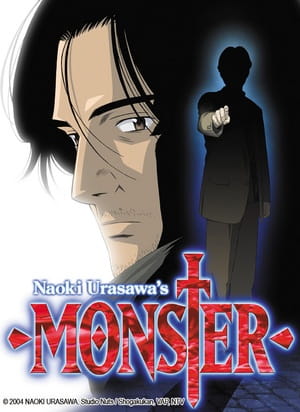
Seventy-four episodes of a fugitive neurosurgeon chasing a blond sociopath through reunified Germany is either the most disciplined long-form seinen anime ever produced or a test of patience dressed in literary clothing. Monster is both, and the question of whether it's worth the time has a sharper answer than its length suggests.
Is Monster Worth Watching? The Short Answer
Most people just want to know: is Monster worth your time, and for whom? Yes — if you can tolerate a deliberate pace and you came for character work rather than spectacle. No — if your patience for ensemble drama runs out before the Czech orphanage threads converge. The Codex weighted score is 9.24, anchored almost entirely by a 9.7 in character and a 9.5 in story, and those two numbers are the entire decision. Everything else is texture.
The opposing position is easy to locate. MyAnimeList scores Monster at 8.89, treating it as a near-flawless prestige object — the show you recommend when you want to prove anime can be literature. That number isn't wrong in direction, but it flattens what's actually load-bearing here. Monster is not uniformly excellent. Its animation is conservative, its cultural footprint narrower than its reputation implies, and its mid-series stretch genuinely tests the viewer. The 8.89 reads it as a monolith. The rubric reads it as a show carried by two criteria so strong they pull a 74-episode runtime across the line.
The Character Score Is the Whole Argument
Tenma's arc is the single most convincing case the show makes for itself, and it's why character lands at 9.7. The premise asks a brain surgeon who once chose the Hippocratic Oath over career advancement to eventually carry a gun with intent to kill the patient he saved. Urasawa stages that conversion not as a single rupture but as a years-long erosion, and the anime — under Madhouse's restraint — refuses to dramatize it with the usual shorthand. Tenma doesn't have a breakdown episode. He has dozens of small concessions.
Johan is the obvious counterweight, and his menace works because Madhouse animates him almost entirely through stillness. The lingering close-ups, the absence of expression, the calm voice — these are directorial choices, not character design tricks. He's terrifying because he doesn't perform terror.
What pushes the criterion past a 9.5 is the supporting bench. Inspector Lunge's mnemonic typing, Eva Heinemann's slow shift from antagonist to bruised survivor, Wolfgang Grimmer's grief beneath his cheerfulness, Nina's parallel investigation — these are not satellites orbiting the leads. They're written with the kind of interiority that most ensemble anime can't sustain for a single arc, let alone seventy-plus episodes. Even one-shot characters who appear for a single episode get full emotional arcs. The humanist thesis the show keeps gesturing toward — that every life is worth the cost of saving — works because the writing actually treats every life that way.
The Story Score Survives Its Own Indulgences
Story lands at 9.5, and the reason it isn't higher is the same reason most viewers stall out somewhere in the middle: Urasawa indulges his detours. The episodic stretches where Tenma helps a stranger in a Bavarian village or a Czech farming town aren't filler in the structural sense — they all feed the thematic argument — but they slow the conspiracy plot to a crawl. Anyone telling you Monster is flawlessly paced hasn't rewatched it.
What the show does have is cohesion. The Kinderheim 511 experiments, the 511 Children's Home, the Red Rose Mansion revelations — these threads are seeded with a patience most anime writers don't have. By the time the Ruhenheim sequences arrive, the show has earned its convergence. This is the inverse of Death Note's structural collapse, where a tight thriller bled out the moment its premise lost its anchor. Monster sets up more pieces than Death Note ever attempted and lands almost all of them.
What Madhouse Actually Did
Animation scores 8.2, and that's the honest number. Madhouse made the correct production decisions for the material — muted European palette, realistic proportions, restrained character acting, Kuniaki Haishima's spare score, the "Grain" opening sequence — but the show is not animated lavishly. Across 74 episodes the studio rationed its budget toward the moments that mattered: Johan's facial work, the orphanage flashbacks, the climactic confrontations. The rest is competent television animation. Anyone expecting the visual density of Madhouse's later prestige work will find Monster austere.
This is the right tradeoff. A noir thriller about whether monsters are born or made does not benefit from sakuga. It benefits from the silence Madhouse repeatedly chooses over a score cue. Compare this to the studio-as-savior dynamic the Codex has flagged elsewhere — the way Ufotable's compositing carries Demon Slayer — and Monster is the opposite case. The writing carries the production.
The Counter-Argument: 74 Episodes Is Too Many
The strongest objection to Monster is structural. The argument runs: Urasawa's manga is 18 volumes, the anime adapts them at near 1:1 density, and the result is a show that could lose fifteen episodes without losing a thread. The detour-heavy middle stretch is the evidence. A tighter 50-episode version would score higher on pacing and lose nothing material.
This is fair, and the rubric partially concedes it — the story score docks for exactly this reason. But the counter-argument misreads what the runtime is doing. The reason the character score hits 9.7 is that Urasawa uses those detour episodes to populate Germany and the Czech Republic with people whose lives intersect Tenma's for an hour and then end. Cut those, and the humanist argument collapses into assertion. The runtime is the thesis. You can dislike the thesis, but you can't extract it without taking the show with it.
Verdict
Monster is worth watching if you came to anime expecting it could function as adult drama, and you have the patience to let a 74-episode show breathe at its own tempo. The 9.24 isn't a participation trophy for ambition — it's the rubric reading two criteria, story and character, scoring high enough to absorb the conservative animation and the narrower cultural footprint. Skip it if you need momentum every episode. Watch it if you want to see what seinen looks like when a mangaka and a studio both refuse to flinch.
Featured in the Codex





More from The Codex
The Seven Deadly Sins Is a 6.60 Wearing a 7.60 Costume: A One-Point Gap Earned by Groping Gags and Convenient Flashbacks
The Seven Deadly Sins scores 6.60 on the Codex against MyAnimeList's 7.60 because the crowd is grading a Netflix breakout and a Ban-and-King friendship, not the 24 episodes A-1 Pictures actually broadcast in 2014.
The 10.0 That Built a Sunday: How Sazae-san's Cultural Score Carries a 6.58 Scorecard
Sazae-san is a case study in how a single criterion — cultural — can define how a show is remembered, and the 10.0 the Codex hands Eiken's 1969 institution is doing every bit of the heavy lifting its other five scores refuse to.
The Sebastian Problem: Why Black Butler Sits 1.10 Below Its MAL Line and the Crowd Refuses to Notice
Black Butler (Kuroshitsuji) posts a 1.10-point gap between MyAnimeList's 7.65 and the Codex 6.55 because the crowd is grading Sebastian's silhouette and a Phantomhive aesthetic, not the anime-original finale A-1 Pictures actually shipped in 2009.
Discussion
Set a display name above to post.
Loading discussion…