Slam Dunk at 8.12: The 6.8 on Animation That Decides How Toei's Basketball Landmark Gets Remembered
Slam Dunk earns 9.5 on cultural impact and 9.0 on character, but Toei's 1993 production caps it at 8.12 — and the gap between manga and adaptation is measured in still frames.
Slam Dunk earns 9.5 on cultural impact and 9.0 on character, but Toei's 1993 production caps it at 8.12 — and the gap between manga and adaptation is measured in still frames.
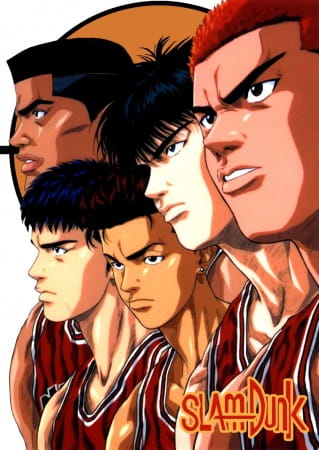
Slam Dunk is the most culturally consequential sports anime ever produced in Japan and one of the most visually compromised. Both statements are true, and the second is the reason the Codex puts the 1993 Toei adaptation at 8.12 rather than the high-eights its character writing and thematic sincerity would otherwise demand. This is a show whose legacy was built by Takehiko Inoue's manga and ratified, not animated, by the television series — and the Slam Dunk animation question is the hinge on which the entire scorecard turns.
The Consensus Position, and Where It Breaks
MyAnimeList scores Slam Dunk at 8.56. That number reflects a real consensus: the show is remembered with enormous warmth, its emotional beats are quoted into the present day, and its cultural reach across Japan and the rest of Asia is genuinely without peer in the sports genre. The Codex does not dispute any of this. What the 8.56 elides is the production itself. Aggregated user scores reward memory and meaning; they are bad instruments for measuring whether a show's craft holds up when you sit down with the 101 episodes today.
The Codex weighting forces a separation between what Slam Dunk means and what Slam Dunk, as a piece of 1993 Toei Animation television, is. On the first question, the rubric is generous — 9.5 on cultural impact, 9.0 on character, 8.3 on themes. On the second, it is cold. Animation lands at 6.8, and that one number drags a near-great scorecard down by enough to matter. The show that emerges is exactly the case Slam Dunk presents in reality: a foundational text with a workhorse adaptation. Anime Codex has made this argument before about Major and Hajime no Ippo — sports anime whose character writing outpaces the studio's ability to render it.
What the 6.8 Actually Looks Like on Screen
Toei's 1993 production is not bad. It is constrained, and the constraints are visible. Across 101 episodes the show leans heavily on still frames during dialogue exchanges, recycles motion cycles for dribbles and fast breaks, and runs into character-art inconsistency from episode to episode that anyone watching in sequence will clock by the Ryonan practice match at the latest. Faces drift. Body proportions wander. Background players become abstractions. None of this is unusual for a mid-90s Weekly Shonen Jump adaptation produced on a punishing weekly schedule, but unusual and acceptable are not the same word.
The damage is concentrated where it hurts most: the basketball itself. A sports anime lives on the legibility of motion. When Sakuragi goes up for a rebound against Akagi in early-arc practice, the framing is dynamic but the in-between work is sparse, and the impact reads through pose and sound design more than through animated weight. The Kainan match — the apex of the Inter-High qualifiers and the show's strongest sustained dramatic sequence — is staged with real directorial conviction in its key moments, but stretched thin in the connective tissue between them. Watch the way fast breaks resolve: the camera cuts, the crowd freezes, an impact frame lands, and the play is over. It works. It also reveals the budget.
Where Toei's Direction Earns Its Keep
Credit where the data credits. The 6.8 is not a 5.5 because the direction, when it commits resources to a moment, knows what it is doing. The staging of Sakuragi's signature dunks uses low-angle framing and held impact poses with genuine force — these are the shots the show is remembered for, and they are remembered because Toei understood which seconds of footage had to land. Mamoru Hosoda, credited on key animation for episodes 29 and 70, is a name worth marking; the show's better-animated stretches are not accidents.
The comedic register also lands. Sakuragi's slapstick — the head-bumps, the chase gags, the face-pulls at Rukawa — is well-timed and expressive in a way the basketball action often isn't, because comic exaggeration forgives the kind of limited animation that realistic motion punishes. This is the same trick a lot of mid-budget shonen of the period relied on, and it is part of why Slam Dunk's comedic detours, however much they bloat the runtime, also rescue stretches of the production. The 6.8 reflects this duality: serviceable and occasionally striking, dated where it matters.
The Counterfactual: What the 2022 Film Proved
The cleanest evidence that animation was Slam Dunk's bottleneck is The First Slam Dunk, the 2022 feature Inoue directed himself. The film renders basketball motion with a fluidity, weight, and tactical legibility the television series could not approach — players cut, screen, recover, and reset with continuous motion rather than cut-driven impact. It is, in effect, the adaptation the manga had been waiting thirty years for. That it had to wait that long, and that the Sannoh match — the climactic confrontation the 1993 anime never reached, since the series ended mid-arc — finally got its definitive screen treatment in a film rather than the TV run, is itself an indictment of the original production. The show stopped before its peak. The film delivered the peak in a register the show couldn't have produced.
The Honest Counter-Argument
The strongest defense of the 1993 anime is that period-correct production values shouldn't be held against a show that did what television animation could do at its budget and schedule. There is a version of this argument that goes further: the character writing, the Mitsui redemption arc with his "I want to play basketball" confession to Anzai, the slow-burn realism of Sakuragi's skill development — these survive the visual limitations because Yoshiyuki Suga's scripts and the source material are strong enough to carry the production on their backs.
The Codex agrees with the premise and rejects the conclusion. The rubric is not period-adjusted. A 1993 Toei production is judged against animation as a craft, not against 1993 Toei's median output, because the alternative is to grade shows on a curve that rewards the studio for showing up. The same logic applies to Berserk's 1997 production and to Gintama's workhorse Sunrise run: great writing inside cheap animation produces a specific kind of legacy — beloved, quoted, recommended with caveats — and the rubric is built to register exactly that shape.
Verdict
Slam Dunk at 8.12 is the correct reading of a show whose cultural footprint and character work are unimpeachable and whose adaptation is, frankly, the weakest version of itself that still works. The 6.8 on animation is not a hit piece — it is the number that explains why this is the manga people press into your hands and the anime they tell you to supplement with the 2022 film. Toei made a serviceable record of a masterpiece. The masterpiece is elsewhere.
Featured in the Codex
More from The Codex
The Seven Deadly Sins Is a 6.60 Wearing a 7.60 Costume: A One-Point Gap Earned by Groping Gags and Convenient Flashbacks
The Seven Deadly Sins scores 6.60 on the Codex against MyAnimeList's 7.60 because the crowd is grading a Netflix breakout and a Ban-and-King friendship, not the 24 episodes A-1 Pictures actually broadcast in 2014.
The 10.0 That Built a Sunday: How Sazae-san's Cultural Score Carries a 6.58 Scorecard
Sazae-san is a case study in how a single criterion — cultural — can define how a show is remembered, and the 10.0 the Codex hands Eiken's 1969 institution is doing every bit of the heavy lifting its other five scores refuse to.
The Sebastian Problem: Why Black Butler Sits 1.10 Below Its MAL Line and the Crowd Refuses to Notice
Black Butler (Kuroshitsuji) posts a 1.10-point gap between MyAnimeList's 7.65 and the Codex 6.55 because the crowd is grading Sebastian's silhouette and a Phantomhive aesthetic, not the anime-original finale A-1 Pictures actually shipped in 2009.
Discussion
Set a display name above to post.
Loading discussion…