Vinland Saga Is the Rare Seinen That Earns Its Pacifism — and the Anime Adaptation Almost Squanders It
Yukimura's manga argues itself into a corner and then writes its way out; Wit and MAPPA's adaptations are caught mid-argument, brilliant in pieces, structurally compromised as a whole.
Yukimura's manga argues itself into a corner and then writes its way out; Wit and MAPPA's adaptations are caught mid-argument, brilliant in pieces, structurally compromised as a whole.
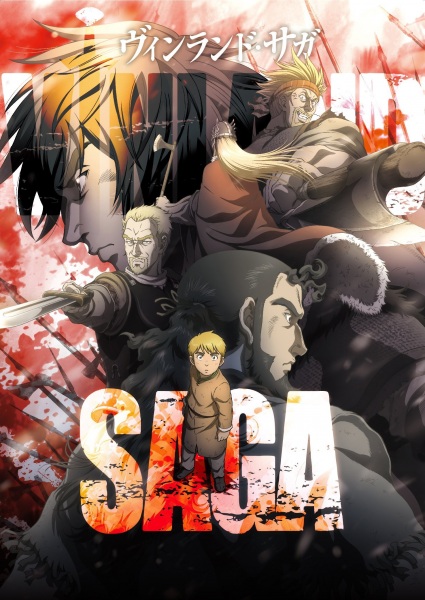
Vinland Saga is the only post-2000 shonen-adjacent action property that has earned the right to abandon action, and the cost of that earning is what makes the adaptation difficult to score cleanly. The Wikipedia page pulls 857 monthly views — respectable, not viral. The subreddit produced zero top-week posts in the last cycle. It sits outside the current trending list entirely. This is the profile of a show the discourse has filed away as "settled prestige," and that filing is precisely the problem: Vinland Saga is not settled, and treating it as a finished canonical object obscures what the adaptation actually does and fails to do.
The Consensus Misreads Season 2
MyAnimeList currently parks the first season at 8.71 and the second at 8.76 — a rounding-error gap that flatters Season 2 by treating its thematic ambition as if ambition itself were execution. The fan position, in the broad strokes you can still excavate from old threads, runs roughly: Season 1 is a revenge banger, Season 2 is a brave pivot to pacifism, both are masterpieces, MAPPA did fine. Anime Codex's rubric disagrees with the flatness of that read. The Farmland Saga is not a brave pivot; it's the load-bearing thematic argument the entire first arc exists to set up. And the studio transition from Wit to MAPPA is not a neutral handoff — it's a measurable downgrade in compositing, action choreography, and shot economy that the writing has to compensate for, and mostly does.
Where the Codex departs hardest from consensus: Season 2 is the better season not because it's braver but because it's where Makoto Yukimura's structural thesis finally lands. Thorfinn standing in a wheat field refusing to strike Snake is the payoff for every Askeladd monologue in Season 1. If you scored the show as two separate objects you would miss the architecture.
Askeladd Is the Best Written Antagonist in Modern Seinen, and the Show Knows It Too Well
The character criterion is where Vinland Saga posts its highest marks, and almost all of that score is Askeladd. Yukimura writes him as a man whose Welsh ancestry, Roman education, and Viking pragmatism are not backstory beads but operating principles that determine every tactical choice he makes. The Episode 24 throne room sequence — Askeladd's faked madness, the strike against Sweyn, the deliberate provocation of Canute — is the cleanest piece of character-driven plotting the genre has produced in a decade. He dies having authored Canute's transformation, and the show structurally cannot replace him.
This is the problem. Season 2 is partly about Thorfinn learning to exist without an antagonist-father, and the audience has to undergo the same withdrawal. Einar is a magnificent counterweight — Shizuno Ushio's voice work in the slave arc does more thematic labor than the script gets credit for — but the comparison is unfair and the writing knows it. The show's character score holds up because Snake, Gardar, and Ketil's family are individually excellent. It doesn't hold up because Yukimura found an Askeladd-equivalent. He didn't try to.
Compare this to how Fullmetal Alchemist: Brotherhood structures its antagonist economy — the Homunculi are distributed thematic load-bearers, no single one carrying the show. Vinland Saga is the opposite design: one antagonist carries the show, then the show kills him on purpose, then it dares you to keep watching. That's a riskier architecture and the rubric rewards the risk, but it also exposes the seams.
The Farmland Saga Is the Point, and Most Viewers Treated It as a Detour
The themes criterion is where the show separates itself from every shonen-adjacent property in its weight class. The Farmland Saga is an extended argument that violence is not redeemed by purpose, that revenge is not a coherent identity, and that pacifism is not passive — it's the harder discipline. Episode 18 of Season 2, "The Battle of the Old Soldier," is the single best episode of anime broadcast in 2023 and almost nobody talks about it that way. Snake's duel with Thorgil is choreographed as conventional seinen combat, then deliberately undercut by the realization that Snake is fighting to protect a man who has chosen not to fight. The episode is the show's thesis statement in miniature.
This is the inverse of how Demon Slayer treats violence — there, the action is the point and the thematic dressing is incidental. Vinland Saga inverts the priority and the rubric rewards it heavily on the themes axis. The cultural impact score lags because the discourse never caught up; the property's monthly Wikipedia traffic is a quarter of what its thematic ambition deserves.
Wit to MAPPA Is Not a Neutral Transition
The animation criterion is the cleanest place to register a complaint. Shuhei Yabuta's direction at Wit gave Season 1 a tactile weight — the Episode 7 forest skirmish, the snow compositing in the Jomsviking sequences, the way blood read as wet rather than as sakuga garnish. MAPPA's Season 2, directed by Shuhei Yabuta again to his credit, retains directorial intelligence but loses the in-between density. Comparison shots from the slave arc against any Wit-era combat sequence show the gap: fewer frames, flatter compositing, more reliance on held cels.
The argument that "Season 2 is about farming so it doesn't need animation" is a cope. The harvest sequences, the wrestling match with Thorgil, the climactic confrontation with Snake — all of these are shot with ambition the budget cannot fully service. The animation score takes a real hit and the rubric will not pretend otherwise.
The Counter: This Is Just a Manga Adaptation Doing Its Job
The strongest opposing case: Vinland Saga is a faithful, intelligent adaptation of a manga that is itself the actual masterpiece, and grading the anime as if it were the primary text is a category error. Yukimura's pacing decisions, the Farmland Saga's length, the Askeladd-shaped hole — these are manga-side choices, and the anime is executing them with above-average craft.
This is fair, and it's why the Codex doesn't penalize the show for structural choices it didn't make. But adaptation is not transcription. The Wit-to-MAPPA shift produced a real downgrade in the animation criterion, and the cultural-impact criterion has to register that the show has not penetrated the broader discourse the way its thematic ambition warrants — partly because the adaptation never produced a single sakuga moment iconic enough to drag in the lurkers. Hunter × Hunter has the same problem in reverse: a show whose reputation is gated by viewer patience. Vinland Saga's reputation is gated by the absence of a viral hook the manga never needed.
Verdict
Vinland Saga is the most thematically rigorous seinen of its decade and the rubric scores it accordingly on story, character, and themes, with real deductions on animation and a cultural-impact figure that lags its quality by a wide margin. The 857 monthly Wikipedia views and the dead subreddit week are not evidence the show is overrated — they're evidence the discourse moved on before the argument finished. Watch Season 2 again. The show is not done telling you what it meant.
Featured in the Codex

More from The Codex
The Seven Deadly Sins Is a 6.60 Wearing a 7.60 Costume: A One-Point Gap Earned by Groping Gags and Convenient Flashbacks
The Seven Deadly Sins scores 6.60 on the Codex against MyAnimeList's 7.60 because the crowd is grading a Netflix breakout and a Ban-and-King friendship, not the 24 episodes A-1 Pictures actually broadcast in 2014.
The 10.0 That Built a Sunday: How Sazae-san's Cultural Score Carries a 6.58 Scorecard
Sazae-san is a case study in how a single criterion — cultural — can define how a show is remembered, and the 10.0 the Codex hands Eiken's 1969 institution is doing every bit of the heavy lifting its other five scores refuse to.
The Sebastian Problem: Why Black Butler Sits 1.10 Below Its MAL Line and the Crowd Refuses to Notice
Black Butler (Kuroshitsuji) posts a 1.10-point gap between MyAnimeList's 7.65 and the Codex 6.55 because the crowd is grading Sebastian's silhouette and a Phantomhive aesthetic, not the anime-original finale A-1 Pictures actually shipped in 2009.
Discussion
Set a display name above to post.
Loading discussion…