Death Note Is the Codex's Most Overrated Thriller: How a 12-Episode Masterpiece Got Smothered by 25 More
Death Note's reputation as a flawless psychological thriller depends entirely on amnesia about everything after the Yotsuba arc — and the rubric refuses to forget.
Death Note's reputation as a flawless psychological thriller depends entirely on amnesia about everything after the Yotsuba arc — and the rubric refuses to forget.
The L death scene is the best episode of television Madhouse produced in the 2000s, and it is also the moment Death Note stops being a great anime. Everything Tetsurō Araki built across twenty-five episodes — the desk-lamp chiaroscuro, the Hideki Taniuchi score collapsing into Latin chant, Light Yagami's chess-clock interiority — converges in episode 25, and then the show keeps going for twelve more episodes that nobody can defend on the merits. The Codex score reflects that asymmetry. The discourse does not.
The Consensus Problem With "Death Note"
Search "death note" on any aggregator and you get the same shape of conversation: a top-tier MAL score (it still sits comfortably above 8.6), a permanent fixture on every "gateway anime" list, a Wikipedia page pulling steady monthly traffic that dwarfs most of its 2006 cohort, and — tellingly — zero top-week Reddit posts in the current cycle. It is a show people have stopped arguing about. It has slipped off the trending list entirely and into the long tail, where canon goes to be misremembered as better than it was.
The consensus position treats Death Note as a complete work that happens to have a weaker back half. The Codex position is sharper: Death Note is two shows welded together at episode 25, and the rubric's character and story criteria penalize the weld. Tsugumi Ohba and Takeshi Obata wrote themselves into a structural trap when they killed L, and Araki's adaptation — for all its directorial intelligence in the first cour — could not engineer a way out, because there wasn't one.
The First 25 Episodes Are a Directorial Masterclass
Strip the show down to the Kira investigation arc and you have something close to genre-defining television. Araki and series composition lead Toshiki Inoue understood that a thriller about two geniuses writing each other's names in notebooks needed to be filmed like a heist movie shot inside a chess problem. The potato chip sequence in episode 2 is the canonical example, but the better one is the tennis match in episode 6 — a scene that has no business being as tense as it is, sustained entirely by cutting rhythm, internal monologue overlap, and Taniuchi's percussion cues. Madhouse leaned hard on still-frame compositions and chromatic shifts because the source material is ninety percent people sitting in rooms, and the show converts that liability into its signature aesthetic.
Light's interiority is the engine. Mamoru Miyano's vocal performance — pitched halfway between aristocratic boredom and active mania — gives the show its register. The Yotsuba arc, often dismissed as a holding pattern, is actually where the writing is doing its most interesting work: a Light without memory of the Death Note becomes a different character entirely, and the show is brave enough to make him sympathetic, then crueler still to make us watch him reabsorb the monster. That is character writing at a level the medium rarely attempts, and the Codex rubric scores the first half accordingly.
Then L Dies and the Show Forgets How to Build Tension
The Near and Mello arcs are not bad in the abstract. They are bad because the show that surrounds them is set up to deliver one thing — a two-handed psychological duel with stakes that escalate through proximity — and the post-timeskip structure delivers something else: a three-way standoff where the antagonists never share a room with Light until the endgame, and where the rules of the Death Note have been so thoroughly enumerated that the cat-and-mouse becomes administrative.
Near is the load-bearing problem. Ohba's decision to split L into two successors was a manga-economic choice (Mello provides volatility, Near provides analysis), but on screen, Near reads as a deflated photocopy. He has L's mannerisms — the crouch, the sugar, the toy-sorting — without L's screen presence, and Noriko Hidaka's performance is deliberately affectless in a way that drains scenes rather than tightening them. The warehouse climax in episode 37 is staged competently, and Light's breakdown is one of Miyano's best moments, but the road there is paved with exposition dumps about Mello's chocolate-bar logistics and SPK org charts. This is the same structural failure the Codex has flagged in Bleach's late arcs — a story that survives on momentum until the author can no longer disguise that the rules have outgrown the drama.
The Themes Criterion Is Where Death Note Quietly Underperforms
Death Note is treated as a thematic heavyweight — justice versus order, the corruption of absolute power, the loneliness of intellect — but the rubric reads it as a show that gestures at these themes without committing to any of them. Light's ideology never evolves past episode 2. He decides he is god, the show agrees that this is interesting, and then nothing in the next thirty-five episodes complicates his position from inside. The critique of Kira comes from L and Near as procedural opposition, not as moral counterweight. Soichiro Yagami is the closest the show comes to a genuine ethical interlocutor, and the writing kills him in a glorified plot-clearing exercise.
Compare this to how Vinland Saga argues itself out of its own premise — Thorfinn's worldview is forced to break and reconstitute under narrative pressure. Light's never breaks. He simply runs out of room. That is a thriller plot resolution, not a thematic one, and the Codex rubric, which weights themes meaningfully in the seinen-adjacent psychological category, does not award credit for ambition the text does not cash.
The Counter-Argument: Cultural Impact Should Carry More Weight
The strongest defense of Death Note's reputation is that it functioned as a global gateway anime for a decade, that the L silhouette is one of the three or four most recognizable character designs of the 2000s, and that the show's influence on the psychological-thriller adjacent space (everything from Code Geass to The Promised Neverland owes it structural debt) is incalculable. The cultural impact criterion in the Codex rubric is real, and Death Note scores high on it — arguably as high as anything in its decade outside the Studio Ghibli catalogue.
That defense is correct as far as it goes. The rubric does credit it. But cultural impact is one of six criteria, not a trump card, and the same logic that prevents Demon Slayer from coasting on Ufotable's compositing applies here: a single dominant criterion cannot rescue a work whose story and character arcs structurally collapse in the back half. The Codex weights are designed precisely to prevent that kind of laundering.
The first 25 episodes of Death Note are an S-tier psychological thriller; the last twelve are a B-tier procedural with a great final five minutes. The rubric averages them, and the result is a show that lives a full tier below where the discourse has filed it. Death Note is not bad. It is just not what its reputation insists it still is.
Featured in the Codex

More from The Codex
Slam Dunk at 8.12: The 6.8 on Animation That Decides How Toei's Basketball Landmark Gets Remembered
Slam Dunk earns 9.5 on cultural impact and 9.0 on character, but Toei's 1993 production caps it at 8.12 — and the gap between manga and adaptation is measured in still frames.
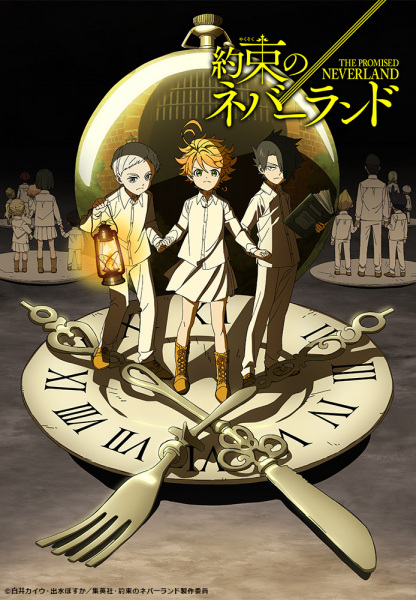
The Promised Neverland Review: An 8.18 That Lives on Story and Direction, and Loses Ground on World and Legacy
Judged against one consistent rubric, The Promised Neverland is best understood by which criteria carry it and which drag it down — not by a single number.
Anime Like Re:Zero: 5 the Codex Rubric Says You'll Love
Fans of Re:Zero respond to its strongest criteria — character at 9.0, cultural weight at 9.0, story and themes at 8.5 — and these five picks deliver the same qualities, ranked by how close their critical profile sits to it, not by vibes.
Discussion
Set a display name above to post.
Loading discussion…


