Are Popular Anime Actually Good? We Scored 195 Shows and the Answer Is "Loosely, at Best"
Popularity and quality correlate at r = 0.33 across the Codex catalogue — real, but loose enough that MyAnimeList's member counts are lying to you about half the shelf.
Popularity and quality correlate at r = 0.33 across the Codex catalogue — real, but loose enough that MyAnimeList's member counts are lying to you about half the shelf.
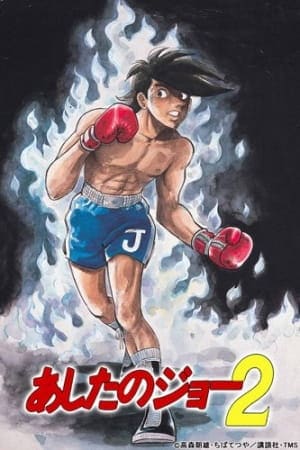
Fairy Tail has 1.85 million MAL members. Ashita no Joe has 68,883. If popularity were a proxy for quality, that ratio would mean something. It doesn't. The Codex rubric puts Joe at 9.02 and Fairy Tail at 6.25, and the arithmetic of that gap is the entire subject of this post.
What the Numbers Actually Say About Whether Popular Anime Are Actually Good
Across 195 scored titles, the correlation between log MAL membership and Codex score is r = 0.33. That is a real signal — bigger shows do tend to score higher, on average, because the medium's landmarks (Cowboy Bebop, FMA: Brotherhood, Mushishi) are both watched and defensible. But 0.33 is not 0.8. It explains roughly eleven percent of the variance. The other eighty-nine percent is where taste, marketing, shonen-magazine muscle, dub availability, meme half-life, and simulcast timing decide what gets watched — none of which are criteria on our rubric.
Vote-average sites conflate "how many liked it" with "how good it is." That is the whole problem. MyAnimeList's 8.14 on Black Clover and 8.00 on Bleach are not fraudulent — they are honest reports of what a huge audience thought of a show they finished. But an average of votes weights every viewer equally, weights every criterion invisibly, and produces a number that drifts toward whatever demographic showed up. The Codex rubric — six weighted criteria per genre — is designed to disagree, publicly, when disagreement is warranted. The correlation is real but loose, and the gaps are where it gets interesting.
The High-Score, Low-Membership Shelf: What 195,000 People Are Missing
Ashita no Joe (1980, Tokyo Movie Shinsha, 47 episodes) sits at 9.02 on the Codex against a MAL score of 8.83 and — the punchline — 68,883 members. That is a rounding error next to Bleach's 2.2 million. The rubric puts it there on story (9.2), character (9.5), and themes (9.4): Rikiishi's death arc, the corner-work interiority of Danpei, the terminal frame of the final round against Jose Mendoza. There is no shonen made after 1980 that is not downstream of this show, and roughly one in thirty MAL users has clicked on it.
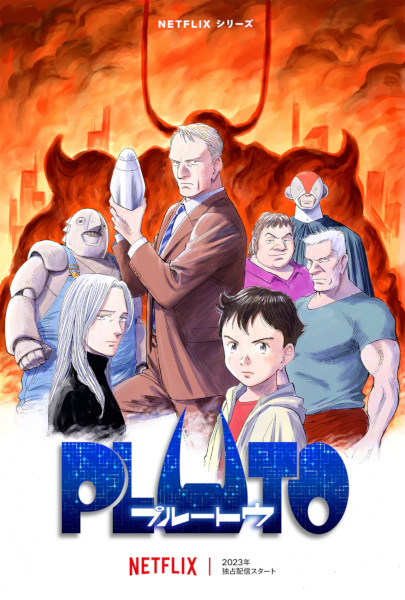
Pluto (2023, Studio M2) scores 8.96 across eight episodes — a seinen adaptation of Urasawa's Tezuka reworking that earns 9.3 on themes and 9.2 on story for its handling of Gesicht's memory arc and North No. 2's pastoral episode. It has 254,812 members. Honey and Clover (2005, J.C. Staff, 24 episodes) lands at 8.66, carried by a 9.2 on character — Takemoto's bicycle journey, Hagu's fragility, the entire architecture of Yamazaki's unrequited economy — and it has 285,979 members. Hikaru no Go (2001, Studio Pierrot, 75 episodes) earns 8.65 with a 9.0 on cultural impact for the actual, measurable spike in Japanese Go club enrollment it caused, and it has 150,411 members. Tongari Boushi no Atelier (2026, BUG FILMS) opens at 8.50 on the strength of a 9.2 world-building score and hasn't yet cleared 340,000.
Five shows. None of them under 8.50. All of them below the catalogue's median popularity. If you built your watchlist from MAL's Top Popularity page, you would miss every one.
The Low-Score, High-Membership Shelf: What 2 Million People Rewarded Anyway
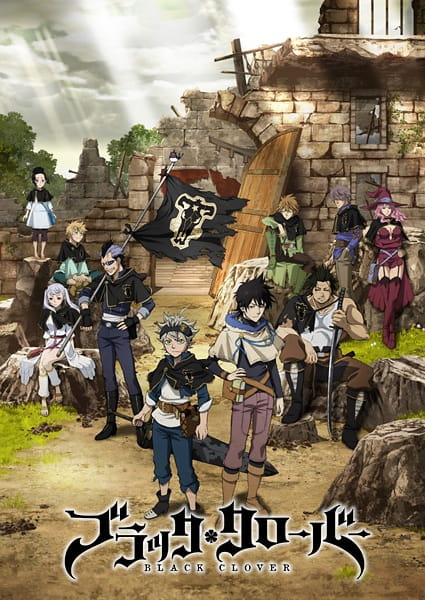
Now invert. Bleach (2004, Studio Pierrot, 366 episodes) has 2,212,907 members and a Codex score of 6.55, dragged down by a 6.5 on story and a 6.0 on character — the Bount arc exists, the Fullbring arc exists, and Orihime spends roughly a hundred episodes being rescued. The Seven Deadly Sins (2014, A-1 Pictures, 24 episodes) has 2,214,380 members and scores 6.60, with a 6.0 on themes and a 6.8 on story that reflect exactly how much of the plot is chest-thump reveals. Black Clover (2017, Studio Pierrot, 170 episodes) earns 6.52 against 1,907,373 members — 6.0 on animation, 6.5 on story, a show that improved late and never recovered from its opening cour. Fairy Tail (2009, Satelight, 175 episodes) sits at 6.25 with 1,848,185 members. Soul Eater (2008, Bones, 51 episodes) is the most interesting of the group at 6.38 — an 8.0 on animation from Bones, undercut by a 5.5 on story that collapses the moment the anime outruns the manga and invents its Asura finale.
These are all shonen. That is not an accident. The demographic's distribution channels — Jump, Weekly Shonen Magazine, the simulcast-friendly runtime, the merchandise pipeline — reliably manufacture audience at a scale unrelated to whether the writing survives a rubric. If you want to see the same pattern in a show the Codex treats more kindly, the rubric-adjacent picks for Seven Deadly Sins fans map the animation-and-ensemble strengths without inheriting the thematic collapse.
Why r = 0.33 Is the Honest Number, Not 0.7 or 0.1
A stronger correlation would mean the audience is a critic. A near-zero correlation would mean the audience is noise. Neither is true. Some very popular shows are also very good — Fullmetal Alchemist: Brotherhood, Steins;Gate, Frieren — and their presence in the catalogue is what pulls r up to 0.33 in the first place. The signal exists. It just isn't strong enough to use as a shortcut. When the correlation is this loose, "popular" and "acclaimed" are two different variables that happen to overlap in the middle of the distribution and diverge at both tails. The Ashita no Joe tail and the Bleach tail are the same phenomenon, seen from opposite ends.
This is also why single-criterion analysis matters more than an overall number. A show can earn a 9.5 on one axis and a 6.5 on another and land in the middle of a leaderboard that hides both facts. Akira's 9.8 on animation gets capped by a thin Kaneda; Maison Ikkoku's 9.0 on character gets capped by Studio Deen's animation floor. Aggregate scores lie by averaging. Popularity lies by counting.
The Steelman: Maybe Popularity Is Measuring Something Real
The honest counter is that popularity captures accessibility, and accessibility is a legitimate axis of value. Bleach's 2.2 million members reflect a show that gave a generation of viewers a first door into the medium, and a first door is not nothing. The Codex rubric has a cultural-impact criterion precisely because reach matters — Soul Eater's 7.0 there, Seven Deadly Sins' 7.0 there, are not zero.
But cultural impact is one of six criteria, weighted, not the whole scorecard. The rubric reads Bleach as a show whose reach outran its writing, not a show whose reach is its writing. Popularity is evidence. It is not a verdict.
Popularity is a distribution fact, not a quality fact, and r = 0.33 is the receipt. Watch Ashita no Joe before you watch the next 200 episodes of a Pierrot shonen. The correlation says you probably won't — the rubric says you should.
Featured in the Codex





More from The Codex
The Seven Deadly Sins Is a 6.60 Wearing a 7.60 Costume: A One-Point Gap Earned by Groping Gags and Convenient Flashbacks
The Seven Deadly Sins scores 6.60 on the Codex against MyAnimeList's 7.60 because the crowd is grading a Netflix breakout and a Ban-and-King friendship, not the 24 episodes A-1 Pictures actually broadcast in 2014.
The 10.0 That Built a Sunday: How Sazae-san's Cultural Score Carries a 6.58 Scorecard
Sazae-san is a case study in how a single criterion — cultural — can define how a show is remembered, and the 10.0 the Codex hands Eiken's 1969 institution is doing every bit of the heavy lifting its other five scores refuse to.
The Sebastian Problem: Why Black Butler Sits 1.10 Below Its MAL Line and the Crowd Refuses to Notice
Black Butler (Kuroshitsuji) posts a 1.10-point gap between MyAnimeList's 7.65 and the Codex 6.55 because the crowd is grading Sebastian's silhouette and a Phantomhive aesthetic, not the anime-original finale A-1 Pictures actually shipped in 2009.
Discussion
Set a display name above to post.
Loading discussion…