Is Ashita no Joe Worth Watching in 2024? The Codex Verdict on Anime's Most Important 47 Episodes
A 47-episode 1980 boxing series scored 9.02 on the Codex rubric — worth your time if you can tolerate 1980 limited animation, mandatory if you care about the medium's history.
A 47-episode 1980 boxing series scored 9.02 on the Codex rubric — worth your time if you can tolerate 1980 limited animation, mandatory if you care about the medium's history.
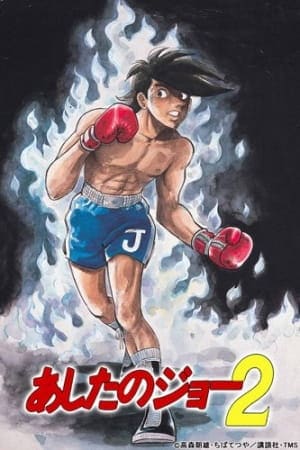
The question of whether Ashita no Joe is worth watching has a fast answer and a slow answer, and the fast one is yes — but only for a specific viewer, and not for the reasons the boxing-anime canon usually invokes. The Codex scores the 1980 Tokyo Movie Shinsha run at 9.02, weighted heaviest by a 9.8 in cultural impact and a 9.5 in character. Those are the two numbers that decide the recommendation. Animation, at 8.0, is the number that decides whether you'll actually finish it.
The MyAnimeList Consensus Is Right for the Wrong Reasons
The MyAnimeList crowd scores Ashita no Joe at 8.83, which is roughly where the site files a respected classic that most users haven't actually completed. The aggregate is correct in direction and wrong in texture. The MAL discourse tends to treat the series as a foundational sports-anime artifact — the thing Hajime no Ippo and Megalo Box descend from — and recommend it on those grounds. That framing undersells the show and primes the wrong viewer. Someone arriving for boxing choreography in the Madhouse-era idiom is going to bounce off Osamu Dezaki's static, pose-driven fight grammar inside three episodes.
The Codex departs from the consensus by routing the recommendation through character and theme rather than genre lineage. The show is not worth watching because it invented the sports-anime training arc. It is worth watching because of what it does with Joe Yabuki between the death of Rikiishi and the final bell against Mendoza, and because the cultural footprint behind that arc is large enough that not seeing it leaves a genuine gap in your literacy. This is the same logic the Codex applies to Hunter × Hunter's misfiling problem — the score is not the recommendation; the criterion weights are.
The Character Score Is What's Carrying the Verdict
A 9.5 in character is the highest non-cultural number on the card, and it is earned by the back half. The 1980 run picks up after Rikiishi's death and tracks Joe's inability to throw the corkscrew blow — a psychological injury rendered as a technical one, which is the kind of writing shonen rarely attempts and almost never lands. Carlos Rivera is the load-bearing addition: a fighter introduced as a rival and ushered out as a warning, his brain damage shown not as a tragic beat but as a sustained state Joe has to look at across multiple episodes. Carlos is what Joe might become, walking around the gym, and the show refuses to let either Joe or the audience forget it.
Mendoza, the final opponent, is written with a quiet domesticity that disqualifies the standard shonen final-boss reading. Danpei Tange's stubbornness and Yoko Shiraki's presence at the margins keep the Doya-gai grounded across stretches where the show could have lost its non-boxing texture entirely. The supporting cast does recede during the fight-heavy middle, which is the honest knock — some of the mid-series bouts feel like throat-clearing before the Mendoza confrontation, and the 47-episode runtime is not lean.
The Cultural Score Is Doing the Other Half of the Work
A 9.8 in cultural impact is not a courtesy. Rikiishi's funeral drew real mourners. Joe became iconography for the 1970s student left and the Japanese Red Army. The final frame — Joe slumped in his corner — is one of the most referenced images in the medium, and you have seen it parodied or quoted in dozens of shows you watched before knowing where it came from. If you care about the genealogy of how anime made meaning in the postwar period, this is non-optional viewing in the same way Akira and the original Mobile Suit Gundam are non-optional. Yoshiyuki Tomino's storyboards on the closing run, including episode 79, are part of why the ending hits as architecture rather than gesture.
This is also where the recommendation tightens. If your interest in anime is bounded by what's been made in the last fifteen years, the cultural weight argument lands abstractly and the animation will feel punishing. If you've already worked through the canonical seinen and the major shonen pillars — the ones the Codex treats seriously, including Vinland Saga's pacifism argument — then Ashita no Joe is the missing root of half of them.
The Animation Score Is the Honest Warning
An 8.0 in animation, in 2024, means something specific: Dezaki's direction is doing more work than the cels. The postcard memory freeze-frames, the harsh ink-shadow compositions, the split-screen during emotional peaks — these are stylistic choices that defined an era and still register as authored. They are also a frank response to a limited budget. Punches land through pose and shadow rather than motion. Cuts are reused. Stiffness is visible.
This is the criterion that will determine whether you finish the show. If you can read 1980 limited animation as direction rather than failure, the 8.0 is generous and the show is constantly interesting to look at. If you can't, no amount of thematic weight will save it for you, and the recommendation collapses. There is no version of this where you tolerate the visual language because the story is important. That deal does not exist for any anime.
The Strongest Case Against Watching It
The honest counter is that Ashita no Joe is a 47-episode commitment with mid-series pacing dips, animation that will date harder for you than it did for the people who made it, and a thematic payload — burn pure white until nothing remains — that the medium has since recycled into cliché. A viewer could reasonably argue that Megalo Box delivers the aesthetic compression and the Joe homage in thirteen episodes, and that the cultural-literacy argument is a Codex affectation rather than a reason to spend twenty hours.
The rubric disagrees because the thematic payload is not cliché in 1970-1980; it is the source, and watching it land in the original register is qualitatively different from watching it quoted. The 9.4 in themes is doing work the imitators cannot. But the counter is not stupid, and for a viewer who knows they will not finish a 47-episode 1980 boxing series, Megalo Box is the correct triage.
Verdict
Watch it if you take anime history seriously and can read Dezaki's direction as authored style rather than dated limitation — in which case the 9.02 will feel earned by the final frame. Skip it if the animation barrier is real for you; the cultural-weight argument will not carry twenty hours on its own. The show is worth the time it asks, but it asks for all of it.
Featured in the Codex


More from The Codex
The Seven Deadly Sins Is a 6.60 Wearing a 7.60 Costume: A One-Point Gap Earned by Groping Gags and Convenient Flashbacks
The Seven Deadly Sins scores 6.60 on the Codex against MyAnimeList's 7.60 because the crowd is grading a Netflix breakout and a Ban-and-King friendship, not the 24 episodes A-1 Pictures actually broadcast in 2014.
The 10.0 That Built a Sunday: How Sazae-san's Cultural Score Carries a 6.58 Scorecard
Sazae-san is a case study in how a single criterion — cultural — can define how a show is remembered, and the 10.0 the Codex hands Eiken's 1969 institution is doing every bit of the heavy lifting its other five scores refuse to.
The Sebastian Problem: Why Black Butler Sits 1.10 Below Its MAL Line and the Crowd Refuses to Notice
Black Butler (Kuroshitsuji) posts a 1.10-point gap between MyAnimeList's 7.65 and the Codex 6.55 because the crowd is grading Sebastian's silhouette and a Phantomhive aesthetic, not the anime-original finale A-1 Pictures actually shipped in 2009.
Discussion
Set a display name above to post.
Loading discussion…