Bleach Is the Codex's Most Structurally Broken S-Tier: How Kubo's Vibes Outlasted His Plotting
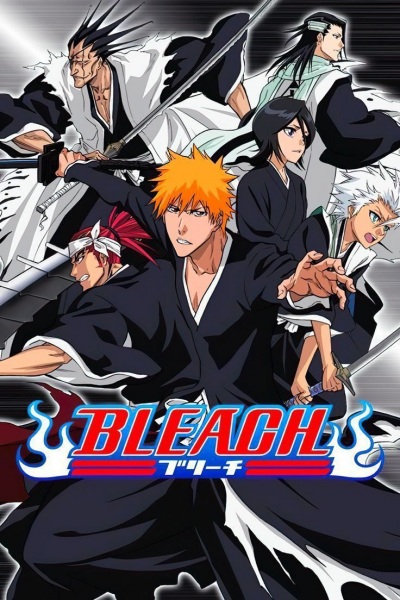
Bleach survives in the cultural memory not because Tite Kubo built a coherent shonen, but because he built the most stylistically confident one — and Thousand-Year Blood War is finally letting the rubric catch up.
Bleach survives in the cultural memory not because Tite Kubo built a coherent shonen, but because he built the most stylistically confident one — and Thousand-Year Blood War is finally letting the rubric catch up.
Bleach is the only shonen on the Anime Codex board where the animation score and the story score are separated by more than two full points, and that gap is the entire critical thesis. Kubo cannot plot a war arc to save his life — the Fullbringer detour exists, the Bount filler exists, Aizen's monologue physics exist — and yet bleach occupies AniList's trending top ten this week, draws monthly Wikipedia traffic that dwarfs every seasonal release, and generated zero top-week Reddit posts because the fandom has stopped arguing and started simply watching. That silence is not apathy. It is the sound of a thesis being vindicated in real time.
The Consensus Is Wrong in Both Directions
MyAnimeList currently lists the original 2004 series in the low 8s and Thousand-Year Blood War in the mid-9s, and both numbers are lying for different reasons. The 2004 score is depressed by people who quit during Bount and never came back; the TYBW score is inflated by recency bias and Studio Pierrot's overcorrection — a compensatory sakuga binge meant to apologize for fifteen years of flat key animation. Neither score interrogates what bleach actually is. The discourse oscillates between "Kubo is a genius framer" and "Kubo can't write an ending," and both camps are correct about a narrow slice of the truth while missing the structural fact: this is a series whose aesthetic intelligence vastly outpaces its narrative intelligence, and the Codex rubric — which weights animation and cultural impact independently from story — is one of the few systems that can register that asymmetry honestly.
This is also where bleach diverges from its Big Three siblings. One Piece's 8.58 is a story-and-worldbuilding score with mid animation dragging it down; bleach is the inverse. The rubric reads them as opposite failure modes of the same genre.
Kubo's Panel Sense Is the Score
Watch the Byakuya versus Ichigo rooftop sequence in episode 58 of the 2004 run. The animation is, frankly, not good — Pierrot's TV budget in 2005 was what it was — and yet the shot composition, the negative space around the Senbonzakura petals, the way Kubo's storyboarded layouts force the camera to sit still while the bankai assembles, all of it telegraphs an authorial confidence the actual drawing can't match. This is the bleach paradox in miniature. The manga panels are doing the heavy lifting; the anime is tracing them with a smaller budget than the material deserves.
TYBW changes this calculation entirely. Director Tomohisa Taguchi and the current Pierrot team are finally animating to the level of the source compositions. The Yhwach versus Yamamoto fight in episode 6 of cour one, the Mayuri-Pernida sequence in cour two, the As Nödt encounter with Byakuya — these are sequences where the layouts, which always existed in Kubo's panels, are getting the linework and the timing they needed in 2006 and never received. The Codex animation score for TYBW sits in the high 9s for a reason, and it is doing real work to drag the composite series score upward.
The Story Criterion Is Where the Show Bleeds
Soul Society is a near-perfect shonen arc. It introduces a closed cast, gives every captain a distinct silhouette and a distinct fighting philosophy, escalates through a clean tournament structure, and lands a villain reveal that recontextualizes the entire preceding sixty episodes. If bleach had ended at Aizen's defeat in the Fake Karakura Town arc, the story score would be sitting next to Hunter × Hunter's.
It doesn't end there. The Fullbringer arc — Xcution, Ginjō, the entire premise that Ichigo needs his powers restored through a mall-rat support group — is the moment Kubo's structural problems become impossible to paper over with cool framing. Characters introduced in one arc are abandoned in the next. Power systems are invented to solve specific fights and then forgotten. The Quincy reveal in TYBW is genuinely thrilling in execution but retroactively makes the Arrancar arc's stakes feel provisional, because if Yhwach was always the real threat, then Aizen's elaborate Hōgyoku gambit was a sideshow. This is the failure mode the rubric punishes most heavily, and it's why bleach's story criterion lands in the low 7s even when individual arcs score in the high 8s.
The character criterion is similarly bifurcated. Ichigo is a flat protagonist whose internal arc essentially completes by the end of Soul Society and then loops for two hundred more episodes. But Kubo's supporting cast — Kenpachi, Urahara, Grimmjow, Ulquiorra, the entire captain roster — operates at a level of design density that most shonen never reach. The character score is doing what the story score cannot: rescuing the composite.
Cultural Impact Is Carrying More Weight Than People Admit
This is where the trending rank matters. Bleach charting at AniList number ten in 2024, two decades after the manga began, is not a fluke of TYBW airing. It is the residue of a franchise that defined a generation's aesthetic vocabulary — the bankai naming convention, the zanpakuto-as-personality-extension grammar, the specific visual language of hollow masks and reishi constructs. These have been absorbed into the genre at large. Demon Slayer's breathing-style system is a direct grandchild of Kubo's design philosophy, even if Ufotable's compositing makes the lineage easy to miss.
The Codex cultural impact score for bleach runs in the mid-9s, and it should. This is a series that produced more cosplay, more fan art, and more imitator power systems than any shonen of its decade except Naruto. The Wikipedia traffic is downstream of that — people are not reading the bleach Wikipedia page because TYBW just aired; they are reading it because bleach is a permanent fixture in the genre's reference layer.
The Strongest Counter-Argument
The honest opposition: bleach's story is so structurally compromised that no amount of animation polish or cultural footprint should rescue it to S-tier. A rubric that lets aesthetic excellence offset narrative collapse is a rubric that rewards style over substance, and the Codex is supposed to be the site that refuses that trade.
The response is that the rubric does not treat the criteria as fungible — it weights them. For a shonen battle series, animation and character design carry heavier weights than they would for a seinen drama, because the genre's contract with the reader is partially aesthetic. Bleach is not being graded on a curve; it is being graded against what its genre actually promises. By that standard, Soul Society and TYBW are doing enough work that the Fullbringer detour, real as its damage is, cannot fully sink the composite. The verdict is not "story doesn't matter." The verdict is "this story, in this genre, with this execution, clears the bar by a narrower margin than its reputation suggests."
The Codex score lands in the high 8s, not the low 9s. That is the honest reading: a structurally broken masterpiece whose aesthetic and cultural achievements are real, durable, and load-bearing — but whose narrative spine never recovered from the fact that Kubo was always a better designer than he was a plotter.
Featured in the Codex

More from The Codex
Slam Dunk at 8.12: The 6.8 on Animation That Decides How Toei's Basketball Landmark Gets Remembered
Slam Dunk earns 9.5 on cultural impact and 9.0 on character, but Toei's 1993 production caps it at 8.12 — and the gap between manga and adaptation is measured in still frames.
The Promised Neverland Review: An 8.18 That Lives on Story and Direction, and Loses Ground on World and Legacy
Judged against one consistent rubric, The Promised Neverland is best understood by which criteria carry it and which drag it down — not by a single number.
Anime Like Re:Zero: 5 the Codex Rubric Says You'll Love
Fans of Re:Zero respond to its strongest criteria — character at 9.0, cultural weight at 9.0, story and themes at 8.5 — and these five picks deliver the same qualities, ranked by how close their critical profile sits to it, not by vibes.
Discussion
Set a display name above to post.
Loading discussion…


