The Best Anime of 2019, Ranked by Rubric: What the Codex Actually Rewards When the Hype Settles
Year-end lists are usually recency-biased popularity polls — this one applies one consistent rubric to everything 2019 produced, and the order is not what you remember.
Year-end lists are usually recency-biased popularity polls — this one applies one consistent rubric to everything 2019 produced, and the order is not what you remember.
2019 was the year ufotable's compositing department decided a shonen's reputation, Wit Studio quietly produced one of the decade's most important seinen openings, and Bones delivered the best-directed sequel of the year to a fraction of the audience watching Tanjiro fight a spider. The discourse remembers one of those things. The rubric remembers all three.
What Most "Best of 2019" Lists Get Wrong
The standard year-end retrospective for 2019 is a Demon Slayer coronation with a Vinland Saga nod and a Mob Psycho 100 II footnote. MyAnimeList's numbers tell that story cleanly: Demon Slayer sits at 8.40, The Promised Neverland at 8.47, Dr. Stone at 8.26 — all above Vinland Saga's 8.78 in raw vote count, though not in score, and all dwarfing Beastars' 7.78 and 7 Seeds' 6.57 in cultural footprint. Aggregate scores are partly a popularity contest with a decimal point, which is why a competently directed shonen with viral fight scenes will always beat a structurally rigorous adaptation of a Yukimura manga in the public memory.
Year-end lists are usually recency-biased popularity polls. This one applies one consistent rubric to everything 2019 produced — six criteria, per-genre weights, no extra credit for trending on Twitter in October. The order below is the Codex catalogue's, by score, and the gaps between entries are larger than the discourse implies.
The Top Tier: Bones and Wit Did the Actual Work
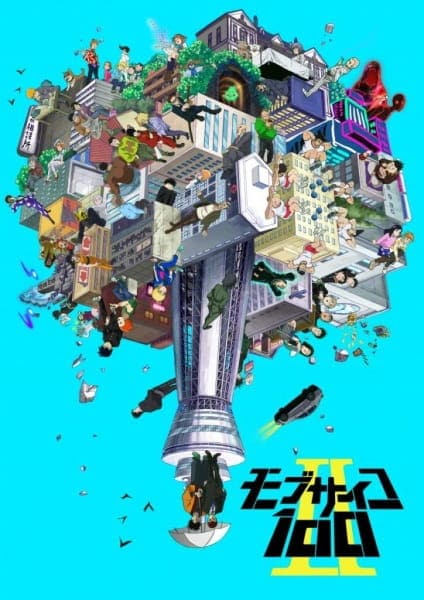
Mob Psycho 100 sits at the top of 2019 with a Codex score of 9.05, and the criterion breakdown is where the argument lives. Character lands at 9.7 — the highest individual mark on this entire list — because Yuzuru Tachikawa and Bones used the second season to interrogate Reigen as a moral subject rather than a comic device, with the Confession arc functioning as the rare shonen reversal that re-reads everything before it. Animation pulls a 9.5 on the strength of the Mogami episode and the climactic Claw confrontation, where Miyo Sasaki and the Bones key animation roster turn ONE's deliberately ugly source art into something closer to motion painting. The only soft criterion is world-building at 7.8, which is honest: Mob's universe is a vehicle for character, not a constructed mythology. The full coordinates are worth reading at the show level.
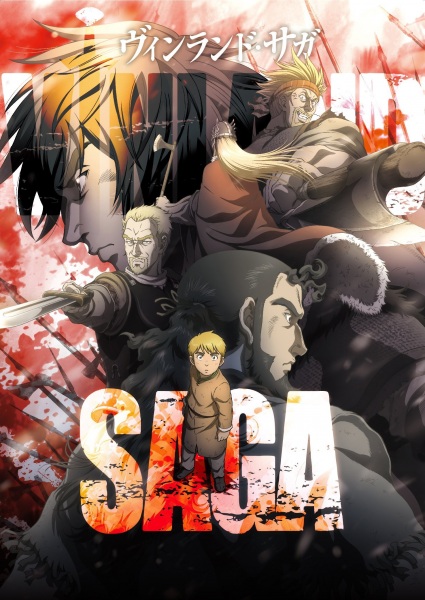
Vinland Saga follows at 8.88, and the rubric is unsentimental about why it sits below Mob. Wit Studio's 24-episode adaptation scores 9.0 on story and 9.2 on character — Askeladd is the year's best-written supporting figure, full stop — but animation lands at 8.7, not 9.5, because Shuhei Yabuta's direction is staging-led rather than sakuga-led, and the rubric weights what's on screen, not what's intended. Themes at 8.8 reflect a structural problem the adaptation's larger arc only clarifies in retrospect: Season 1 is the prologue to a pacifist thesis it cannot yet state, and the Codex grades the season as delivered, not as promised.
The Middle: Where Adaptation Quality Stops Hiding the Source
Fruits Basket at 8.22 is the catalogue's most interesting middle-tier entry. TMS Entertainment's 25-episode reboot scores character 8.7 and themes 8.5 — the Sohma family's trauma economy reads more clearly here than in the 2001 Deen version — but story drops to 7.8 because the first cour is structurally an introduction with the engine still warming. Cultural impact at 7.0 is the rubric being honest: the 2019 reboot revived a property, it did not redefine one.
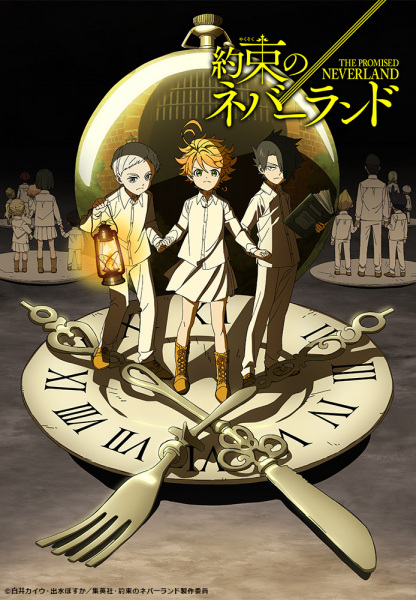
The Promised Neverland at 8.18 is the year's cleanest example of why the Codex weights story differently across genres. CloverWorks' 12-episode first season scores story at 8.8 — the Grace Field arc is one of the most controlled thriller structures in recent shonen — and Mamoru Kanbe's direction earns the 8.3 animation mark with composition rather than frame count. The cap is character at 8.0 and world at 7.5: Norman, Emma, and Ray are functional rather than deep, and the world outside the orphanage is a question the season correctly refuses to answer.
Beastars at 7.85 is Orange's argument for CG as a register rather than a compromise. Character at 8.5 and world at 8.0 carry it; Legoshi's interiority and the Cherryton ecology are doing genuinely original work. Animation at 7.5 is the rubric refusing to grade on the curve — Orange's CG is the best of its kind, but the rigging visibly limits Shinichi Matsumi's staging in dialogue scenes, and pretending otherwise would be hype.
The Lower Tier: Where the Discourse and the Rubric Disagree Loudest
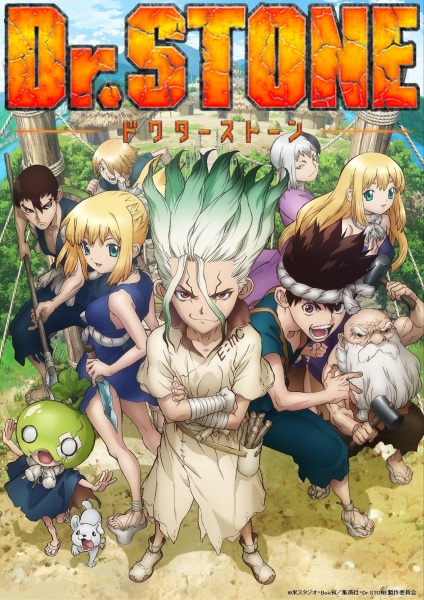
Dr. Stone at 7.63 is a competent science-procedural that the rubric grades as a competent science-procedural. Story at 8.0 reflects Riichiro Inagaki's structural discipline; character at 7.0 reflects Senku being a delivery mechanism for exposition rather than a person.
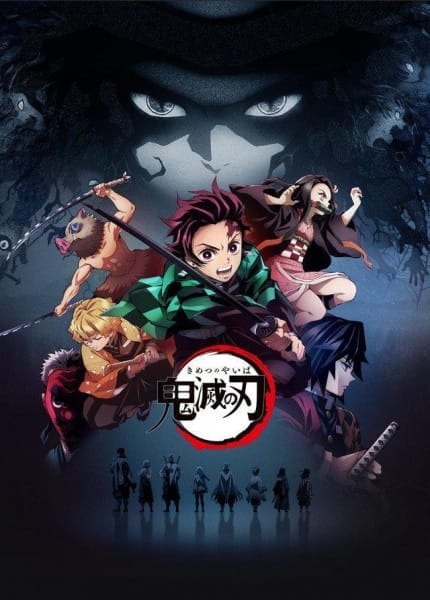
Demon Slayer sits at 7.15 — the placement most likely to generate email. Story at 6.8, character at 6.5, themes at 7.0. The rubric does not see what the box office saw. Tanjiro is a flat protagonist whose moral compass never wavers, the Twelve Kizuki are introduced as a checklist, and the writing's only real ambition is sibling loyalty as restated thesis. The reason Demon Slayer ranks where it does, and the reason the Codex has written about it at length elsewhere, is that ufotable's compositing — Yuichi Terao's color work, the Mt. Natagumo sequence in episodes 19-21 — is doing the heavy lifting the script declines to do. Sakuga is one criterion of six.
Fire Force at 6.68 is the cleanest study in the catalogue of a show carried by a single criterion. Animation at 8.5 is real — David Production's fire effects and Yuki Yase's episode direction are genuinely accomplished — but story 6.5, character 6.0, and themes 6.0 mean the rubric reads it as a beautifully animated tonal mess that cannot decide whether it is a horror, a comedy, or a fanservice vehicle, and frequently attempts all three in one cut.
7 Seeds closes the list at 6.03. Gonzo's adaptation of Yumi Tamura's post-apocalyptic josei is the year's most damaging studio mismatch — themes 6.8 and world 7.0 indicate the source material's actual quality, animation 4.0 indicates what happened to it.
The Counter-Argument
The strongest case against this ordering is straightforward: Demon Slayer was the most important anime of 2019 by every measurable cultural metric, and a rubric that ranks Mob Psycho 100 nearly two full points above it is describing a parallel universe. The objection is fair on its own terms. Cultural impact is one of the six criteria, and Demon Slayer would score very high on it — but cultural impact is weighted, not dominant, and the other five criteria are not optional. A show whose script, characterization, and thematic ambition all land in the 6s cannot reach the top tier on production value alone, regardless of how many records the Mugen Train film would set the following year. The rubric is not arguing Demon Slayer is bad. It is arguing Demon Slayer is a 7.15.
Verdict
2019 belongs to Bones and Wit on the rubric, to ufotable in the box office, and to Orange in the technical footnotes — and only one of those three stories is the one most retrospectives tell. The Codex's order is not a contrarian pose; it is what falls out when story, character, and themes are weighted at parity with animation and impact. Read the discourse for what 2019 felt like. Read the rubric for what 2019 actually was.
Featured in the Codex



More from The Codex
The Seven Deadly Sins Is a 6.60 Wearing a 7.60 Costume: A One-Point Gap Earned by Groping Gags and Convenient Flashbacks
The Seven Deadly Sins scores 6.60 on the Codex against MyAnimeList's 7.60 because the crowd is grading a Netflix breakout and a Ban-and-King friendship, not the 24 episodes A-1 Pictures actually broadcast in 2014.
The 10.0 That Built a Sunday: How Sazae-san's Cultural Score Carries a 6.58 Scorecard
Sazae-san is a case study in how a single criterion — cultural — can define how a show is remembered, and the 10.0 the Codex hands Eiken's 1969 institution is doing every bit of the heavy lifting its other five scores refuse to.
The Sebastian Problem: Why Black Butler Sits 1.10 Below Its MAL Line and the Crowd Refuses to Notice
Black Butler (Kuroshitsuji) posts a 1.10-point gap between MyAnimeList's 7.65 and the Codex 6.55 because the crowd is grading Sebastian's silhouette and a Phantomhive aesthetic, not the anime-original finale A-1 Pictures actually shipped in 2009.
Discussion
Set a display name above to post.
Loading discussion…