The 10 Anime With the Best Characters, Ranked Only on Character Writing & Growth
Most "best anime" lists rank by overall vibe. This one isolates a single axis — character writing & growth — and lets the rubric pick the winners.
Most "best anime" lists rank by overall vibe. This one isolates a single axis — character writing & growth — and lets the rubric pick the winners.
The question "what are the anime with the best characters" is almost always answered with a list of shows that are simply good overall — the writer's favorites, dressed up in character-study language. The Anime Codex rubric exists to prevent that. It weights six criteria separately, which means a show can score a 9.7 on character and an 8.0 on cultural impact and still finish below a more balanced rival on the composite. What follows is the inverse of a standard top-ten: the ten anime that scored highest on character writing & growth specifically, ordered by that single number, regardless of where they landed on the Codex aggregate.
What This List Refuses to Do
It refuses to flatten character writing into "memorable cast." Memorability is a function of cultural reach and design. Character writing & growth measures something narrower: whether the show's people change in ways the script earns, whether their psychology is consistent enough to make the change legible, and whether secondary figures are written with the same rigor as leads. The Codex method treats this as one axis among six, and shows that excel here are not necessarily the shows that win popularity contests on MyAnimeList. Three of the ten below sit under an 8.80 on the composite. They are still here. That is the point.
1. Monster — 9.7
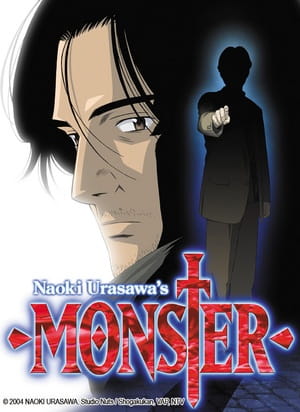
Monster earns the highest character score in the catalogue, and the figure is not a sentimental gesture toward Naoki Urasawa's reputation. Across 74 episodes, Madhouse's 2004 adaptation tracks Kenzo Tenma's slow erosion from idealist surgeon to man capable of pointing a gun, and surrounds him with a supporting cast — Nina, Lunge, Grimmer, Eva Heinemann — each of whom carries an internal arc that would justify its own series. Eva's drunken collapse and partial recovery is the cleanest example: a side character given five distinct emotional positions over the runtime, each one logically reachable from the last. The composite 9.24 sits in the upper tier of seinen, but the character figure is what does the structural work.
2. Mob Psycho 100 — 9.7
Mob Psycho 100's third season, animated by Bones across 13 episodes in 2019, ties Monster on the character axis with completely different methodology. ONE writes Shigeo Kageyama as a thesis: power is meaningless without the social humility to use it. The final arc, with the Mogami flashback paid off in Mob's confrontation with his own repressed self, is the closest the genre has come to making interiority legible as action. Reigen, Ritsu, Dimple — all receive their resolutions in service of Mob's, not at his expense. The composite 9.05 is dragged down by world-building, which the show simply does not care about. Character is where Bones spent the budget.
3. Hunter × Hunter (2011) — 9.5
Hunter × Hunter earns 9.5 mostly on the strength of Chimera Ant, where Togashi performs the rare trick of giving a villain — Meruem — a more thorough developmental arc than the protagonist receives across the previous hundred episodes. Killua's arc out of Gon's shadow, culminating in the Zoldyck household confrontation, is the cleanest sibling-fracture in shonen. Madhouse's 148-episode adaptation does not always animate this well, but the writing carries it. The show's 9.23 composite reflects a worldbuilding apparatus most shonen can't approach, but the character figure is what makes the long stretches survivable.
4. Ashita no Joe — 9.5
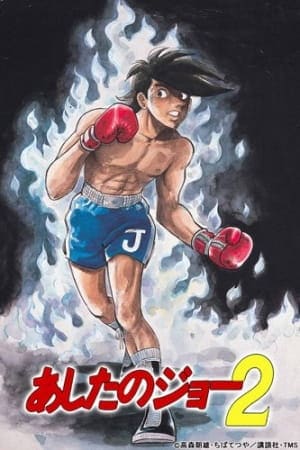
Forty-seven episodes from Tokyo Movie Shinsha in 1980, and Joe Yabuki is still the most psychologically specific protagonist in sports anime. The 9.02 composite carries a 9.8 in cultural impact and a 9.5 in character because the show refuses to let Joe become heroic in a clean way. His relationship with Toru Rikiishi — and the death that anchors the back half — is written as grief, not motivation. The white-ash ending works because the script has spent forty episodes earning the exhaustion. Few shonen since have written a lead with this much interiority.
5. Fullmetal Alchemist: Brotherhood — 9.4
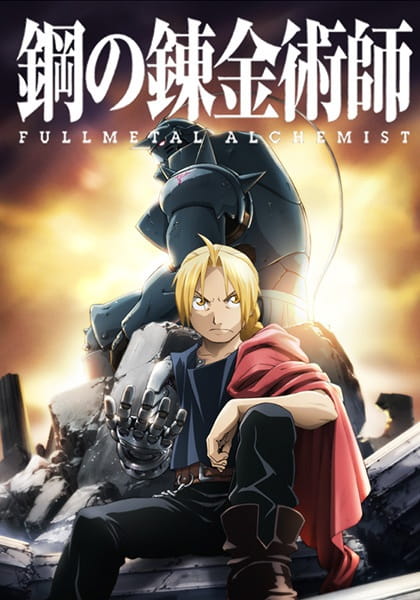
Bones' 64-episode 2009 adaptation scores 9.4 on character because Hiromu Arakawa wrote a structurally rigorous shonen in which nearly every named figure has a coherent arc. Roy Mustang's revenge against Envy is the case study: the show stages it, then has Hawkeye and Edward intervene, and the writing makes both Mustang's rage and his decision to step back legible without monologue. Scar's evolution from genocidal avenger to wary ally is handled with similar economy. The composite 9.25 is the highest on this list.
6. Frieren: Beyond Journey's End — 9.3
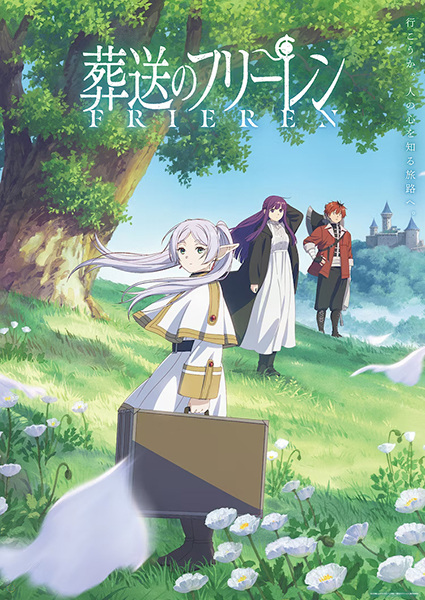
Frieren earns 9.3 on character despite spending most of its 28 episodes in a deliberately low-affect register. The show's premise — an elf processing a human party's death over centuries — requires character writing that operates in subtraction rather than addition. Fern and Stark are conventional anime archetypes elevated by their function as mirrors for Frieren's slow recognition of what she failed to notice while Himmel was alive. The composite 9.03 pays tax on world and culture; character is one of the two criteria that carry it.
7. NANA — 9.3
Madhouse's 47-episode 2006 adaptation of Ai Yazawa's manga scores 9.3 because NANA writes two protagonists whose codependence is the show's actual subject. Nana Komatsu's drift through bad romantic decisions is treated with neither contempt nor irony, and Nana Osaki's controlled exterior cracks at specifically chosen moments. Ren, Takumi, Yasu — all given motivations that complicate the central relationship rather than service it. The 8.74 composite reflects modest worldbuilding and animation; the character figure reflects what Yazawa actually built.
8. Vinland Saga — 9.2
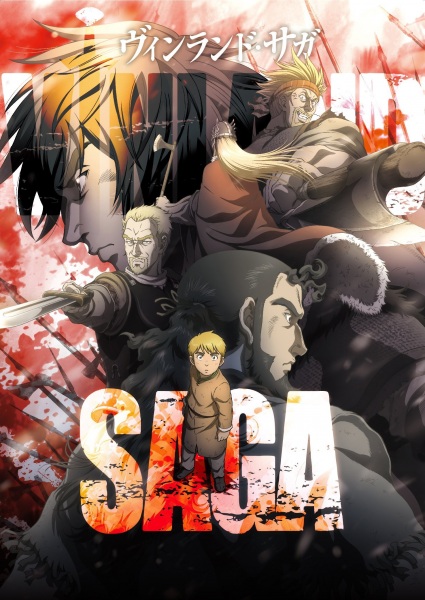
Vinland Saga's 24-episode Wit Studio run scores 9.2 because Thorfinn is written as a revenge-arc protagonist who completes the revenge arc inside the first season, and the show then has to figure out what to do with him. Askeladd carries the same season: a pragmatist whose final act reframes everything that preceded it. The 8.88 composite is held back by structural compromise across the adaptations; the character writing is not.
9. Honey and Clover — 9.2
J.C.Staff's 24-episode 2005 adaptation of Chica Umino's josei manga earns 9.2 because Honey and Clover writes unrequited love as a structural condition rather than a plot engine. Takemoto's cycling pilgrimage, Mayama's obsession with Rika, Hagumi's collapse — each character is written with a specific relationship to ambition and failure that the show refuses to resolve cleanly. The 8.66 composite is the second-lowest on this list. The character figure is why it qualifies at all.
10. Hikaru no Go — 9.2
Studio Pierrot's 75-episode 2001 adaptation scores 9.2 because Hikaru no Go builds Hikaru Shindo's transformation from indifferent middle-schooler to professional player as a function of two relationships: Sai, the Heian-era ghost, and Akira Toya, the rival. Sai's disappearance two-thirds through the run is the most devastating structural choice in 2000s shonen, and Hikaru's grief-driven retreat from the game is written with patience the genre rarely affords. The 8.65 composite is the lowest here; the character work is undimmed.
The Counter-Argument
The honest objection is that this list privileges interiority over impact — that One Piece's Luffy or Evangelion's Shinji are more culturally consequential characters than, say, Takemoto from Honey and Clover, and that any character ranking that omits them is performing a category error. The rubric reads it differently. Cultural impact is its own axis. Character writing & growth measures construction, not reach. Shinji scores extremely well on this axis in his own Codex entry; Luffy does not, because One Piece's protagonist is deliberately static. The rubric is not denying their importance. It is refusing to confuse importance with craft.
The ten above are the ten that, isolated on one criterion, earn the figure. The composite scores tell a different story. That is the feature, not the flaw.
Featured in the Codex



More from The Codex
The Seven Deadly Sins Is a 6.60 Wearing a 7.60 Costume: A One-Point Gap Earned by Groping Gags and Convenient Flashbacks
The Seven Deadly Sins scores 6.60 on the Codex against MyAnimeList's 7.60 because the crowd is grading a Netflix breakout and a Ban-and-King friendship, not the 24 episodes A-1 Pictures actually broadcast in 2014.
The 10.0 That Built a Sunday: How Sazae-san's Cultural Score Carries a 6.58 Scorecard
Sazae-san is a case study in how a single criterion — cultural — can define how a show is remembered, and the 10.0 the Codex hands Eiken's 1969 institution is doing every bit of the heavy lifting its other five scores refuse to.
The Sebastian Problem: Why Black Butler Sits 1.10 Below Its MAL Line and the Crowd Refuses to Notice
Black Butler (Kuroshitsuji) posts a 1.10-point gap between MyAnimeList's 7.65 and the Codex 6.55 because the crowd is grading Sebastian's silhouette and a Phantomhive aesthetic, not the anime-original finale A-1 Pictures actually shipped in 2009.
Discussion
Set a display name above to post.
Loading discussion…