Anime Like Assassination Classroom: 5 the Codex Rubric Says You'll Love
Fans of Assassination Classroom respond to its strongest criteria — themes at 8.5, character at 8.0, story at 7.5 — and these five picks deliver the same qualities, ranked by how close their critical profile sits to it, not by vibes.
Fans of Assassination Classroom respond to its strongest criteria — themes at 8.5, character at 8.0, story at 7.5 — and these five picks deliver the same qualities, ranked by how close their critical profile sits to it, not by vibes.
The reason Assassination Classroom works isn't the tentacle gag or the Mach 20 chase scenes — it's that Yusei Matsui wrote a sincere thesis about education as salvation and then dared the reader to laugh at it anyway. Lerche's 2015 adaptation lands at 7.53 on the Codex, and the breakdown tells you exactly why: themes (8.5) and character (8.0) carry it, with story (7.5) close behind. Recommend anything that doesn't honor those three numbers, and you're recommending vibes.
What the consensus gets wrong about recommending it
The standard recommendation engine — Reddit threads, MAL adjacency lists, the algorithmic sludge — sorts anime like Assassination Classroom by surface tags: "school setting," "found family," "comedy-action." That's how you end up watching something with a classroom and assassins but none of the tenderness Koro-sensei mainlines into every Class 3-E confrontation. MyAnimeList puts Assassination Classroom at 8.07, which is roughly where the crowd parks any well-liked Jump property; the Codex's 7.53 is harsher on production (Lerche's animation lands at 6.5, functional rather than distinctive) and softer on the things that actually matter — Nagisa's clap-stun confrontation with Takaoka, the End Class hierarchy, Koro-sensei's coexistence of menace and grace.
So these five are ranked not by what they look like, but by how closely their critical profile maps onto the trio of themes-character-story that makes Assassination Classroom land. The order is deliberate.
5. Soul Eater — the visual cousin, not the thematic one
Soul Eater (Codex 6.38) is the furthest pick on this list, and it's here for a specific reason: it understands that a school of misfits learning a deadly trade can be played as both gothic farce and sincere coming-of-age. Bones' 2008 production is the inverse of Lerche's — it scores 8.0 on animation against Assassination Classroom's 6.5, with the crescent-moon laughing and the Death City silhouettes giving the show a visual identity Koro-sensei's expressive face only hints at.
Where it falls short of the Assassination Classroom profile is exactly where it ranks fifth: story drops to 5.5 and character to 6.0, because the anime-original ending strands Maka and Soul in a finale the manga hadn't written yet. If you came for Koro-sensei's pedagogical philosophy, Shibusen's "weapon meister" pairings won't substitute. If you came for the genre energy of a classroom that's also a battlefield, the 51 episodes deliver.
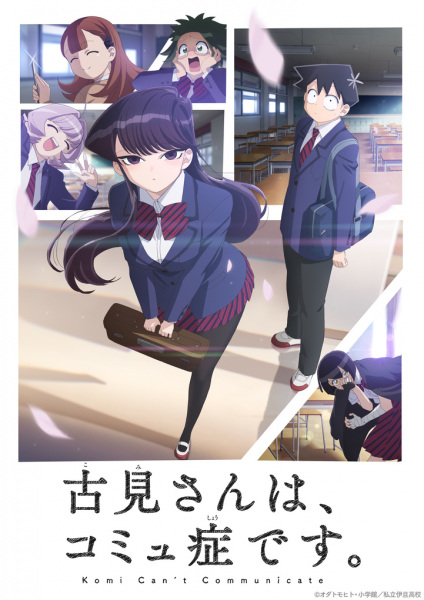
4. Komi Can't Communicate — the ensemble tenderness, scaled down
Komi Can't Communicate (Codex 6.85) is on this list because of one criterion: themes at 7.0, doing very similar work to what 3-E's End Class hierarchy does — namely, taking a population of social outcasts and treating each one's interior life as load-bearing rather than punchline. OLM's 2021 adaptation scores 7.5 on animation, well above Lerche's effort, and the character writing (7.3) honors the same ensemble logic Assassination Classroom uses: thirty-plus students, each given at least one episode where they stop being scenery.
The reason it's fourth and not higher is that Komi's stakes are conversational where Assassination Classroom's are existential. There is no Mach 20 monster, no contract to assassinate, no deferred mystery box. The breadth-over-depth weakness the Codex flags in Assassination Classroom's character writing — tidy single-episode growth doses — is also Komi's design philosophy, and the rubric reads them as kin.
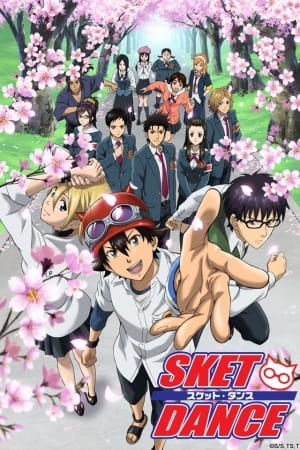
3. Sket Dance — the closest thing to Class 3-E energy on this list
Sket Dance (Codex 7.47) sits within 0.06 of Assassination Classroom on the Codex, and the rubric agreement is almost embarrassing: character 8.5 (against AC's 8.0), themes 7.8 (against 8.5), story 7.5 (identical). Tatsunoko Production's 77-episode run is a school comedy that quietly metabolizes into one of the most emotionally serious ensemble pieces of its era — Bossun, Himeko, and Switch each carry an arc that would feel at home in 3-E's late-season character spotlights.
What makes this the third-place pick rather than the first is reach. Sket Dance lands at 6.0 on cultural impact (Assassination Classroom is at 7.0), and the show's status as a perpetually underseen Jump entry means recommending it feels like passing a note rather than handing over a torch. But criterion-for-criterion, it's the closest match in this list — if you loved how Assassination Classroom let comedy and melancholy share a scene, Sket Dance has 77 episodes of that exact tonal coexistence.
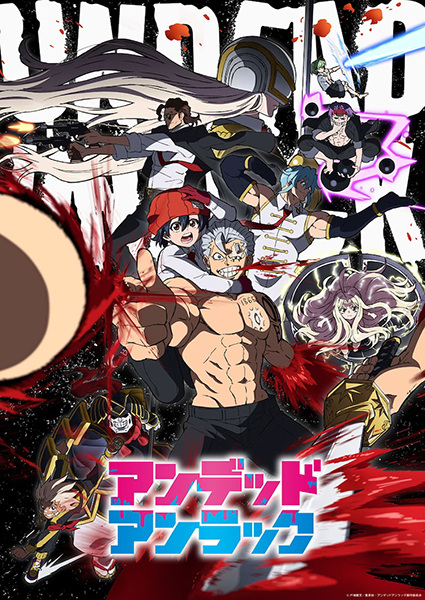
2. Undead Unluck — the closest Codex score, the freshest premise
Undead Unluck (Codex 7.64) is the numerical neighbor: 0.11 above Assassination Classroom, with a profile that reads almost like a parallel reading of the same rubric. Character 8.0 matches AC exactly. Story 7.2 is within striking distance of 7.5. Themes 7.5 lands a point below AC's 8.5 but in the same conceptual territory — Fuuko Izumo's "Unluck" ability, which kills anyone she touches with affection, is structurally the same premise as Nagisa being trained to assassinate the teacher he loves.
David Production's 2023 adaptation also clears Lerche on animation (7.8 vs 6.5) and crushes it on world-building (8.3 vs 7.0), which is where the show separates itself: the UMA bureaucracy and the rule-based negation powers give Undead Unluck the dense internal logic the Codex specifically docks Assassination Classroom for withholding. If the anti-sensei weaponry — BB pellets that harm only Koro-sensei — was your favorite kind of internally-consistent absurdity, Undead Unluck is built from that exact instinct, scaled up.
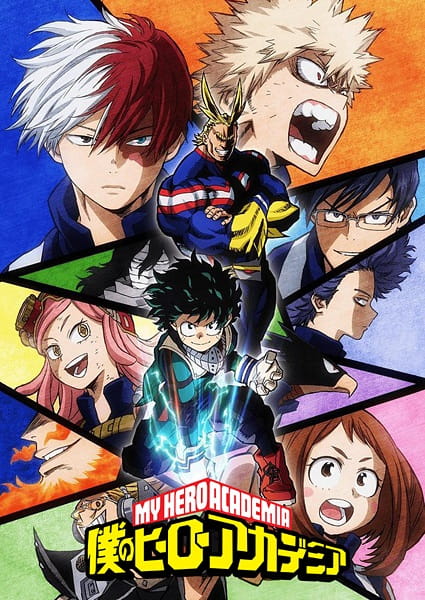
1. My Hero Academia — the show Assassination Classroom is constantly compared to, for once correctly
My Hero Academia (Codex 8.40) tops this list because every criterion that carries Assassination Classroom is upgraded here, not replaced. Character 9.0 against AC's 8.0. Themes 8.3 against 8.5 — basically a draw, with the school-as-salvation thesis intact and recoded as hero-as-vocation. Story 8.2 against 7.5. Cultural 8.5 against 7.0, which is the Codex's blunt acknowledgment that U.A. became what Kunugigaoka's End Class only gestured toward.
Bones' 2017 production also fixes the single most identifiable weakness in Assassination Classroom's scorecard: animation jumps from 6.5 to 8.7. The Stain arc, the Sports Festival's Todoroki-Midoriya match, the U.S.J. invasion — these are staged with a visual ambition Lerche's clean-but-flat direction never reaches. The deeper Codex case for the show is broken down in the dedicated Anime Like My Hero Academia write-up, but for an AC fan the pitch is simple: it's the same emotional engine — a teacher who believes in the worth of officially-discarded kids — built on a production that earns the comparison.
The counter-argument: doesn't this just recommend more shonen?
The honest opposing read is that this list dodges the obvious move — recommending something tonally unlike Assassination Classroom but thematically aligned. Mob Psycho 100's pedagogical core. March Comes In Like a Lion's case for found-family salvation. The kind of cross-genre jump the Re:Zero recommendation post leans into for its top picks.
The rubric reads it differently. Assassination Classroom's score is anchored in shonen conventions executed sincerely — the ensemble, the school year clock, the comedy-tragedy oscillation. Recommending outside the demographic means losing the structural rhyme that makes the emotional payoff land. A criterion-matched recommendation honors what the viewer actually responded to, not what a critic wishes they'd responded to.
The verdict
Sort by criterion-match, not by tag, and the order is My Hero Academia, Undead Unluck, Sket Dance, Komi Can't Communicate, Soul Eater — closest critical profile first, furthest last. The Codex's job isn't to flatter the recommendation engine; it's to tell you which show actually delivers the qualities that made Koro-sensei matter. Watch them in that order, and the rubric earns its keep.
Featured in the Codex



More from The Codex
The Seven Deadly Sins Is a 6.60 Wearing a 7.60 Costume: A One-Point Gap Earned by Groping Gags and Convenient Flashbacks
The Seven Deadly Sins scores 6.60 on the Codex against MyAnimeList's 7.60 because the crowd is grading a Netflix breakout and a Ban-and-King friendship, not the 24 episodes A-1 Pictures actually broadcast in 2014.
The 10.0 That Built a Sunday: How Sazae-san's Cultural Score Carries a 6.58 Scorecard
Sazae-san is a case study in how a single criterion — cultural — can define how a show is remembered, and the 10.0 the Codex hands Eiken's 1969 institution is doing every bit of the heavy lifting its other five scores refuse to.
The Sebastian Problem: Why Black Butler Sits 1.10 Below Its MAL Line and the Crowd Refuses to Notice
Black Butler (Kuroshitsuji) posts a 1.10-point gap between MyAnimeList's 7.65 and the Codex 6.55 because the crowd is grading Sebastian's silhouette and a Phantomhive aesthetic, not the anime-original finale A-1 Pictures actually shipped in 2009.
Discussion
Set a display name above to post.
Loading discussion…