Anime Like My Hero Academia: 5 the Codex Rubric Says You'll Actually Love
Fans of My Hero Academia respond to its strongest criteria — character writing, animation, cultural weight — and these five picks deliver the same qualities, ranked by how close their critical profile sits to it, not by vibes.
Fans of My Hero Academia respond to its strongest criteria — character writing, animation, cultural weight — and these five picks deliver the same qualities, ranked by how close their critical profile sits to it, not by vibes.
The Sports Festival arc is the single most-cited stretch in 2010s shonen for a reason: it's the cleanest example we have of a tournament structure used to extract character rather than spectacle. Midoriya pushing Todoroki to claim his fire in episode 23 isn't a power-up beat — it's a thesis about self-determination delivered through choreography. That's the bar. That's what we're matching against.
What My Hero Academia Actually Does Well
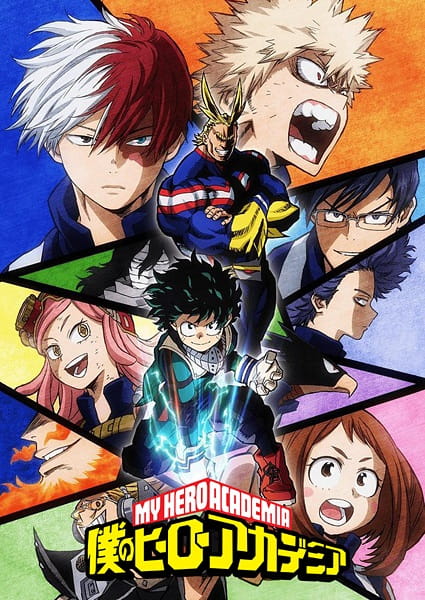
Anime Codex scores My Hero Academia (Bones, 2017, 25 episodes) at 8.40, against a MyAnimeList average of 8.05. The catalogue numbers tell a specific story about what's working. Character lands at 9.0, animation at 8.7, cultural impact at 8.5, themes at 8.3, story at 8.2, and world-building trails at 7.5. The fan response isn't to a balanced product; it's to a show carried by ensemble writing and Bones' sakuga peaks, with the quirk system contributing texture rather than invention.
The standard "anime like My Hero Academia" recommendation list ignores all of that. It pattern-matches on premise — superpowers, school setting, ensemble cast — and surfaces whatever the algorithm thinks rhymes. That's how you end up recommending power-fantasy isekai to people who fell in love with Todoroki refusing his father's legacy. The rubric departs here. We're ranking by criterion overlap with MHA's strongest axes, not by surface tags. The order below is deliberate: closest critical profile first.
Assassination Classroom Shares the Ensemble Discipline
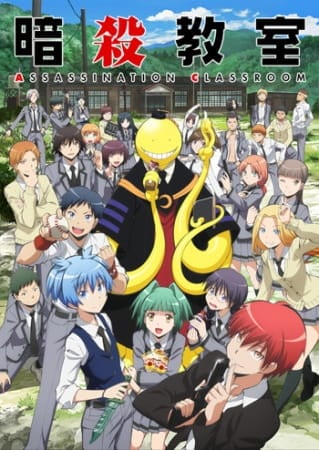
Assassination Classroom (Lerche, 2015, 22 episodes) sits at a Codex 7.53, with character at 8.0 and story at 7.5. That character number is the load-bearing one. Korosensei's classroom operates on the same structural principle as Class 1-A: a large ensemble where the writing refuses to let anyone become decoration. Karma, Nagisa, Karasuma, Irina — every named student gets an arc that meaningfully shifts the group dynamic, and the show's willingness to take its premise seriously (these are children training to kill their teacher) keeps the comedy from neutering the stakes.
The rhyme with MHA is in the pedagogical frame. Both shows treat the classroom as a moral laboratory where adult mentors expose students to ideas about violence, responsibility, and self-determination. All Might's "you can be a hero" and Korosensei's whole existence are the same beat in different keys. MyAnimeList puts it at 8.07, marginally above MHA on the crowd's number — the Codex disagrees on the overall but agrees the character axis is where it earns its keep.
Undead Unluck Hits the Animation Peaks
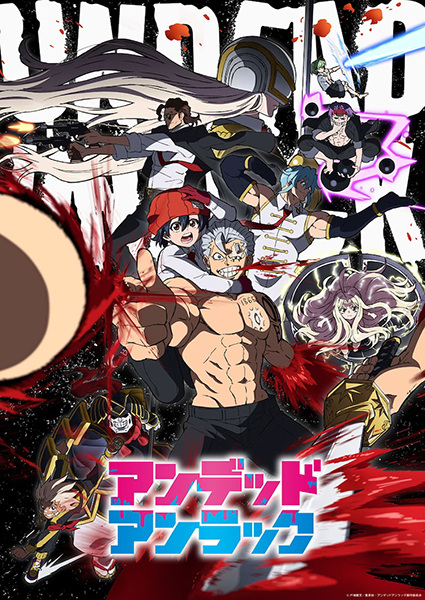
Undead Unluck (David Production, 2023, 24 episodes) lands at 7.64 on the Codex. The criterion breakdown is the sell: character 8.0, world-building 8.3, animation 7.8, themes 7.5. That's a profile that mirrors MHA's shape — high on character and animation, with a power system (Negators) that does the same job the quirk catalogue does, giving the action choreography a vocabulary.
David Production brings the same kind of sakuga commitment that Bones brought to the Midoriya-Todoroki duel. The Andy-Fuuko dynamic carries the same kind of emotional load the Bakugo-Midoriya rivalry carries in MHA — a relationship where the action sequences are character writing in motion. The 6.0 cultural score is honest; this show hasn't permeated yet. But on the axes MHA fans actually respond to, it's the closest match on this list, which is why it sits this high despite the lower overall.
JoJo's Bizarre Adventure: Stardust Crusaders Brings the Cultural Weight
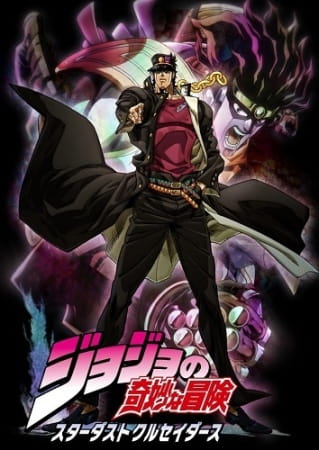
JoJo's Bizarre Adventure (David Production, 2014, 24 episodes) hits 7.55 on the Codex, with world-building at 9.0 and cultural impact at 9.0. Those two numbers are why it's here. MHA's 8.5 cultural score reflects its position as a defining shonen of its generation; JoJo sits even higher on that axis because Stand combat rewrote how shonen power systems could be designed. Every quirk in Class 1-A owes structural debt to the Stand discourse — abilities as character expression, weaknesses as personality.
The character score (6.8) is lower than MHA's, and that's the honest gap. Jotaro's crew doesn't get the interior work Todoroki gets in episode 23. But if what hooked you on MHA was the sense that you were watching a show that mattered to the medium — the merchandising footprint, the cosplay ubiquity, the feeling that this thing was redefining the lineup — JoJo is the senior text doing the same job. For more on how cultural weight shapes legacy scoring, the most influential anime list makes the case at length.
Wind Breaker Carries the Animation and the Ensemble
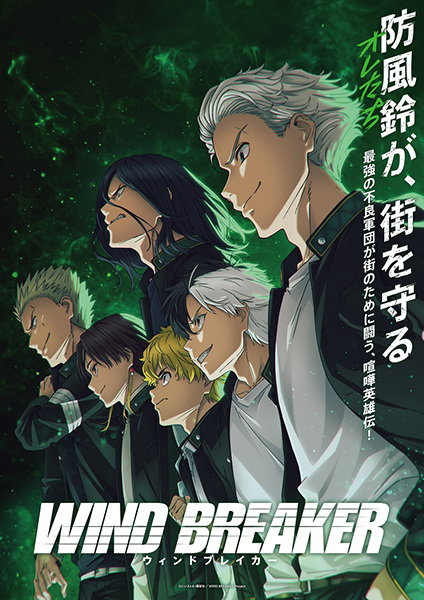
Wind Breaker (CloverWorks, 2024, 13 episodes) scores 6.99 on the Codex. Animation lands at 7.8, character at 7.3, themes at 7.0. The MAL number is 7.71. This is the closest analogue to MHA's school-as-battleground frame — Bofurin's hierarchy is functionally a hero agency without the legal scaffolding, and Sakura's arc from outsider to accepted member is Midoriya's first-season journey transposed into delinquent register.
CloverWorks brings real animation weight to the fight scenes, in the way Bones brings it to MHA's set-pieces. The themes around protection-as-identity — what it means to fight for a community rather than for yourself — are the same thematic territory MHA stakes out with the hero industry. The overall score is lower because the world-building and story criteria don't reach for as much. But on the specific axes MHA fans care about, it delivers.
Wistoria: Wand and Sword Is the Underdog-at-the-Academy Beat
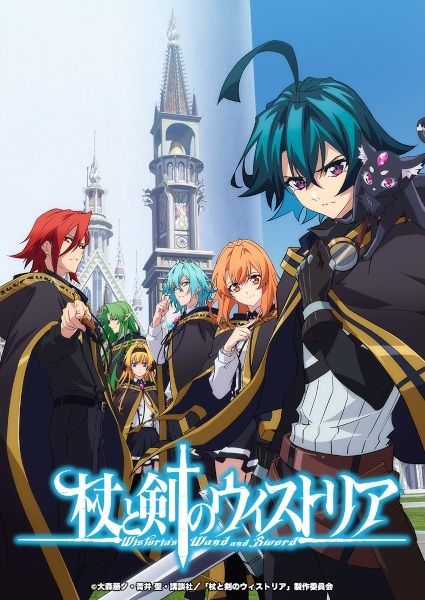
Tsue to Tsurugi no Wistoria (Actas, 2024, 12 episodes) scores 6.27 on the Codex — the lowest on this list, and the most honest fit on premise. Will Serfort's situation is structurally identical to Midoriya's at the start of MHA: a student at an elite magic academy who can't perform the discipline everyone else takes for granted, who substitutes a different aptitude (swordsmanship for One For All). The character score (6.5) and story score (6.3) reflect a less ambitious execution than Bones managed, and the animation at 6.0 is the real ceiling — Actas isn't operating in the same budget bracket.
It's here because if the specific narrative shape of "Quirkless kid earns his place at U.A." is what you want again, this is the show that gives it to you most directly. The rubric isn't pretending it matches MHA's overall quality. It's matching the beat.
The Counter-Argument: Just Watch More Shonen
The reasonable objection is that anyone who loved My Hero Academia should just queue up the genre's blue-chip catalogue — Hunter × Hunter, Jujutsu Kaisen, the canonical battle shonen — and stop overthinking it. Premise overlap is enough; the rubric is academic.
The rubric reads it differently because not all shonen share MHA's profile. A show can be excellent and still be the wrong recommendation. Sending an MHA fan to a power-fantasy isekai because the lead has powers is a category error — the response is to character ensemble and animation peaks, not to power escalation. The list above is ordered by how closely each show's criterion profile sits to MHA's, with character and animation weighted highest because those are MHA's load-bearing axes. That's a sharper instrument than genre matching, and you can see the same approach applied to Naruto and Demon Slayer elsewhere on the site.
Verdict
My Hero Academia earns its 8.40 on character writing and animation, and the five shows above are ranked by how closely they replicate that specific load-bearing pair. Undead Unluck is the tightest match on profile; Wistoria is the tightest match on premise. Pick by which one you actually want.
Featured in the Codex

More from The Codex
The Seven Deadly Sins Is a 6.60 Wearing a 7.60 Costume: A One-Point Gap Earned by Groping Gags and Convenient Flashbacks
The Seven Deadly Sins scores 6.60 on the Codex against MyAnimeList's 7.60 because the crowd is grading a Netflix breakout and a Ban-and-King friendship, not the 24 episodes A-1 Pictures actually broadcast in 2014.
The 10.0 That Built a Sunday: How Sazae-san's Cultural Score Carries a 6.58 Scorecard
Sazae-san is a case study in how a single criterion — cultural — can define how a show is remembered, and the 10.0 the Codex hands Eiken's 1969 institution is doing every bit of the heavy lifting its other five scores refuse to.
The Sebastian Problem: Why Black Butler Sits 1.10 Below Its MAL Line and the Crowd Refuses to Notice
Black Butler (Kuroshitsuji) posts a 1.10-point gap between MyAnimeList's 7.65 and the Codex 6.55 because the crowd is grading Sebastian's silhouette and a Phantomhive aesthetic, not the anime-original finale A-1 Pictures actually shipped in 2009.
Discussion
Set a display name above to post.
Loading discussion…