The 10 Anime That Score Highest on World-Building & Power Systems, by the Codex Rubric
Most "best anime" lists rank by overall vibe. This one isolates a single axis — world-building & power systems — and lets the rubric pick the winners.
Most "best anime" lists rank by overall vibe. This one isolates a single axis — world-building & power systems — and lets the rubric pick the winners.
The best world-builders in anime are not always the best anime. That's the uncomfortable consequence of evaluating a medium across six criteria instead of one, and it's why the list below diverges from every "best anime worldbuilding" listicle the algorithm has fed you this year. A 9.5 on world-building is a separate fact from an 8.6 overall, and the Codex rubric — which weights story, character, themes, world-building, animation, and cultural impact independently before genre-weighting them — is designed to expose exactly that gap.
The Discourse Problem
Search "best anime world-building" and you'll get the same six shows: Attack on Titan, Fullmetal Alchemist: Brotherhood, One Piece, Hunter × Hunter, Made in Abyss, and whatever isekai is currently trending. These lists rank by overall reputation and then retroactively justify the world-building criterion. The MyAnimeList top 50 reinforces this — a 9.03 on MAL for Hunter × Hunter (2011) gets read as "great worldbuilding" because the show is great, not because the criterion was isolated.
The Codex methodology, explained here in detail, inverts that. World-building & power systems is scored independently: how internally consistent is the system, how generative is it of new dramatic situations, how thoroughly does the setting reward attention. The result is a top ten where two of the entries — JoJo's Bizarre Adventure at a 7.55 Codex and Akira at 7.98 — would not crack a general top 30, but rank fifth and sixth on this specific axis. That's the point.
The List, Ranked
1. Hunter × Hunter (2011) — World 9.5, Codex 9.23
Madhouse's 148-episode adaptation earns the highest possible world-building tier because Togashi treats Nen as a closed mathematical system with public rules, hidden subclauses, and a contract economy. The Chimera Ant arc's queen-king-royal-guard hierarchy is not a power-scaling exercise; it's an ethnographic study of a species inventing nationhood in real time. Greed Island is a videogame inside a worldbuilding exercise inside a manhunt. The Codex has argued elsewhere that Hunter × Hunter is misfiled rather than underrated — the 9.5 here is the criterion that does the heaviest lifting.
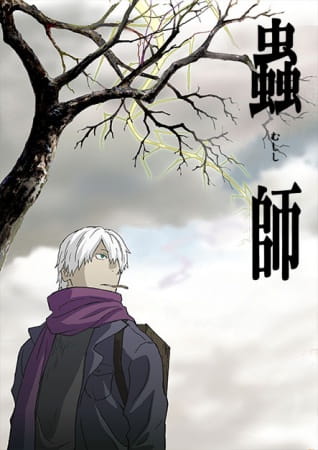
2. Mushishi — World 9.5, Codex 8.68
Artland's 26-episode 2005 run scores identically on world-building to Hunter × Hunter despite operating on the opposite principle. Mushi are not a power system in the shonen sense; they are a parallel ecology of pre-life organisms that interact with human biology in ways governed by rules the show refuses to explain in dialogue. Yuki Urushibara's worldview is anthropological, not mechanical, and the rubric treats anthropological rigor as equivalent to combat-system rigor when both produce a setting that generates new stories episode after episode. The 8.68 overall is dragged by a deliberately low character score (7.5) — Ginko is a vector, not an arc.
3. Made in Abyss — World 9.5, Codex 8.60
Kinema Citrus's 13-episode first season is the rare modern show whose world-building criterion outranks every other axis it has. The Abyss's curse layers, the Whistle hierarchy, and the relics economy form a vertical worldbuilding structure so disciplined that the show can spend ten minutes on a topographical cross-section without losing momentum. The 8.60 Codex reflects a setting that exceeds the writing around it — themes 9.0, world 9.5, story only 8.5.
4. Tongari Boushi no Atelier — World 9.2, Codex 8.50
The BUG FILMS 2026 adaptation is the youngest entry on this list and the most fragile. Kamome Shirahama's manga built a magic system around inscription — spells exist as drawn glyphs, forgery is the central crime, and the entire ethical structure of witchcraft follows from a single anti-proliferation rule. The Codex has previously flagged the adaptation risk; the 9.2 world-building score reflects the source's rigor, not faith in the studio.
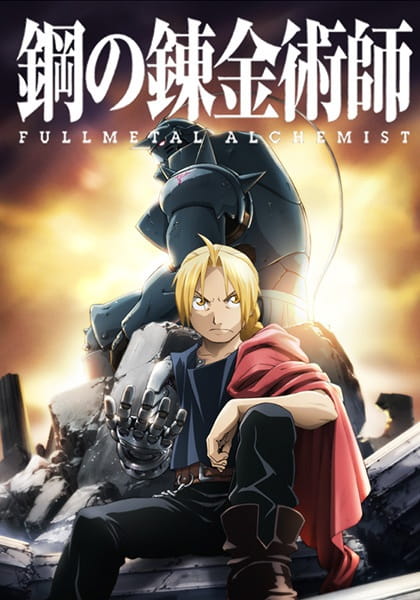
5. Fullmetal Alchemist: Brotherhood — World 9.0, Codex 9.25
Bones's 64-episode Brotherhood is the only show in the top five whose overall Codex score (9.25) exceeds its world-building score (9.0), and that's instructive: alchemy's equivalent-exchange rule is elegant, Amestris's military-political structure is functional, and the homunculus hierarchy maps cleanly onto the seven sins. But the system is closed by design — once you know the rules, the rules don't expand. That's not a flaw, but it's why FMAB sits fifth on this axis while ranking near the top of the seinen-shonen map overall.
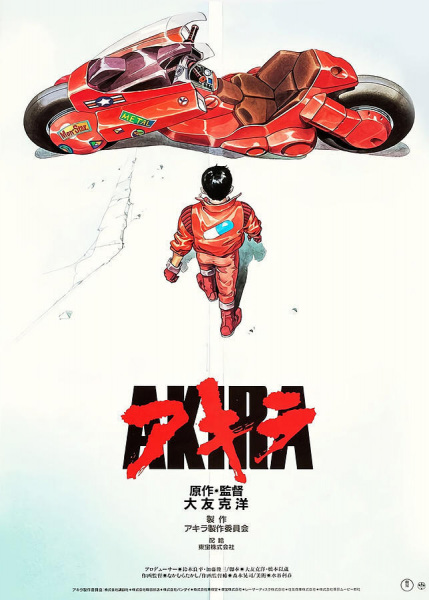
6. Akira — World 9.0, Codex 7.98
Tokyo Movie Shinsha's single 1988 film scores a 9.0 on world-building and 10.0 on cultural impact, dragged to a 7.98 overall by a deliberately fragmentary 7.5 story score. Neo-Tokyo is not explained; it is depicted with such density — the bosozoku gangs, the Akira project bureaucracy, the cult of Lady Miyako, the espers — that the worldbuilding criterion rewards Ōtomo's refusal to exposit. The power system, the numbered subjects and their psionic decay, is one of the few in anime where "power" is also "illness."
7. JoJo's Bizarre Adventure — World 9.0, Codex 7.55
David Production's 2014 Stardust Crusaders entry is the lowest overall score in the top seven and the clearest demonstration of the Codex's axis-isolation logic. Stand combat is the most generative power system in shonen — every Stand is a self-contained logic puzzle, every fight resolves on a rules clarification. The 6.5 themes and 6.8 character scores are why the Codex is 7.55. The 9.0 world is why the show belongs here.
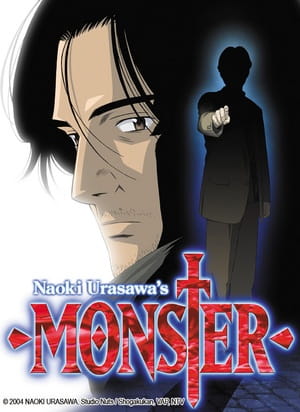
8. Monster — World 8.8, Codex 9.24
Madhouse's 74-episode Monster is the second-highest Codex score on this list and the lowest world-building score in the top eight, which is exactly the kind of inversion this exercise is built to surface. Urasawa's Cold War European geography — the orphanage program at 511 Kinderheim, the Czech-German border, the Red Rose Mansion — is researched to a degree most thrillers don't attempt. There is no power system; the "worldbuilding" is institutional. The full Monster review treats this in more depth.
9. Pluto — World 8.7, Codex 8.96
Studio M2's 8-episode 2023 Netflix adaptation builds a robot-rights jurisprudence and an Article 13 backstory that function as worldbuilding even though the runtime should not permit it. The full Codex placement of Pluto on the seinen map makes the case that the 8.7 here is impressive given the episode count, not despite it.
10. Heavenly Delusion — World 8.7, Codex 8.26
Production I.G's 13-episode 2023 adaptation lands here because the dual-timeline structure — the post-apocalyptic outside and the sealed facility — is a worldbuilding mechanism, not a plot device. The 8.7 world score is provisional; if the second cour confirms the implied biological premise, this entry moves up the list.
The Counter-Argument
The strongest objection is that "world-building & power systems" collapses two different things. A shonen battle system and a seinen ecology are not the same criterion, and stapling them together flatters Hunter × Hunter and Mushishi equally for opposite virtues. Fair. The Codex's defense is that both are evaluated on the same underlying question — does the setting generate new dramatic situations indefinitely, or does it exhaust itself — and on that question, Nen and Mushi behave identically. A power system that stops generating is just a setting. A setting that keeps generating is a power system.
Verdict
Rank by overall Codex score and Monster, Brotherhood, and Hunter × Hunter dominate. Rank by world-building and the list reshuffles into something stranger, more honest, and more useful. The 9.5s at the top — Hunter × Hunter, Mushishi, Made in Abyss — are the shows whose settings keep working after the credits roll. That is what the criterion measures, and that is what the rubric rewards.
Featured in the Codex




More from The Codex
The Seven Deadly Sins Is a 6.60 Wearing a 7.60 Costume: A One-Point Gap Earned by Groping Gags and Convenient Flashbacks
The Seven Deadly Sins scores 6.60 on the Codex against MyAnimeList's 7.60 because the crowd is grading a Netflix breakout and a Ban-and-King friendship, not the 24 episodes A-1 Pictures actually broadcast in 2014.
The 10.0 That Built a Sunday: How Sazae-san's Cultural Score Carries a 6.58 Scorecard
Sazae-san is a case study in how a single criterion — cultural — can define how a show is remembered, and the 10.0 the Codex hands Eiken's 1969 institution is doing every bit of the heavy lifting its other five scores refuse to.
The Sebastian Problem: Why Black Butler Sits 1.10 Below Its MAL Line and the Crowd Refuses to Notice
Black Butler (Kuroshitsuji) posts a 1.10-point gap between MyAnimeList's 7.65 and the Codex 6.55 because the crowd is grading Sebastian's silhouette and a Phantomhive aesthetic, not the anime-original finale A-1 Pictures actually shipped in 2009.
Discussion
Set a display name above to post.
Loading discussion…