Anime Like Demon Slayer: Kimetsu no Yaiba — 5 Shows the Codex Rubric Says You'll Actually Love
Fans of Demon Slayer respond to its strongest criteria; these five picks deliver the same qualities, ranked by how close their critical profile sits to it — not by vibes.
Fans of Demon Slayer respond to its strongest criteria; these five picks deliver the same qualities, ranked by how close their critical profile sits to it — not by vibes.
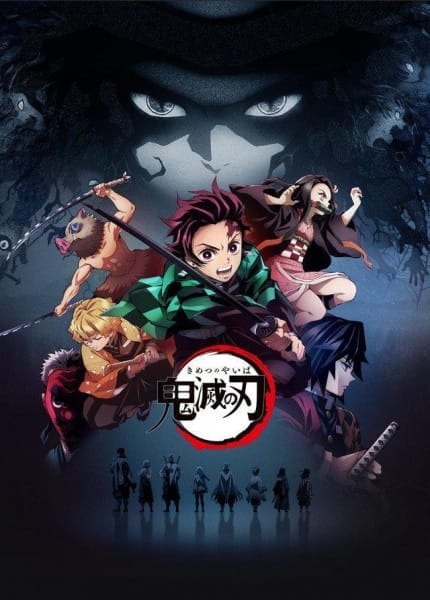
Demon Slayer: Kimetsu no Yaiba sits at 7.15 on the Codex not because it's a story revolution — it isn't — but because ufotable built the most theatrical action production Weekly Shonen Jump has ever received, then wrapped it around a protagonist who refuses to hate the things he kills. That combination is rarer than the discourse admits, and it's the reason the recommendation engine for this show is harder to fill than it looks.
What the Rubric Actually Likes About Demon Slayer
Strip the 7.15 down to its components and the shape is obvious. Animation lands at 9.5 — the Tanjirou vs. Rui fight in episode 19 is a watershed in TV production, and the Water Breathing compositing is the best argument anyone has made for CG-assisted 2D this decade. Cultural impact lands at 9.0; the 2019 broadcast reset what mainstream audiences expected from a shonen adaptation. Themes hold at 7.0 on the strength of Tanjirou's compassion for dying demons — the Rui family flashback is the cleanest example of the show humanizing its monsters. Story (6.8), character (6.5), and world (6.0) are the soft spots: a competent mission-of-the-week structure, a hero who never internally changes, and a Breathing Style system that's more flourish than mechanic.
So when fans ask for anime like Demon Slayer: Kimetsu no Yaiba, what they're really asking for is some combination of: supernatural-hunter premise, a protagonist with moral warmth, demons or spirits with backstories worth grieving, and production values that respect the fight choreography. MyAnimeList's 8.40 community average will steer you toward whatever's loud and recent. The rubric steers somewhere stranger. If you want the broader argument for why MAL averages flatten this kind of recommendation, the Codex methodology piece lays out the six-criterion case.
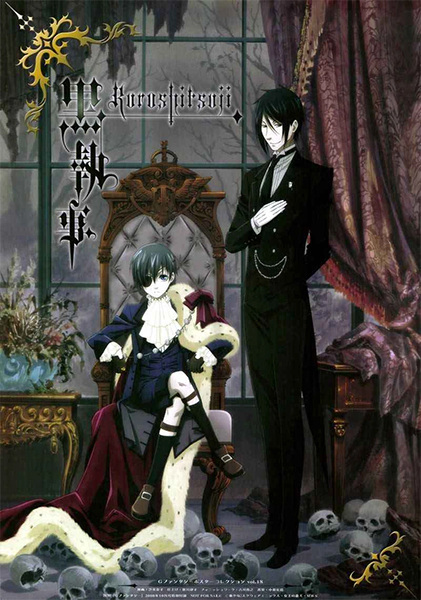
1. Black Butler (Kuroshitsuji) — Codex 6.55
A-1 Pictures' 2008 adaptation is the closest tonal cousin Demon Slayer has in the catalogue: a young protagonist bound by a supernatural contract, a Taisho-adjacent period aesthetic (Victorian London rather than Taisho Japan, but the visual sensibility rhymes), and a worldview where the line between human and demon is the show's central moral question. Its 7.0 world-building score outpaces Demon Slayer's 6.0 — Yana Toboso's London is more thoroughly built out than the season-one Breathing Style system — and its 7.5 animation, while not in ufotable's altitude, is the strongest signal A-1 sent in 2008. The Jack the Ripper arc and the curry competition both operate the same way Demon Slayer's mission structure does: episodic, escalating, tied to a slow-burning master arc. If what you loved was the gothic atmospherics and the human-demon contract premise, this is the closest match in the catalogue.
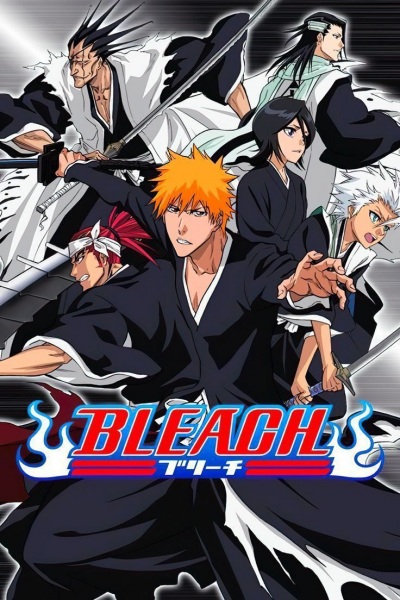
2. Bleach — Codex 6.55
Studio Pierrot's 366-episode behemoth is the template Demon Slayer was iterating on. A protagonist who fights spiritual monsters, a tiered hierarchy of antagonists (Hollows, Arrancar, Espada — the Twelve Kizuki's structural ancestor), and a sword-driven combat language that builds power through naming. Bleach's 6.5 story and 6.0 character scores sit just under Demon Slayer's 6.8 and 6.5 — a near-identical critical profile on the narrative axes, which is what justifies the placement. The Soul Society arc is the strongest extended run in shonen of its era, and Kubo's character silhouettes are still the gold standard for Jump character design. What it lacks in ufotable-tier compositing it returns in scope: this is what the genre looks like when it's allowed to breathe across hundreds of episodes.
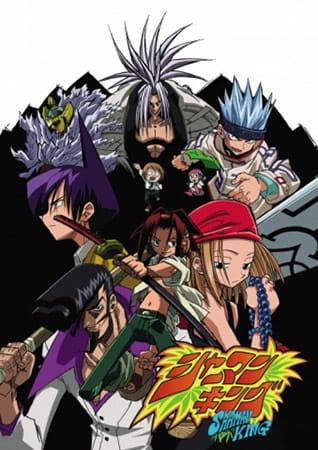
3. Shaman King — Codex 6.00
Xebec's 2001 adaptation is the deepest cut on this list and the one that pays off if your love of Demon Slayer is rooted in the spirit-companion bond between Tanjirou and Nezuko. Yoh and Amidamaru's partnership is the structural ancestor of every modern shonen pairing where one half is human and the other half exists in a liminal supernatural state. The Codex gives it 7.0 on world-building — stronger than Demon Slayer's 6.0 — because the Shaman Fight tournament and the integumentary spirit-medium logic are more rule-governed than season-one Breathing Styles. Animation lands at 5.5, the lowest on this list, and that's the honest tradeoff: you're trading ufotable's spectacle for a more inventive cosmology. If you came to Demon Slayer for Nezuko, this is where you go next.
4. Mob Psycho 100 — Codex 9.05
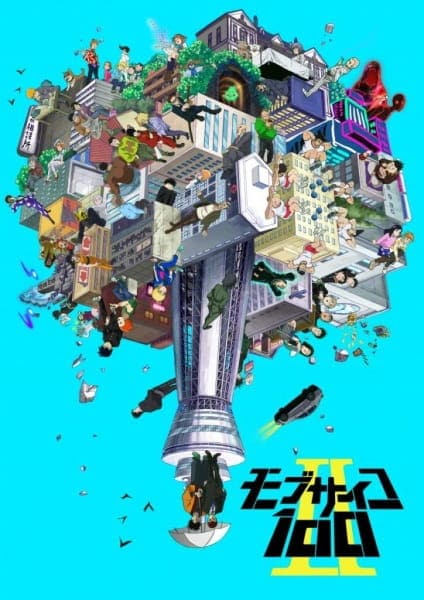
The highest-scoring recommendation on this list, and the one where the rubric's logic gets interesting. Mob Psycho shares Demon Slayer's defining strength — Bones' animation lands at 9.5, identical to ufotable's — but it does what Demon Slayer doesn't: it scores 9.7 on character and 9.2 on themes, which is where Demon Slayer's 6.5 and 7.0 are softest. If Tanjirou's compassion for monsters is the thematic hook you respond to, Mob is the show that takes that exact instinct and builds an entire psychology around it. Shigeo's refusal to use his power against people who don't deserve it is the same moral spine Tanjirou has, expressed by a protagonist who actually changes across his runtime. The full Mob Psycho 100 review maps the season-two coordinates in detail. This is the upgrade pick — same animation tier, dramatically better writing.
5. Kekkaishi — Codex 6.75
Sunrise's 52-episode adaptation is the most direct structural sibling Demon Slayer has: a young protagonist from a hereditary monster-hunting bloodline, demons that need to be banished rather than simply slain, and a quiet emphasis on the moral weight of killing things that used to be human. Its 6.5 story, 7.0 character, 6.8 themes, and 7.5 world scores all sit above Demon Slayer's equivalents — the only place it loses ground is animation (6.5 vs. 9.5) and cultural footprint (5.0 vs. 9.0). What you're trading is spectacle for substance. Yoshimori and Tokine's partnership has the kind of slow-build interiority Tanjirou and Nezuko gesture at but don't quite reach in 26 episodes.
The Counter-Argument: Why Not Just Recommend Jujutsu Kaisen?
The obvious objection is that the most popular Demon Slayer recommendation engine — the one Twitter runs — would put Jujutsu Kaisen, Chainsaw Man, or Hell's Paradise at the top of this list. They share the modern-shonen-with-prestige-animation profile and they're contemporaneous. The rubric reads it differently. As the Jujutsu Kaisen piece argues, JJK's appeal is structurally similar to Demon Slayer's — production carrying a workmanlike script — which makes it a redundant recommendation rather than a complementary one. The five picks above each share a specific criterion with Demon Slayer: Black Butler the contract premise, Bleach the structural template, Shaman King the spirit bond, Mob the thematic upgrade, Kekkaishi the moral architecture. That's a better-shaped recommendation set than five variations on "modern shonen with good fights."
Verdict
These five aren't the five most popular shows next to Demon Slayer's MAL page — they're the five whose critical profiles align with the criteria Demon Slayer actually wins on, in descending order of tonal proximity. Mob Psycho is the only one that outscores it on the Codex, and it does so by being the version of Demon Slayer that took its protagonist seriously. Watch in order, and you'll see exactly which parts of Demon Slayer you were actually responding to.
Featured in the Codex


More from The Codex
The Seven Deadly Sins Is a 6.60 Wearing a 7.60 Costume: A One-Point Gap Earned by Groping Gags and Convenient Flashbacks
The Seven Deadly Sins scores 6.60 on the Codex against MyAnimeList's 7.60 because the crowd is grading a Netflix breakout and a Ban-and-King friendship, not the 24 episodes A-1 Pictures actually broadcast in 2014.
The 10.0 That Built a Sunday: How Sazae-san's Cultural Score Carries a 6.58 Scorecard
Sazae-san is a case study in how a single criterion — cultural — can define how a show is remembered, and the 10.0 the Codex hands Eiken's 1969 institution is doing every bit of the heavy lifting its other five scores refuse to.
The Sebastian Problem: Why Black Butler Sits 1.10 Below Its MAL Line and the Crowd Refuses to Notice
Black Butler (Kuroshitsuji) posts a 1.10-point gap between MyAnimeList's 7.65 and the Codex 6.55 because the crowd is grading Sebastian's silhouette and a Phantomhive aesthetic, not the anime-original finale A-1 Pictures actually shipped in 2009.
Discussion
Set a display name above to post.
Loading discussion…