Jujutsu Kaisen's Writing Is Basic. The Show Is Still One of the Best Things MAPPA Has Ever Animated.
Gege Akutami's script is a workmanlike shonen blueprint — but the fights, the pace, and the cursed-energy logic make Jujutsu Kaisen impossible to look away from, and the rubric agrees.
Gege Akutami's script is a workmanlike shonen blueprint — but the fights, the pace, and the cursed-energy logic make Jujutsu Kaisen impossible to look away from, and the rubric agrees.
The first time I tried Jujutsu Kaisen, I bounced off it. The manga's opening — Yuji eating Sukuna's finger to save his friends — read as the laziest possible inciting incident, a checklist beat dressed in shonen drag. "What a lack of creativity," I thought, and dropped it. That instinct was correct about the writing. It was completely wrong about the show. Jujutsu Kaisen earns a Codex weighted score of 8.54 not because Akutami is a great prose stylist, but because MAPPA, Hiroshi Seko's series composition, and a system of curses with genuine tactical depth turn basic shonen architecture into some of the most exhilarating action television of the last decade.
The Consensus Is "Typical Shonen." The Consensus Is Half-Right and Entirely Wrong.
The lazy reading — louder online than it deserves to be — is that Jujutsu Kaisen is your typical shonen: a cursed object, a chosen vessel, a school of weirdos, a tournament-shaped middle, a sealed mentor, a final boss telegraphed from episode one. AniList's 84 and the manga-reader chorus often frame the show as a Bleach-coded retread benefiting from MAPPA's sakuga budget. Half of that is true. The bones of this story are not original, and Akutami's character writing — particularly around Megumi, whose interiority remains stubbornly closed off, and Nobara, who gets sidelined into ambiguity that reads more like an authorial shrug than a choice — is genuinely a weak point. The Codex character score of 8.7 is buoyed almost entirely by Gojo and Geto's split across the Hidden Inventory arc, not by the protagonist trio.
But the dismissal stops there because the people making it are grading the wrong rubric. Jujutsu Kaisen is not interesting because of what's written. It's interesting because of what's staged. That distinction is where the show separates itself from the eight-season chase My Hero Academia has been running, and from the compositing-dependent spectacle Demon Slayer survives on. JJK has flaws Demon Slayer doesn't; it also has a combat grammar Demon Slayer has never come close to.
The Cursed Energy System Is Doing the Heavy Lifting the Script Won't
The world score lands at 8.2 for a specific reason: Domain Expansions are not power-scaling theater. They are tactical objects with binding-vow mechanics, sure-hit guarantees, simple-domain counters, and territorial logic that actually constrains the fights inside them. When Sukuna carves Shibuya in half with Malevolent Shrine, the spectacle works because the rules around it — the cost, the reach, the inability to refuse the hit once the domain closes — have been laid out across a season. When Dagon's beach materializes, the fight changes shape because the environment has changed shape.
This is where the show outpaces its own writing. Akutami's dialogue is functional at best, his thematic gestures (Jogo's eleventh-hour humanity speech, Choso's brotherhood pivot) often lean on sentimentality the script hasn't earned, and the cursed technique rules are dense enough to require exposition dumps that frequently break pace. None of that matters in motion. The system is the worldbuilding, and the worldbuilding is the reason a fundamentally typical shonen feels like it's playing a different game than its peers.
The Crystallizing Moment: Gojo vs. Jogo and the First Domain Clash
The fight that converted me — the one that retroactively justified the finger-eating I'd rolled my eyes at months earlier — is Gojo against Jogo, when Gojo deploys Unlimited Void and the show stages what is effectively the first real domain confrontation of the series. It is not the most technically impressive sequence in the run. The Toji vs. Gojo episode "Right and Wrong" is animated with more obvious craft, and the Mahito/Itadori finale has cleaner choreography. But the Jogo fight is the pivot because it's the moment the system announces itself. Gojo's Six Eyes, Limitless, and the territorial logic of Unlimited Void all collapse into a single sequence that tells you exactly what kind of show this is going to be: one where the rules are the entertainment, and the rules are good.
From there the list of great fights becomes unmanageable. Nanami versus Mahito, with its exhausted-salaryman fatalism. Itadori versus Mahito in the season two finale, which the animation directors stage with impact frames and negative space that recall the best moments of the Shibuya directorial team. Megumi's first domain expansion against the finger bearer. Toji Fushiguro's brief, devastating arc — a side character with maybe two episodes of real screen time who becomes one of the most memorable presences in the show. Yuta Okkotsu versus Geto. None of these fights need the script to carry them. They are self-justifying setpieces.
Pace Is a Virtue and JJK Treats It Like One
Hiroshi Seko's series composition deserves more credit than it gets. Across 24 episodes in the first season and the Shibuya run, there is almost no fluff — no beach episode detours, no recap weeks dressed as character development, no tournament rounds inflated to fill broadcast slots. The Hidden Inventory prequel collapses an entire tragedy into a handful of episodes and lets Shibuya weaponize it immediately. The Shibuya Incident itself, which the Codex story score of 8.5 specifically credits, juggles roughly a dozen sorcerers and antagonists across a single night and somehow holds shape.
This is the contrast that matters. The plot is not as ambitious as Attack on Titan's — nothing in JJK approaches the structural argument Isayama was building before he flinched at the ending — and the character writing is not as dense as Vinland Saga's. But where AoT and Vinland Saga can stall, JJK refuses to. The cultural score of 9.2 didn't materialize because Shibuya was deep. It materialized because Shibuya was relentless, and the world watched it weekly because every episode delivered.
The Honest Counter-Argument
The strongest version of the opposing view is this: a power system, no matter how tactical, is not a substitute for character interiority, and a show that runs on fight choreography is a show with a ceiling. There is truth here. Megumi is opaque in a way that limits the protagonist trio. Nobara's fate is handled with a carelessness that should genuinely cost the show points. Mahito's nihilist sermon on the soul is gestured at more than developed. The themes score of 8.0 reflects this honestly — the Geto arc engages with sorcerer/non-sorcerer apartheid more pointedly than season one ever managed, but the show is not a thematic heavyweight and pretending otherwise would be dishonest.
What the rubric reads differently is the weight of the animation score — 9.0 despite well-documented MAPPA production turmoil and visibly compromised in-betweens in the Sukuna rampage — combined with a cultural score that reflects genuine industry impact, not just fandom volume. JJK is not Brotherhood. It is not Hunter × Hunter. It is a show whose execution outruns its writing by a margin wide enough to score in the mid-eights regardless.
The script is basic. The show is not. The fights are the argument, the pace is the proof, and the 8.54 is earned in motion, not on the page.
Featured in the Codex
More from The Codex
Slam Dunk at 8.12: The 6.8 on Animation That Decides How Toei's Basketball Landmark Gets Remembered
Slam Dunk earns 9.5 on cultural impact and 9.0 on character, but Toei's 1993 production caps it at 8.12 — and the gap between manga and adaptation is measured in still frames.
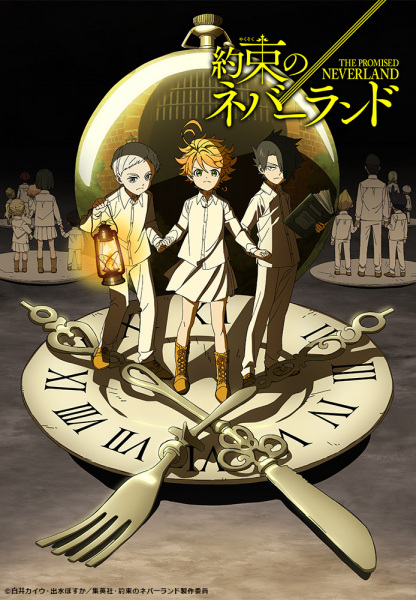
The Promised Neverland Review: An 8.18 That Lives on Story and Direction, and Loses Ground on World and Legacy
Judged against one consistent rubric, The Promised Neverland is best understood by which criteria carry it and which drag it down — not by a single number.
Anime Like Re:Zero: 5 the Codex Rubric Says You'll Love
Fans of Re:Zero respond to its strongest criteria — character at 9.0, cultural weight at 9.0, story and themes at 8.5 — and these five picks deliver the same qualities, ranked by how close their critical profile sits to it, not by vibes.
Discussion
Set a display name above to post.
Loading discussion…


