What Anime Does Best — and Worst: Six Criteria, One Catalogue, and the Gap Between Ambition and Achievement
Across the Anime Codex catalogue, animation scores lowest and character writing scores highest — which inverts almost everything the medium says about itself.
Across the Anime Codex catalogue, animation scores lowest and character writing scores highest — which inverts almost everything the medium says about itself.
The medium that markets itself on sakuga reels and Ufotable compositing layers averages 6.87 on animation across the Codex catalogue. The same catalogue averages 7.48 on character writing. That gap — small in absolute terms, structurally enormous — is the most honest answer to what makes anime good, and the one almost no one in the discourse is willing to give.
The Consensus Is Backwards
The MyAnimeList top 100 is a monument to spectacle. Demon Slayer trends every season it airs a Ufotable set piece. Jujutsu Kaisen's reputation is load-bearing on a handful of MAPPA cuts. The shorthand version of "what makes anime good" — the version that drives clip culture, that powers the seasonal hype cycle, that determines which shows get picked up for English dubs — is animation-first. The visual layer is treated as the medium's signature competence, the thing it does that no other format can match.
The Codex rubric does not support this read. Animation is the lowest-averaging of the six criteria. Character writing is the highest. The medium reaches hardest for the thing it executes worst, and quietly executes best the thing it foregrounds least. This is not a minor inversion. It is the difference between how anime is marketed and how anime, when it works, actually works.
What the Numbers Say
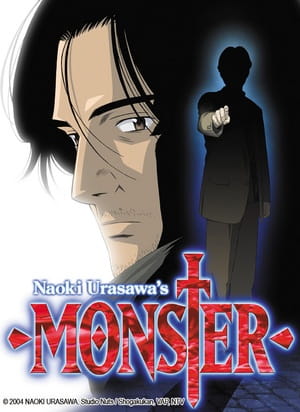
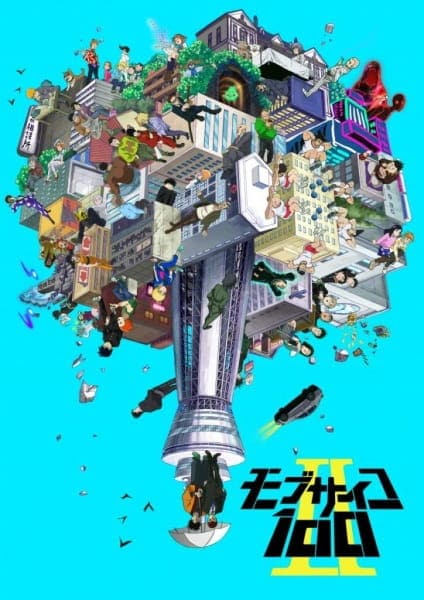
Sorted by catalogue-wide average, the six criteria rank as follows. Character writing and growth sits at 7.48 with a spread of ±1.10, exemplified by Monster at 9.7 — Madhouse's 74-episode Urasawa adaptation built a character study so structurally sound it remains the seinen benchmark almost twenty years later. World-building and power systems averages 7.28 (±0.87), with Mushishi's 26-episode Artland run at 9.5. Cultural impact averages 7.21 (±1.37) — the highest variance of any criterion — anchored by Naruto's 500-episode Pierrot run at 9.5. Themes and emotional resonance sits at 7.17 (±1.17), again exemplified by Mushishi at 9.5. Story and narrative averages 7.13 (±0.97), with Monster at 9.5. Animation and direction comes last at 6.87 (±1.13), with Mob Psycho 100's 2019 Bones season at 9.5.
Read that order again. Animation is sixth. The thing the medium sells, the thing the seasonal discourse argues about, the thing that determines which trailers go viral — sixth.
The Floor Is Low Because the Floor Is Expensive
The reason animation averages 6.87 is not mystery. It is production economics. A character writer working on a seinen thriller costs the production a fraction of what a key animator costs on a fight sequence, and the writer's output is reusable across the run. Animation quality is bound to budget, schedule, and the specific talent on a specific cut on a specific episode. The catalogue's animation floor is dragged down by every long-running Pierrot shonen, every late-cour collapse, every adaptation that ran out of money in episode nine. Naruto's 2007 entry scores 6.5 on animation against a 9.5 on cultural impact — the show that defined a generation looks, on a frame-by-frame basis, mediocre.
This is what the medium reaches for and frequently misses. Mob Psycho 100's third season hits 9.5 on animation because Bones let Yuzuru Tachikawa's team build a directorial identity around the source material's visual logic. That is a coordinate, not an altitude — the rest of the catalogue cannot reproduce those conditions on demand, and most productions do not try.
The Ceiling Is High Because Writing Scales
Character writing averages 7.48 not because every show writes brilliantly but because the floor for competent character work is higher than the floor for competent animation. A merely functional script with a clear arc lands a 7. A merely functional production with inconsistent in-betweens and off-model close-ups lands a 6. The catalogue is dense with shows that animate adequately and write better than they animate — and the rubric, run honestly across hundreds of entries, surfaces that pattern.
Monster's 9.7 on character is the ceiling, but the more telling number is the average. The medium, at baseline, is more reliably good at building people than at drawing them. Even Jujutsu Kaisen — a show whose writing is, charitably, a workmanlike shonen blueprint — scores higher on character work than on most other axes once the rubric applies its weights. The competence is structural.
The Real Differentiator Is Cultural Impact
The spread numbers matter as much as the averages, and the criterion with the widest spread is cultural impact at ±1.37. This is the axis that separates great shows from good ones in the catalogue, by a wider margin than any other. Animation spread is ±1.13. Themes ±1.17. Story is the tightest at ±0.97 — meaning narrative quality is the most uniformly distributed criterion across the catalogue, and therefore the least useful for distinguishing tiers.
If animation averages lowest and character averages highest, that tells you what the medium reaches for versus what it consistently delivers. But cultural impact — the criterion with the largest variance — is what actually separates a 9 from a 7 on the Codex. Naruto's 9.5 on cultural impact is the reason its 7.28 overall score is not lower; its story is 6.8 and its animation is 6.5. The catalogue's biggest quality differentiator is not how well a show is made. It is how much it mattered.
The Counter-Argument: Averages Flatten the Outliers
The strongest objection is that catalogue-wide averages are a blunt instrument. Mushishi's 9.0 animation score and Mob Psycho 100's 9.5 prove the ceiling exists; pointing at the mean punishes the medium for its volume of mid-tier productions rather than crediting its peaks. The objection is partially correct. Averages do flatten. A catalogue weighted toward the top decile would show animation in a very different light, because the top decile is where studios commit the resources to clear the bar.
The rubric reads it differently. The point of a catalogue-wide average is precisely that it accounts for what the medium produces at scale, not what it produces in a Trigger anniversary project or a Bones prestige slot. The 6.87 animation average is the realistic expectation. The 9.5 ceiling is the exception, and treating the exception as the rule is how the discourse ends up arguing about sakuga while the actual quality differentiator — character work, then cultural footprint — goes unexamined.
Verdict
The medium aspires to be visual and delivers as written. Animation is the lowest-averaging criterion in the Codex catalogue and character writing the highest, and the gap explains why the most durable shows on the rubric are the ones — Monster, Mushishi, Mob Psycho — that treat animation as a vehicle for character rather than the other way around. Cultural impact is the widest spread, which means the question of what makes anime good ends, finally, with what made it stay.
Featured in the Codex



More from The Codex
The Seven Deadly Sins Is a 6.60 Wearing a 7.60 Costume: A One-Point Gap Earned by Groping Gags and Convenient Flashbacks
The Seven Deadly Sins scores 6.60 on the Codex against MyAnimeList's 7.60 because the crowd is grading a Netflix breakout and a Ban-and-King friendship, not the 24 episodes A-1 Pictures actually broadcast in 2014.
The 10.0 That Built a Sunday: How Sazae-san's Cultural Score Carries a 6.58 Scorecard
Sazae-san is a case study in how a single criterion — cultural — can define how a show is remembered, and the 10.0 the Codex hands Eiken's 1969 institution is doing every bit of the heavy lifting its other five scores refuse to.
The Sebastian Problem: Why Black Butler Sits 1.10 Below Its MAL Line and the Crowd Refuses to Notice
Black Butler (Kuroshitsuji) posts a 1.10-point gap between MyAnimeList's 7.65 and the Codex 6.55 because the crowd is grading Sebastian's silhouette and a Phantomhive aesthetic, not the anime-original finale A-1 Pictures actually shipped in 2009.
Discussion
Set a display name above to post.
Loading discussion…