Is Ojarumaru Underrated? A 6.95 That Quietly Outscores Its MAL Reputation on Culture, World, and a Heian Prince Who Refuses to Grow
Ojarumaru is better than its reputation suggests, and the rubric shows where — a 0.61-point Codex-over-MAL gap earned on cultural weight, world-building, and a premise Studio Gallop has kept warm since 1998.
Ojarumaru is better than its reputation suggests, and the rubric shows where — a 0.61-point Codex-over-MAL gap earned on cultural weight, world-building, and a premise Studio Gallop has kept warm since 1998.
The question of whether Ojarumaru is underrated has a numerically clean answer: Anime Codex scores it 6.95, MyAnimeList scores it 6.34, and the 0.61-point gap is not noise. It is the sound of an international ratings crowd grading a show they have barely encountered against a rubric that actually weighs what NHK's second-longest-running anime has been doing on Japanese television since October 1998. The interesting work is not proving the gap exists. It is naming which criteria the crowd has undervalued, and where the show's own ceiling — real, structural, deliberate — sits.
The Consensus Position, Named
The MyAnimeList 6.34 is the consensus to engage. It is a score that reads as a shrug: "kids' show, seen the OP, moving on." That's a defensible position from a database whose sample is heavily international, heavily adult, and structurally unsuited to a kodomomuke morning slot on NHK Educational TV. The 53/100 AniList number tells the same story from the same demographic angle. Neither number is engaging the show Studio Gallop has actually been producing for over a quarter century under Akitarou Daichi's original direction and Kazuya Tanaka's sound work; they are grading a five-minute exposure to a premise designed to be sipped, not binged.
Codex departs on two specific axes — cultural footprint and world-building, both scored at 7.5 — and holds the line, honestly, on animation, where the 6.3 acknowledges what any adult viewer sees: this is limited animation on a public-broadcaster kids' budget, and no amount of affection changes that. The case for Ojarumaru being underrated is not a case for it being secretly great. It is a case for it being systematically miscategorized by scorers who don't weigh the criteria the show is actually excellent at.
The Cultural Score Is the Argument
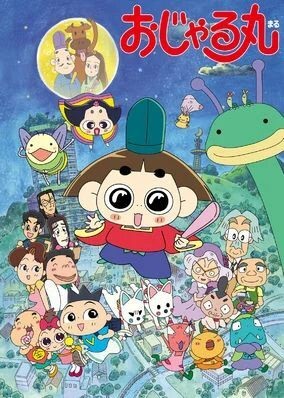
The 7.5 on cultural impact is the load-bearing beam. Ojarumaru has aired on NHK continuously since 1998, produced by NHK and NHK Enterprises with Gallop on animation, and has accumulated thousands of episodes in the process — a fixture of Japanese children's television at the scale of household furniture. The "ojaru" speech mannerism became recognizable in Japan the way "datte-bayo" did for a very different audience. It received an Excellence Award for animation at the 1999 Japan Media Arts Festival in its debut year and was NHK's first anime to use digital ink-and-paint rather than cels — a genuine production-history footnote the MAL score does not know exists.
This is the same pattern the rubric surfaces on Pokémon's 9.8 cultural score and Sailor Moon's 9.5: a domestic institutional presence that transcends whatever the international database happens to have watched. Ojarumaru is not at that tier — a 7.5 is not a 9.5, and the international footprint is genuinely modest — but the shape of the miscalibration is identical. Grade the show that aired, not the show the algorithm surfaced.
World-Building Is Doing More Work Than Anyone Credits
The other 7.5 sits on world. The premise — a five-year-old Heian-era prince who steals the demon-king Enma's power-stick from three incompetent oni and time-warps into contemporary suburban Japan to live with Kazuma's family — is not the cozy trifle its visuals suggest. It is a durable, generative comic engine that lets a single show run domestic vignettes (Ojarumaru meeting convenience-store pudding, negotiating with a television) against Heian-court speech patterns and Enma's demon mythology, and get real cultural literacy work done in the margins.
This is the sort of world-building that reads as slight because it is executed lightly. The internal logic of the stick, of Enma's realm, of how the demons Akane, Kisuke, and Aobee actually function as a pursuit — all of it stays deliberately loose, prioritizing whimsy over consistency. That's a real ceiling. But the collision itself — archaic courtly manners meeting modern suburbia — has powered thousands of episodes without exhausting itself, which is not something you can say about most premises with tighter internal logic.
Character, Held Static by Design
The 7.0 on character is where the rubric is honest in both directions. Ojarumaru himself is a genuinely well-observed protagonist: his Heian-noble entitlement is softened by childlike wonder in a way that makes the fish-out-of-water beats warm rather than bratty, and Akitarou Daichi's direction protects that tonal register episode after episode. The three demons carry more than antagonist weight — Kisuke's perpetual bad luck and Akane's soft-hearted child-demon register generate affection across hundreds of failed retrieval attempts, and their incompetence is the show's real emotional engine.
But growth is minimal, and intentionally so. Kazuma and the supporting cast remain fixtures, not arcs. This is a comfort-programming choice consistent with kodomomuke — the same choice Aikatsu! makes across 178 episodes — and the rubric grades it accordingly: strong observation, low progression, 7.0 rather than something higher.
Themes That Work Quietly
The 7.2 on themes rewards what the show does with hospitality, everyday joy, and belonging across difference. Ojarumaru is a thousand-year-displaced child folded into Kazuma's family without friction, and the show finds real, understated feeling in the loneliness and homesickness that surface beneath the gags. It does not reach for deep pathos. It does not need to. The demographic is not asking for it and the rubric does not penalize a show for staying inside its remit — it penalizes shows that reach and miss.
The Counter-Argument, Steelmanned
The strongest opposing case is structural, and the rubric concedes it. Across thousands of segments there is no narrative progression. The stick is never meaningfully recovered because it cannot be — the show's engine would stop — and anyone approaching Ojarumaru looking for forward momentum will find, correctly, that there is none. The story score of 6.8 admits this openly. The animation, at 6.3, is economical in the way NHK educational programming has to be: flat, rounded, minimalist character designs, soft palettes, little directorial flourish in motion. The opening theme and Kazuya Tanaka's sound work do more emotional lifting than the visuals.
A viewer weighing story and animation above culture and world will land near the MAL 6.34, and they will not be wrong about what they saw. They will be wrong only about which rubric to apply to a kodomomuke institution — the same category error that keeps Astro Boy's cultural weight from registering on international scoreboards.
Verdict
Ojarumaru at 6.95 is not a hidden masterpiece and this is not the post that pretends it is. It is a show whose cultural footprint and world-premise clear the bar its animation budget and static cast cannot, and whose 0.61-point gap over MyAnimeList names exactly which criteria the crowd is failing to weigh. Grade it on what NHK actually shipped in 1998 and has kept shipping, and the number holds.
Featured in the Codex
More from The Codex
The Seven Deadly Sins Is a 6.60 Wearing a 7.60 Costume: A One-Point Gap Earned by Groping Gags and Convenient Flashbacks
The Seven Deadly Sins scores 6.60 on the Codex against MyAnimeList's 7.60 because the crowd is grading a Netflix breakout and a Ban-and-King friendship, not the 24 episodes A-1 Pictures actually broadcast in 2014.
The 10.0 That Built a Sunday: How Sazae-san's Cultural Score Carries a 6.58 Scorecard
Sazae-san is a case study in how a single criterion — cultural — can define how a show is remembered, and the 10.0 the Codex hands Eiken's 1969 institution is doing every bit of the heavy lifting its other five scores refuse to.
The Sebastian Problem: Why Black Butler Sits 1.10 Below Its MAL Line and the Crowd Refuses to Notice
Black Butler (Kuroshitsuji) posts a 1.10-point gap between MyAnimeList's 7.65 and the Codex 6.55 because the crowd is grading Sebastian's silhouette and a Phantomhive aesthetic, not the anime-original finale A-1 Pictures actually shipped in 2009.
Discussion
Set a display name above to post.
Loading discussion…