The 10.0 That Built a Sunday: How Sazae-san's Cultural Score Carries a 6.58 Scorecard
Sazae-san is a case study in how a single criterion — cultural — can define how a show is remembered, and the 10.0 the Codex hands Eiken's 1969 institution is doing every bit of the heavy lifting its other five scores refuse to.
Sazae-san is a case study in how a single criterion — cultural — can define how a show is remembered, and the 10.0 the Codex hands Eiken's 1969 institution is doing every bit of the heavy lifting its other five scores refuse to.
The longest-running animated television series on earth is, by the numbers, a mid-tier show. That is not a contradiction. That is the whole story. Sazae-san posts a 6.58 on the Anime Codex rubric because five of its six criteria sit between 5.0 and 7.0, and one — cultural — sits at a 10.0 the Codex spends most years refusing to give anyone. Everything interesting about the show lives in that gap.
The MyAnimeList 6.16 Is Grading the Wrong Show
The MyAnimeList crowd has Sazae-san at 6.16, and that number is not wrong so much as it is answering a question nobody asked. A global aggregator scoring a Japanese Sunday-evening ritual on the same axis it uses for Monster or Frieren is doing a category error dressed up as consensus. The 6.16 is what happens when viewers who parachute in for a few episodes measure Eiken's flat, static, 1969-vintage character work against modern TV animation and find it visually inert. Fair. It is visually inert. The animation criterion scores 5.0 for exactly that reason — designs and motion that have not meaningfully evolved since the Shōwa era, direction that prioritizes legibility over craft, staging that would embarrass a mid-budget kodomomuke in 2010.
But the aggregator score treats that as a verdict on the show. The Codex treats it as one pillar of six. This is the same structural problem that produces the Yo-kai Watch scorecard and the KochiKame gap — foreign viewers grading a domestic institution by the criteria that travel worst.
What the Sazae-san Cultural Score Actually Measures
The Codex rubric hands out 10.0s the way the Michelin guide hands out three stars: rarely, and only when the case is so overdetermined it becomes embarrassing to withhold. Sazae-san is one of those cases. Machiko Hasegawa's 4-koma began in the Fukunichi Shinbun in 1946, moved to the Asahi Shimbun in 1949, and by the time Hasegawa retired the strip in 1974 it had done what almost no manga does — colonized the national newspaper page as a fixture of ordinary literate life. The TCJ/Eiken anime adaptation launched in October 1969 and has never stopped. That is the Guinness record, and the Guinness record is the least interesting thing about it.
The interesting thing is the Sunday-evening slot. Sazae-san is not watched the way anime is watched. It is watched the way weather forecasts are watched — as domestic infrastructure, running in the background of dinner, part of the sensory furniture of the week's end. Its status as anime "acceptable" to adults who would never touch the medium otherwise is a footprint no shonen juggernaut can match. Dragon Ball's own 10.0 cultural score rides on merchandise, translation, and generational recruitment; Sazae-san's rides on being the show your grandmother has always had on. Those are different kinds of ten, and Eiken's is the rarer one.
The Story and World Are Doing Exactly What They Were Hired to Do
The 6.5 on story and the 6.0 on world are not indictments. They are the sound of the rubric registering that these criteria were never the point. Every episode is a closed loop of domestic micro-stakes — Sazae losing track of where she parked, Katsuo evading his homework, a grocery list gone astray in the walk home from the neighborhood shop. Nothing carries. Nobody ages. The Isono-Fuguta household in 2024 is the Isono-Fuguta household of 1969, minus Norio Ohsaka and plus whichever seiyuu currently holds the roles.
Read as narrative ambition this is a ceiling. Read as the kodomomuke contract it is a genuine strength — Doraemon occasionally reaches for a larger emotional payoff and Sazae-san never does, and that refusal is a directorial choice, not a failure of imagination. The world-building 6.0 lands in the same register: the Setagaya home, the shopping streets, the neighbors' fences and the interior of a middle-class Japanese kitchen are rendered with a fidelity to lived space that stops just short of being interesting because being interesting was never on the brief. It is the platonic normal family, and it earns its mid-range score by refusing to deviate from that platonic form for fifty-five years.
Characters Who Do Not Change Are Still Characters
The 7.0 on character is the score most likely to be misread. Growth is not there — Sazae's scatterbrained warmth in a 1970 broadcast is the same warmth in a 2020 broadcast, Katsuo's mischief is a fixed constant, Masuo's mild-manneredness is load-bearing precisely because it never wavers. The grandparent generation exists as a stabilizing frame around the younger household, and the ensemble reads instantly to a viewer who has never seen an episode because Hasegawa's original 4-koma archetypes were designed to read instantly on a newspaper page.
This is characterization as ritual furniture, and it is sharp within its rules. The 7.0 is honest about the ceiling — you cannot score at the top of a criterion when the entire creative philosophy is anti-arc — but it credits the affectionate specificity of the writing. Sazae is not a placeholder mother. She has a particular scattered energy that separates her from every other kodomomuke matriarch, and the fact that energy has been continuously performed since 1969 is itself an achievement of characterization.
The Steelman: A 10.0 Should Not Save a Show That Scores 5.0 on Animation
The honest opposing view is not the MAL 6.16. It is a harder claim: cultural impact is a backward-looking metric, and rewarding a show for having been on television for fifty-five years is rewarding endurance, not quality. A 10.0 that props up a 5.0 on animation and a 6.0 on world is a rubric that has been captured by its own subject.
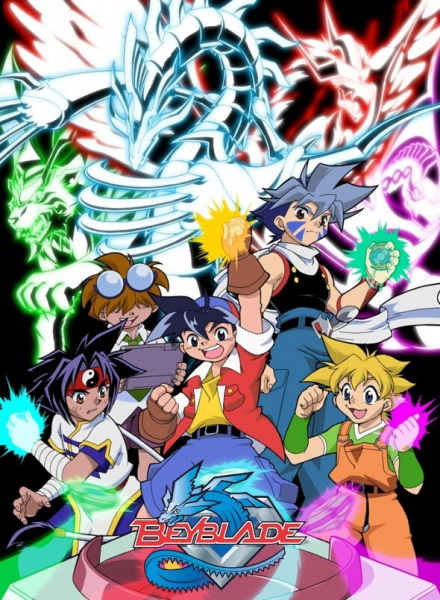
The Codex answer is that cultural is not a participation trophy — it is a measurement of a specific thing the show has actually done to the medium and the country, and Sazae-san has done more of that specific thing than any anime ever produced. The 6.58 weighted score already reflects the ceiling; the rubric is not letting the 10.0 launder the 5.0. It is letting it count. This is the same discipline the Codex applies to Beyblade's cultural carry and refuses to apply where the case is weaker.
Sazae-san is not a masterpiece and the 6.58 says so plainly. It is, however, the clearest evidence in the catalogue that a single criterion, scored honestly at its ceiling, can define how a show enters history. Eiken did not make the best-directed family anime of its era; it made the one that never left the air. That is worth exactly what the rubric says it is worth.
Featured in the Codex





More from The Codex
The Seven Deadly Sins Is a 6.60 Wearing a 7.60 Costume: A One-Point Gap Earned by Groping Gags and Convenient Flashbacks
The Seven Deadly Sins scores 6.60 on the Codex against MyAnimeList's 7.60 because the crowd is grading a Netflix breakout and a Ban-and-King friendship, not the 24 episodes A-1 Pictures actually broadcast in 2014.
The Sebastian Problem: Why Black Butler Sits 1.10 Below Its MAL Line and the Crowd Refuses to Notice
Black Butler (Kuroshitsuji) posts a 1.10-point gap between MyAnimeList's 7.65 and the Codex 6.55 because the crowd is grading Sebastian's silhouette and a Phantomhive aesthetic, not the anime-original finale A-1 Pictures actually shipped in 2009.
Detective Conan Is a 6.55 Wearing an 8.19 Costume: What the Crowd Rewards That the Rubric Refuses To
Detective Conan sits 1.64 points below its MyAnimeList line because the crowd is grading a national institution and a Moonlight Sonata reveal, not the thousand-plus TMS episodes that keep Ran oblivious on principle.
Discussion
Set a display name above to post.
Loading discussion…