Ojarumaru
Is Ojarumaru worth watching?
Worth a look. Anime Codex rates Ojarumaru 6.95 out of 10 — scored on six criteria (story, characters, themes, world-building, animation, and cultural impact), not crowd votes. 131st of 226 on the Codex rubric — bottom 43% of the catalogue. The Codex rates it Δ +0.61 above its MAL score — more underrated than 99% of the catalogue.
Where to watch
Streaming availability varies by region — check your local services.
What the data says
Computed from the Codex rubric across the whole catalogue.
Summary
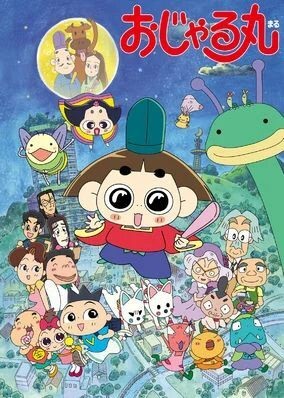
Ojarumaru is a quintessential NHK kodomomuke institution, valued not for narrative ambition but for the gentle reliability that has kept it on air for decades. Its strength is a genuinely original premise — a bored Heian-era noble child transplanted into modern suburban Japan via a stolen demon-king artifact — used as a vehicle for soothing, slice-of-life vignettes rather than the demon-chase plot it nominally hangs on. Ojarumaru's courtly entitlement softened by childlike wonder, and the endearingly incompetent trio of demons (especially the sympathetic child-demon Akane), give the show real warmth. It quietly teaches historical and cultural literacy while championing small everyday joys and cross-difference belonging. Judged within its demographic, it executes its mission near-flawlessly. Its weaknesses are structural and intentional: essentially zero narrative progression or character growth across thousands of segments, deliberately simple limited animation with little directorial ambition, and emotional stakes kept low enough that older viewers find little to grip. It will never satisfy anyone seeking momentum or spectacle. But as comfort television for young children — and as a multi-generational cultural fixture in Japan — it is quietly excellent, a model of the patient, reassuring storytelling its genre exists to deliver.
Criterion breakdown
Story & narrative
The episodic structure is perfectly calibrated for its young audience, using the recurring premise of the demons chasing the power-stick as a low-stakes engine rather than a true ongoing plot. The genius lies in its quiet, almost iyashikei rhythm — most episodes are tiny domestic vignettes (Ojarumaru discovering convenience-store pudding, struggling with modern objects) rather than the demon chase, which keeps it gentle. The weakness is that across thousands of segments there is essentially no narrative progression or payoff; the stick is never meaningfully recovered, by design, so anyone seeking forward momentum finds none.
Character writing & growth
Ojarumaru himself is a beautifully observed character — his Heian-noble entitlement softened by genuine childlike wonder makes his fish-out-of-water reactions warm rather than bratty. The three demons, especially the perpetually unlucky Kisuke and the soft-hearted child-demon Akane, are far more sympathetic than typical antagonists, and their incompetent failures generate real affection over time. Growth is minimal and intentionally so, however; Kazuma and the supporting cast remain static fixtures, prioritizing comfort and familiarity over arcs.
Themes & emotional resonance
The show quietly champions appreciating small everyday joys, hospitality, and finding belonging across difference — Ojarumaru, displaced a thousand years from home, is folded into Kazuma's family without friction. Its emotional resonance is understated but genuine, particularly in episodes touching on loneliness and homesickness beneath the comedy. It rarely reaches for deep pathos, which suits its demographic but caps how affecting it can be for older viewers.
World-building & power system
The premise is genuinely original: blending Heian-period aristocratic culture, Enma's demon-king mythology, and contemporary suburban Japan into a coherent comic world. The contrast between Ojarumaru's archaic speech and courtly manners against modern convenience stores and television is a clever, durable engine, and the show gently teaches historical and cultural literacy. The internal logic of the stick and Enma's realm stays loose and undeveloped, prioritizing whimsy over consistency.
Animation & direction
The visual style is deliberately simple, flat, and rounded — economical limited animation befitting an NHK educational kodomomuke production with thousands of short episodes. Character designs are charmingly minimalist and the soft color palette reinforces the soothing tone, but there is little ambition in motion or directorial flourish. The opening theme and gentle musical cues do more emotional work than the visuals themselves.
Cultural impact
As one of NHK's longest-running anime, airing continuously since 1998 with thousands of episodes, Ojarumaru is a genuine institutional fixture of Japanese children's television and a multi-generational household staple. Its cultural footprint domestically far exceeds its modest international recognition or MAL presence. The 'ojaru' speech mannerism became broadly recognizable in Japan.
Synopsis (from MAL)
In the Heian era, around 1000 years ago, a young boy of noble family named Ojarumaru is bored with his life of privilege. Meanwhile, three demons steal the power-stick of Enma, king of demons, and then lose it. Ojarumaru finds it, and uses it to transport himself to the present time. Here, he is befriended by a young boy named Kazuma, and becomes a member of his family. As time goes on, Ojarumaru makes many new friends, while dodging the comedic efforts of the three demons, Akane, Kisuke, and Aobee, as they try to recover the stick. (from ANN)
Ranked nearby
Explore rankings
Discussion
Set a display name above to post.
Loading discussion…