The 9.8 That Made Pokémon Immortal: How One Cultural Score Carries a 7.02 Scorecard
Pokémon is a case study in how a single criterion — cultural — can define how a show is remembered, and Pikachu is the reason a workmanlike OLM production became a generational passport into anime itself.
Pokémon is a case study in how a single criterion — cultural — can define how a show is remembered, and Pikachu is the reason a workmanlike OLM production became a generational passport into anime itself.
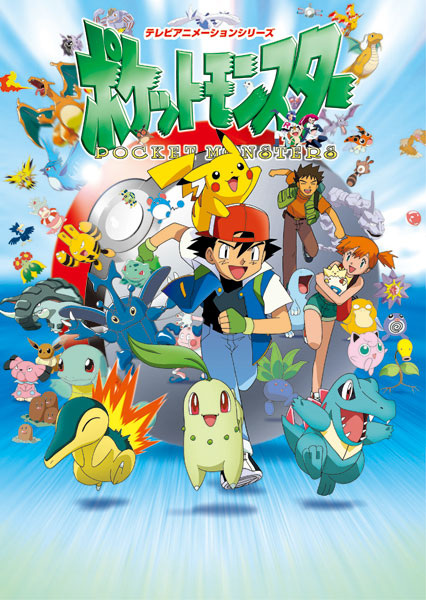
Pikachu is the most recognizable animated face on Earth that isn't drawn by Disney, and that fact alone is doing more work on Pokémon's scorecard than any arc, any battle, any of the 276 episodes the 1997 series actually shipped. The show scores 9.8 on cultural at Anime Codex — a number so large it warps every other criterion around it — while the rest of the rubric sits stubbornly in the mid-sixes and low-sevens. That gap is the entire story.
The Pokémon Cultural Question Nobody Wants to Answer Honestly
The MyAnimeList crowd scores it 7.42. That number is polite, defensible, and slightly incoherent — it treats Pokémon like just another kodomomuke serial with a good mascot, which is exactly the misreading the Anime Codex rubric is built to correct. The Codex weighted score lands at 7.02, lower than MAL's, and yet the argument here isn't that Pokémon is overrated. It's that the crowd is scoring the wrong thing on the wrong axis. The Pokémon cultural footprint is not a bonus point to sprinkle on top of a 7.4 average; it is the load-bearing wall, and once you weight it correctly for a kodomomuke title, the show's real shape appears.
Neither a hit piece nor a puff piece. Be genuinely critical where the data is critical and credit real strengths where they exist. That's the whole assignment.
What a 9.8 Cultural Score Actually Means
Cultural scores at Anime Codex do not reward hype cycles. They reward measurable, durable transmission — the degree to which a show reshaped the medium's relationship with its audience. Pokémon's 9.8 is not because Pikachu is cute. It's because the OLM production that premiered on TV Tokyo in April 1997 became the delivery vehicle by which an entire Western generation of children learned that anime existed as a category. Before Pokémon, anime in North America was a niche VHS trade. After Pokémon, it was a Saturday morning fixture, a lunchbox, a trading-card economy, a gateway drug that carried kids downstream into Digimon, Yu-Gi-Oh, and eventually the shonen canon.
This is the same phenomenon Anime Codex has flagged elsewhere — a mascot-driven kodomomuke title whose cultural score outruns its own scorecard by decades, in the same shape as Crayon Shin-chan's 9.5 outruns its 7.36. Few titles in any demographic match Pokémon's reach. The 9.8 is arguably conservative. A 10 belongs to something, and if not this, then what.
The Story Score Is Honest, and That's the Point
Here is where the celebratory register has to hold its nerve. The story criterion lands at 6.5, and it earns that number honestly. The gym-badge-and-league structure is beautifully suited to serialized kodomomuke — self-contained beginnings, self-contained resolutions, a young viewer can drop in at any point without a primer. That's a genuine design achievement, not a flaw.
But 276 episodes is a long time to defer a stated goal, and Satoshi's Pokémon Master ambition is perpetually pushed to the horizon. The Orange Islands filler stretch between Kanto and Johto pads the runtime noticeably. What saves the story score from sliding lower is the Indigo League quarterfinal — Satoshi losing because Charizard refuses to obey him is one of the most unsentimental narrative choices ever committed to a children's title. The show does not soften it. Satoshi loses, goes home, keeps going. That single decision is worth more than any three arcs of triumphalism, and it is the moment the story department earned every decimal point of its 6.5.
Character Work That Peaks in Episode One
Character lands at 6.8, and the ceiling is set almost immediately. The bond between Satoshi and Pikachu is established in "Pokémon, I Choose You!" — Pikachu shielding Satoshi from a Spearow flock is the emotional grammar of the entire series in a single set piece. Everything downstream is variation on that theme. Satoshi's release of Butterfree and his farewell to a wild Pidgeot are the two moments where the show actually lets its protagonist grow up, if only for an episode, and those beats are genuinely affecting.
The ceiling is the reset. Satoshi is essentially rebooted between regions, and Musashi and Kojiro — charming, indelible, blast-off-loop-locked — never evolve beyond their gag structure. This is what a 6.8 looks like when the emotional anchor is genuinely great and the surrounding ensemble refuses to move. It's the same structural pattern that Anime Codex has flagged in Astro Boy's kodomomuke episodic sag: a great core relationship, a rubric that can't reward it forever.
OLM's Animation Was Never the Point
Animation at 6.3 is the criterion the celebratory register has to work hardest to hold. OLM's late-90s TV production is functional. Bright palette, appealing character designs, workmanlike movement, extensive reuse of stock battle stills and attack cuts. Outside the theatrical films, motion is limited. This is the honest reading.
The single most consequential directorial event in the show's history was accidental — "Dennō Senshi Porygon" triggered photosensitive seizures in Japanese viewers and forced industry-wide flashing-light guidelines that still govern broadcast animation today. That is a footnote of enormous consequence for the medium, and it belongs on the cultural ledger rather than the animation one. The animation score stays honest at 6.3, and the show survives it because nobody watched Pokémon for sakuga. They watched it for Pikachu.
The Steelman: Maybe 7.42 Is Right
The MAL position deserves a real defense. The argument runs: Pokémon's cultural reach is so massive that separating it from the show is artificial, and any rubric that scores the show below its cultural gravity is over-engineering. If a title becomes the definition of its own demographic globally, the demographic average is the wrong yardstick.
The rubric answers this cleanly. The weighted score already gives cultural real weight — that's why the 9.8 pulls a scorecard full of sixes up to 7.02 at all. The Codex isn't dismissing the footprint; it's refusing to let the footprint retroactively upgrade the animation cel count, the Team Rocket static loop, or the pacing of the Orange Islands. A 7.02 that names exactly what's carrying it is more useful than a 7.42 that averages away the very asymmetry that makes Pokémon interesting to talk about.
Verdict
Pokémon at 7.02 is exactly what the rubric says it is: a modestly scored kodomomuke serial being carried on the shoulders of the single most valuable cultural criterion Anime Codex has ever awarded to a children's title. The 9.8 is not a courtesy. It is the reason a workmanlike OLM production became the front door to anime for a hemisphere, and if that isn't what a cultural score is for, nothing is.
Featured in the Codex


More from The Codex
The Seven Deadly Sins Is a 6.60 Wearing a 7.60 Costume: A One-Point Gap Earned by Groping Gags and Convenient Flashbacks
The Seven Deadly Sins scores 6.60 on the Codex against MyAnimeList's 7.60 because the crowd is grading a Netflix breakout and a Ban-and-King friendship, not the 24 episodes A-1 Pictures actually broadcast in 2014.
The 10.0 That Built a Sunday: How Sazae-san's Cultural Score Carries a 6.58 Scorecard
Sazae-san is a case study in how a single criterion — cultural — can define how a show is remembered, and the 10.0 the Codex hands Eiken's 1969 institution is doing every bit of the heavy lifting its other five scores refuse to.
The Sebastian Problem: Why Black Butler Sits 1.10 Below Its MAL Line and the Crowd Refuses to Notice
Black Butler (Kuroshitsuji) posts a 1.10-point gap between MyAnimeList's 7.65 and the Codex 6.55 because the crowd is grading Sebastian's silhouette and a Phantomhive aesthetic, not the anime-original finale A-1 Pictures actually shipped in 2009.
Discussion
Set a display name above to post.
Loading discussion…