The Sebastian Problem: Why Black Butler Sits 1.10 Below Its MAL Line and the Crowd Refuses to Notice
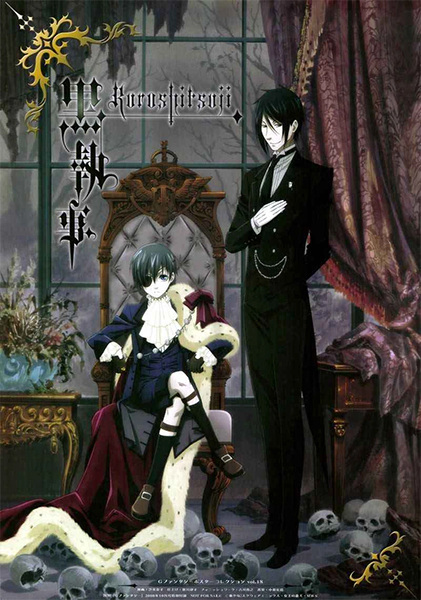
Black Butler (Kuroshitsuji) posts a 1.10-point gap between MyAnimeList's 7.65 and the Codex 6.55 because the crowd is grading Sebastian's silhouette and a Phantomhive aesthetic, not the anime-original finale A-1 Pictures actually shipped in 2009.
Black Butler (Kuroshitsuji) posts a 1.10-point gap between MyAnimeList's 7.65 and the Codex 6.55 because the crowd is grading Sebastian's silhouette and a Phantomhive aesthetic, not the anime-original finale A-1 Pictures actually shipped in 2009.
Sebastian Michaelis throwing silverware at a rooftop assailant is not a thesis. It is a screensaver. Yet the discourse around Black Butler has spent fifteen years treating one demon butler's poised menace as if it were structural argument, and the show's MyAnimeList line — a comfortable 7.65 — is the receipt. The gap between Black Butler (Kuroshitsuji)'s reputation and its rubric score is the story, and the story is that the crowd is rewarding an aesthetic the writing never earns back.
Is Black Butler (Kuroshitsuji) Overrated? The Consensus Says No; The Rubric Says Yes
The MyAnimeList crowd scores it 7.65. That number, in the shonen supernatural bracket, is not "cult classic" territory — it's "broadly respected." It sits Black Butler alongside titles whose narrative machinery actually completes a full rotation. The Codex reads the 2008 A-1 Pictures adaptation at 6.55, and the 1.10-point delta is not a rounding error. It is the difference between grading Yana Toboso's premise and grading the twenty-four episodes that aired under Toshiya Shinohara's direction between October 2008 and March 2009.
The consensus position is easy to name because it repeats itself: Sebastian is iconic, the Victorian gothic look is unique in shonen, the Ciel-Sebastian contract is thematically rich, and the show is a gateway. All four claims are partially true. None of them survives contact with the second half of the anime. What the crowd is rewarding is a mood board and a cosplay silhouette. What the rubric grades is a completed narrative. Those are different objects.
The Angela/Ash Problem Is the Whole Problem
Black Butler's story score sits at 6.0, and the reason is not the opening cour. The Jack the Ripper arc is genuinely strong television — the Madam Red reveal lands because it grafts personal tragedy onto the Phantomhive underworld in a way that gives Ciel's role as the Queen's Watchdog moral weight. That arc is doing what the show promised: a Victorian mystery machine with a demon at the center and real consequence at the edges.
Then the anime runs out of manga. Toboso's serial in Monthly GFantasy hadn't produced enough material for a full-cour ending, and rather than stop, A-1 Pictures invented one. The Angela/Ash arc — a heaven-versus-hell theological detour that appears from nowhere and drags the show's final stretch into an original finale — is a category error. It takes a series whose entire tonal register was aristocratic underworld intrigue and force-feeds it a cosmological framework the earlier episodes had no interest in. The gothic Victorian mystery show becomes, in its final episodes, a shonen apocalypse. The writing doesn't earn the pivot, and the direction can't disguise it.
This is the same failure mode we identified in the D.Gray-man scorecard — a strong gothic premise handed to a production that had to invent its way past the source, and lost the tonal thread doing it. The crowd forgives it because they remember the opening arc. The rubric does not.
Sebastian Is Not a Character, He Is a Function
Character scores 6.5, and the number is generous. The Ciel-Sebastian dynamic is real — a traumatized twelve-year-old wearing pragmatism as armor, a demon performing servitude while calculating the meal to come. That tension has weight in the Jack the Ripper arc and again in the Noah's Ark Circus material the later Book of Circus adaptation would eventually cover from the manga. Daisuke Ono's vocal performance sells the mannered menace with genuine control.
But the anime cannot escape the fact that Sebastian is fundamentally an omnicompetence machine. He solves problems by being a demon. The dramatic ceiling of any given scene is set by whether the writers remember to give him a stated limitation, and they mostly don't. Around him, the Phantomhive staff — Finny, Bard, Mey-Rin, Tanaka — never graduate from comic-relief furniture. They are running gags with names. The show gestures at their backstories but has no interest in the twenty-four-episode arithmetic required to develop them.
And Ciel's own arc, warped by the invented ending, finishes somewhere the manga never sanctioned. The character the source built does not receive the payoff the source was constructing. He receives a different one, cheaper, and the anime shrugs.
The World Is Doing the Heaviest Lifting on the Scorecard
World-building scores 7.0, the highest narrative criterion on the card, and this is where the show's reputation has genuine footing. The Phantomhive estate as a set, the Queen's Guard Dog conceit as a plot engine, the aristocratic underworld of toymakers, curse-merchants, and undertakers — Toboso's setting is one of the few genuinely distinctive gothic Victorian textures in shonen. A-1 Pictures earns its 7.5 on animation by leaning all the way into it: candlelit interiors, period costuming rendered with real attention, Sebastian's balletic action choreography in the rooftop and dinner-service sequences functioning as the show's actual signature.
The demon-contract mechanics are threadbare — a seal on Ciel's eye, a soul as collateral, an omnicompetent servant as the deliverable — and that thinness is why the world scores 7.0 and not higher. It works as ambience. It does not work as system. When the finale asks the contract logic to bear thematic weight, it buckles, because it was never designed to carry anything more structural than "Sebastian wins this fight."
Cultural Score Is Doing the Second-Heaviest Lift
Cultural impact scores 7.0, and the number is fair. Sebastian and Ciel have been convention fixtures for over a decade. The franchise has spawned a second season, the Book of Circus adaptation, the Book of Murder OVA, the Book of the Atlantic film, the 2024 CloverWorks Public School Arc, a fifth season, a live-action film, and a stage musical line. Black Butler helped establish the gothic-Victorian butler aesthetic as a recognizable anime mode. Gateway status is real.
But cultural footprint is one criterion of six, and this is precisely where the crowd inflation lives. We've mapped the same pattern on titles like Yu-Gi-Oh!, where a merchandise-and-silhouette empire drags the MAL line above what the source production actually delivers. Black Butler is a milder version of the same distortion. The cosplay economy scores the show. The finale does not.
The Steelman: What the 7.65 Crowd Is Actually Right About
The strongest defense of the MAL line is this: the Jack the Ripper arc, the Madam Red material, and the Ciel-Sebastian dynamic at its best are genuinely excellent shonen supernatural drama, and the animation craft under Shinohara's direction is real. If you graded Black Butler on its first eight or nine episodes and its aesthetic identity alone, 7.65 is defensible. Maybe generous, but defensible.
The rubric reads the whole object, though. It reads the invented finale as part of the show, because it aired as part of the show. It reads the flat supporting cast as a character-score problem, because twenty-four episodes is enough runway to develop them and the writing chose not to. It reads the theological muddle of the Ash/Angela arc as a thematic-coherence failure, because the show introduced those ideas and then failed to resolve them.
Verdict
Black Butler is a 6.55 because a 7.5 animation floor and a 7.0 world cannot rescue a 6.0 story that gets hijacked in its own final act. The crowd is grading the silverware fight and the silhouette on a Comiket keychain. The rubric is grading the finale that A-1 Pictures actually shipped in March 2009, and that finale is the reason the gap exists.
Featured in the Codex





More from The Codex
The Seven Deadly Sins Is a 6.60 Wearing a 7.60 Costume: A One-Point Gap Earned by Groping Gags and Convenient Flashbacks
The Seven Deadly Sins scores 6.60 on the Codex against MyAnimeList's 7.60 because the crowd is grading a Netflix breakout and a Ban-and-King friendship, not the 24 episodes A-1 Pictures actually broadcast in 2014.
The 10.0 That Built a Sunday: How Sazae-san's Cultural Score Carries a 6.58 Scorecard
Sazae-san is a case study in how a single criterion — cultural — can define how a show is remembered, and the 10.0 the Codex hands Eiken's 1969 institution is doing every bit of the heavy lifting its other five scores refuse to.
Detective Conan Is a 6.55 Wearing an 8.19 Costume: What the Crowd Rewards That the Rubric Refuses To
Detective Conan sits 1.64 points below its MyAnimeList line because the crowd is grading a national institution and a Moonlight Sonata reveal, not the thousand-plus TMS episodes that keep Ran oblivious on principle.
Discussion
Set a display name above to post.
Loading discussion…