Astro Boy (Tetsuwan Atom) Review: A 7.29 That Earns Its Cultural Weight and Pays for It in Middle-Episode Sag
Tezuka Productions' 2003 remake clears the kodomomuke bar on themes and franchise legacy, then loses ground across a 50-episode run the story department can't structurally defend.
Tezuka Productions' 2003 remake clears the kodomomuke bar on themes and franchise legacy, then loses ground across a 50-episode run the story department can't structurally defend.
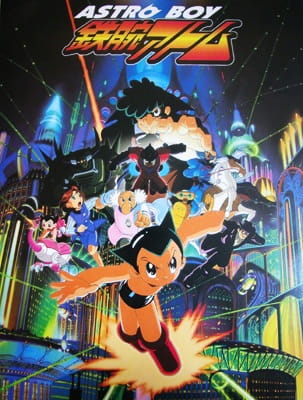
The 2003 Astro Boy is not a show that survives on its animation, its pacing, or its narrative economy. It survives because Osamu Tezuka's premise — a synthetic child engineered as a grief-object, then re-engineered as a citizen — remains one of the most durable ideas in the medium, and because the Blue Knight arc still asks the harder question about coexistence versus separatism that most kids' shows refuse to touch. Judged against one consistent rubric, Astro Boy (Tetsuwan Atom) is best understood by which criteria carry it and which drag it down — not by a single number.
The Consensus and the Codex
MyAnimeList lands the 2003 series at 7.14. The Anime Codex rubric returns 7.29 — a modest 0.15-point premium, which is the interesting number here. The gap is not large, but it points in the opposite direction from the pattern most legacy titles produce, where crowd nostalgia inflates the number and criterion-weighted scoring corrects downward. Here, the crowd is grading a fifty-episode kodomomuke as a shonen-adjacent serial and finding it uneven. The rubric grades it against its actual demographic bracket and its historical weight, and rewards it slightly for both. Neither number is a hit piece. Neither is a puff piece. What the rubric does is name exactly which criteria are doing the lifting and which are being carried.
Cultural Weight Is Doing More Work Than Any Other Criterion
The single highest score on the card is cultural, at 8.0, and it is the reason the rubric doesn't drop the show further. Tezuka's 1963 Mushi Production original is the founding artifact of TV anime as a format — the aesthetic economy, the limited-frame technique, the weekly serial rhythm that every subsequent studio inherited traces back to it. The 2003 remake, produced by Tezuka Productions, is not that pivotal artifact. It is a commemoration. But cultural score in the rubric is not measuring the remake in isolation; it is measuring the franchise weight the remake inherits and the durability of the robot-with-a-heart archetype it re-transmits. That archetype is upstream of everything from Chobits to Vivy to Pluto — the latter being Naoki Urasawa's direct rewrite of one Astro Boy arc, which tells you what the property is still worth to working authors half a century on.
This is the pattern the rubric surfaces elsewhere in the catalogue: a single criterion carrying a scorecard the other five merely tolerate. The Futari wa Precure re-evaluation makes the same structural argument for Toei's 2004 magical-girl reboot, and Crayon Shin-chan's cultural anchor is an even purer version of it. Astro Boy 2003 is not as extreme a case, but it belongs in the same family.
Themes Are the Second Load-Bearing Column
Themes score 7.5, and this is where the 2003 production earns genuine credit rather than inherited credit. The series takes seriously — for a children's title — the ethics of manufactured life, the mechanics of prejudice, and the question of what constitutes a heart. The Blue Knight arc is the clearest evidence: the antagonist is not a monster-of-the-week but an ideological position, arguing for robot separatism as the honest response to human bigotry, and the show declines to dismiss him cleanly. Atom's counter-position — that coexistence is worth the cost — is stated, not proven, and the rubric credits the writers for leaving the argument open rather than resolving it into a hug.
Tenma is the other engine here. A father who builds a replacement son out of grief and then abandons the replacement when it fails to be the original is not a shonen villain. He is a Tezuka villain, which is to say a moral position rendered as a person. The 2003 series leans harder into Tenma's arc than the 1963 or 1980s versions did, and the character work benefits from it. Where the theme criterion loses points is the episodic reset — the show is structurally obligated to return to a safe status quo by the closing credits of most installments, which flattens the resonance the Blue Knight material builds.
Character Holds. Story Sags.
Character lands at 7.2 and story at 7.0, and the delta between them names the problem. Atom himself is a well-realized child — the rubric rewards Tezuka Productions for treating him as a figure grappling with rejection and identity rather than as a superhero silhouette. Ochanomizu is warmth without saccharine. Uran and the robot family provide the found-family register without collapsing into it. The Blue Knight, as noted, is the ensemble's most useful antagonist because he is not defeated in the conventional sense.
Where the show pays for its runtime is the middle stretch of the fifty-episode order. The serialization structure cannot sustain the arc-level momentum the Tenma and Blue Knight material demands, and many episodes across the second and third quarters are monster-of-the-week installments that never feed the larger question. Kazuhiro Furuhashi's work on episode 37 and Osamu Dezaki's storyboarding on episode 9 are individually strong pieces of direction, but they are craft applied to isolated units rather than to a serialized whole. This is the same structural problem that surfaces in longer kodomomuke runs across the catalogue — the Aikatsu! review walks through the 178-episode version of the same tradeoff, where character work clears the bar and runtime forces the story score down.
Animation and World-Building Are Competent, Not Distinctive
Animation at 7.3 and world at 7.0 are the two criteria doing the least interpretive work. The 2003 production modernizes Tezuka's rounded designs with clean digital line and a brighter palette, and the flight sequences are handled with the fluidity the character requires. Direction respects the young audience without condescending — Atom's confrontations with Tenma are shot with restraint rather than melodrama. But the action choreography is conservative by 2003 standards, and the set-piece budget is not competitive with what Bones or Madhouse were putting on television the same year.
The world is coherent — Ministry of Science, robot laws, visible class tension — but not deeply explored beyond what each episode needs. Atom's toolkit (flight, strength, searchlight eyes, arm cannons) is iconic and consistently applied, which is the world-building floor the rubric requires. It doesn't clear the ceiling.
The Steelman: The Crowd Isn't Wrong, It's Grading a Different Show
The 7.14 crowd position is defensible if you grade the 2003 series as a fifty-episode serial aimed at the same demographic as a mid-tier shonen. Under that frame, the middle-episode sag is a fatal flaw, and the show scores in the low sevens on story alone. The rubric declines that frame. It grades the show as kodomomuke — the demographic the catalogue records — and it applies weight to a cultural criterion the crowd score cannot see. The 0.15-point premium is the sum of those two adjustments.
Astro Boy 2003 clears the kodomomuke middle-tier because Tezuka's premise is still alive, the Blue Knight arc still asks the right question, and Tezuka Productions delivers Atom as a child rather than a silhouette. The scorecard is honest about what the fifty-episode structure costs. The 7.29 is neither a rescue nor a rebuke — it is the number the rubric produces when a foundational property is remade competently and asked to carry the weight of its own history.
Featured in the Codex



More from The Codex
The Seven Deadly Sins Is a 6.60 Wearing a 7.60 Costume: A One-Point Gap Earned by Groping Gags and Convenient Flashbacks
The Seven Deadly Sins scores 6.60 on the Codex against MyAnimeList's 7.60 because the crowd is grading a Netflix breakout and a Ban-and-King friendship, not the 24 episodes A-1 Pictures actually broadcast in 2014.
The 10.0 That Built a Sunday: How Sazae-san's Cultural Score Carries a 6.58 Scorecard
Sazae-san is a case study in how a single criterion — cultural — can define how a show is remembered, and the 10.0 the Codex hands Eiken's 1969 institution is doing every bit of the heavy lifting its other five scores refuse to.
The Sebastian Problem: Why Black Butler Sits 1.10 Below Its MAL Line and the Crowd Refuses to Notice
Black Butler (Kuroshitsuji) posts a 1.10-point gap between MyAnimeList's 7.65 and the Codex 6.55 because the crowd is grading Sebastian's silhouette and a Phantomhive aesthetic, not the anime-original finale A-1 Pictures actually shipped in 2009.
Discussion
Set a display name above to post.
Loading discussion…