The 8.0 That Carries Hamtaro: How a Merchandising Empire Props Up a 6.90 Scorecard
Judged against one consistent rubric, Hamtaro (Tottoko Hamtaro) is best understood by which criteria carry it and which drag it down — not by a single number.
Judged against one consistent rubric, Hamtaro (Tottoko Hamtaro) is best understood by which criteria carry it and which drag it down — not by a single number.
TMS Entertainment shipped 296 episodes of a hamster procedural between 2000 and 2006, and the show's legacy is almost entirely a story of one criterion — cultural — doing the heavy lifting for five others that range from serviceable to inert. That asymmetry is what a fair Hamtaro (Tottoko Hamtaro) review has to name first, because without it the number in either direction — the Codex 6.90 or the MyAlist 7.03 — reads as a mystery rather than a decomposition.
The Consensus Position, Named
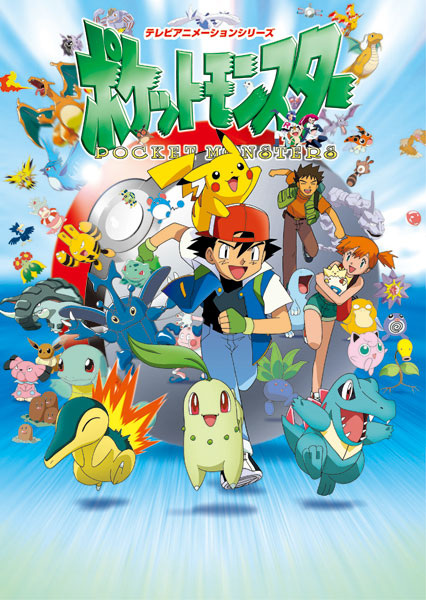
The MyAnimeList crowd scores Hamtaro 7.03. That figure is not wrong so much as it is undifferentiated: it flattens a show whose criterion spread is unusually wide into a single warm-nostalgia average. Ask what the 7.03 is actually grading and the answer keeps returning to the same three things — the character designs, the theme song, the memory of watching it as a child or, in international markets, catching the Ocean Group dub in the early 2000s. Those are cultural artifacts, not story or animation artifacts. The Codex 6.90 sits 0.13 below the crowd because the rubric refuses to let cultural weight quietly upgrade the four criteria that don't earn their keep. This is the same mechanism that pulled Pokémon and Sailor Moon into scorecards where a 9.5-plus cultural line was the load-bearing wall — Hamtaro is a smaller version of the same building.
What the 8.0 Cultural Score Is Actually Measuring
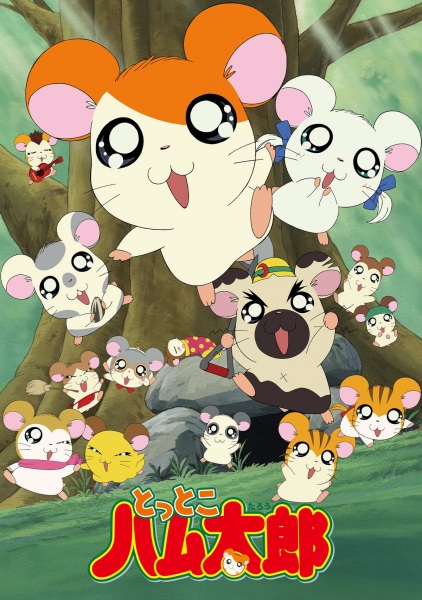
Hamtaro's 8.0 on cultural impact is the highest number on its card, and it is genuinely earned. Ritsuko Kawai's design became a merchandising anchor across toys, Nintendo-published video games, and lifestyle goods; the show is widely credited with amplifying the late-'90s and early-2000s hamster pet boom in Japan. A 296-episode run on TV Tokyo across six years means an entire preschool cohort had Hamtaro as ambient wallpaper, and the Ocean Group English dub carried that recognition into markets that rarely absorbed a kodomomuke property so cleanly. The 8.0 is not a courtesy — it reflects a real cross-media footprint that outlived the show's broadcast.
What the 8.0 does not do is retroactively upgrade the direction, the writing, or the animation. This is the trap the MAL average falls into.
Where the World-Building Actually Earns Its 7.5
The second-highest number on the card is world-building at 7.5, and it deserves credit because the premise is genuinely inventive within its genre. A covert society of pet hamsters — with a clubhouse, an explorer ethos, an internal vocabulary of "-kuru" and "-kushi" suffixes, and a stable social hierarchy under Boss — is one of the more coherent invisible-world constructions in kodomomuke. The consistent scale contrast, where a hamster-sized clubhouse sits inside the human domestic frame of Laura's bedroom and neighborhood, is worked cleverly across recurring locations rather than reset each episode. The candy kingdom and other fantastical excursions dilute the grounded charm — they read as filler destinations rather than extensions of the setup — but the base geography is real, rule-bound, and unusually well-maintained across a run this long.
Where the Formula Runs Out: Story at 6.5
Story lands at 6.5 and this is where the length becomes the enemy of the concept. The episodic structure — a small clubhouse problem, a mild human subplot involving Laura, Kana, or Travis, resolution inside the runtime — is well-judged for the target age; it is emotionally legible, self-contained, and never overstays a single episode. The dual-layer design, where the Ham-Ham adventure runs in parallel to a school or family beat on the human side, gives the show more texture than pure gag procedurals of its era.
The problem is 296 episodes of a formula that never evolves. There is no overarching progression to reward sustained viewing, and the longer excursion arcs — the aforementioned candy-land material chief among them — visibly pad. A viewer dropping in at episode 40 and a viewer dropping in at episode 240 encounter the same show at the same emotional altitude, which is a coherent choice for a preschool audience and a structural ceiling for the rubric.
Character at 7.0: Archetypes Executed Cleanly, Then Frozen
The 7.0 on character reflects a design philosophy correctly calibrated to a young audience and correctly capped by it. The Ham-Ham cast is enormous and instantly readable because each member is built on a single dominant trait — Bijou's vanity and telegraphed crush on Hamtaro, Boss's gruff-soft leadership, Oxnard's sunflower-seed anxiety, Howdy's punning, Pashmina's gentleness, Penelope's monosyllabic "ookyoo." That legibility is a feature; toddlers can distinguish fifteen hamsters, which most shows aimed at adults cannot get their audiences to do with five humans.
What that design cannot support is interiority or growth. Hamtaro himself remains a cheerful constant across 296 episodes; Boss's crush on Bijou is a recurring gag rather than an arc; Oxnard's neuroses reset. The rubric grades what is on screen, and what is on screen is a static ensemble executed cleanly. That is a 7.0, not an 8.
Animation at 6.5 and Themes at 6.5: Competent, Not Distinguished
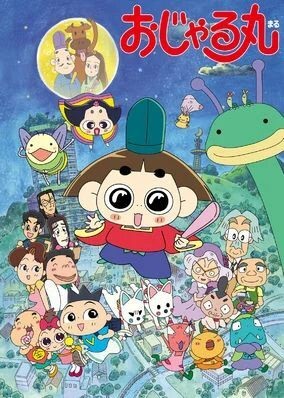
TMS's work here is on-model, bright, and clear across a very long run — the comedy timing on gags like Oxnard cradling his seed or Howdy's reaction faces reliably lands, and the character designs translate to merchandise as cleanly as anything from the era. What is missing is any directorial signature. Backgrounds are functional, action is functional, and the show has none of the flourish that distinguishes the top tier of children's animation — the Ghibli-adjacent kodomomuke work, or the sharper visual direction of contemporaries like Ojarumaru at its best.
Themes score 6.5 for the same reason. Friendship, cooperation, and gentle conflict resolution are consistently and unpreachily modeled, and episodes where the Ham-Hams quietly support a sad Laura land with real warmth for their target age. The show does not reach for the deeper emotional register that separates the standout children's works from the pleasant ones, so the resonance stays reassuring rather than affecting.
The Steelman: Grade It on Its Own Terms
The strongest counter to the 6.90 is that judging a preschool property against a rubric shared with seinen and prestige drama is a category error. Hamtaro does exactly what it sets out to do — comfort small children, model prosocial behavior, sell soft toys — and it does so with more craft than most of its shelf-mates. On its own terms, this argument goes, it is a genuine success and the 7.03 crowd score is closer to honest.
The rubric answers this by weighting the criteria by genre, not by abandoning them. Hamtaro's kodomomuke weighting is already why cultural and world-building can carry as much of the card as they do; the 6.90 is what emerges after that weighting is applied, not before. The gap with MAL is 0.13 — small, directionally correct, and entirely accounted for by the crowd's tendency to let a childhood cultural footprint quietly upgrade the story, animation, and character lines the rubric holds separate.
Hamtaro is a show whose cultural line is real, whose world-building line is earned, and whose remaining four lines describe a competent, static, honestly preschool product. The 6.90 is the sum of those parts. Anything higher is nostalgia doing arithmetic the rubric will not.
Featured in the Codex
More from The Codex
The Seven Deadly Sins Is a 6.60 Wearing a 7.60 Costume: A One-Point Gap Earned by Groping Gags and Convenient Flashbacks
The Seven Deadly Sins scores 6.60 on the Codex against MyAnimeList's 7.60 because the crowd is grading a Netflix breakout and a Ban-and-King friendship, not the 24 episodes A-1 Pictures actually broadcast in 2014.
The 10.0 That Built a Sunday: How Sazae-san's Cultural Score Carries a 6.58 Scorecard
Sazae-san is a case study in how a single criterion — cultural — can define how a show is remembered, and the 10.0 the Codex hands Eiken's 1969 institution is doing every bit of the heavy lifting its other five scores refuse to.
The Sebastian Problem: Why Black Butler Sits 1.10 Below Its MAL Line and the Crowd Refuses to Notice
Black Butler (Kuroshitsuji) posts a 1.10-point gap between MyAnimeList's 7.65 and the Codex 6.55 because the crowd is grading Sebastian's silhouette and a Phantomhive aesthetic, not the anime-original finale A-1 Pictures actually shipped in 2009.
Discussion
Set a display name above to post.
Loading discussion…