The Best Anime of 2023, Ranked by the Codex Rubric: Frieren Wins, Mashle Pays Rent
Year-end lists are usually recency-biased popularity polls. This one applies one consistent rubric to everything 2023 produced, and the order it spits out isn't the order Twitter remembers.
Year-end lists are usually recency-biased popularity polls. This one applies one consistent rubric to everything 2023 produced, and the order it spits out isn't the order Twitter remembers.
2023 was the year the seasonal discourse stopped pretending MAPPA was invincible and started pretending Madhouse had been dormant. Neither framing survives contact with the numbers. The studios that defined the year were not the ones with the loudest trailers; they were the ones that finished what they started, on schedule, with their compositing intact.
The Consensus Is Wrong Before It Starts
The standard year-end ranking for 2023 reads, roughly: Jujutsu Kaisen's Shibuya Incident first, Frieren second because it aired late, Pluto somewhere in the prestige slot, and the rest shuffled by recency. MyAnimeList aggregates close to this — Frieren at 9.26, Jujutsu Kaisen Season 2 at 8.70, Pluto at 8.44, Heavenly Delusion at 8.20. Those are popularity-weighted scores, and they conflate cultural reach with structural quality. The Codex rubric — six criteria, genre-weighted, applied identically across a 1960s Tezuka one-shot and a 2023 Netflix release — produces a different shape. Best anime of 2023 is not the same question as most-watched anime of 2023, and the conflation is why these lists are useless three years later. The method is documented here; the rest of this piece is what happens when you actually run it.
1. Frieren: Beyond Journey's End — 9.03
Madhouse's 28-episode adaptation is the highest-scoring 2023 production in the catalogue, and the criterion breakdown explains why it earned the placement rather than inherited it. Themes lands at 9.5, character at 9.3, animation at 9.2, cultural impact at 9.0, story at 9.0, world at 8.0. The themes score is the engine: Yamada's direction treats the mortality gap between elf and human as the show's only real subject, and every flashback to Himmel exists to compound the same arithmetic. The animation score reflects the fact that Madhouse delivered consistent line quality across a two-cour run in a year when MAPPA could not. The world score is the drag — the geography is functional, not invented — and it's worth being honest that this is the show's actual ceiling on two of six criteria. The First-Class Mage Exam arc, which the consensus treats as the show shifting into shonen tournament mode, is in rubric terms the only stretch where character work is doing the heavy lifting alone, and it still clears 9.
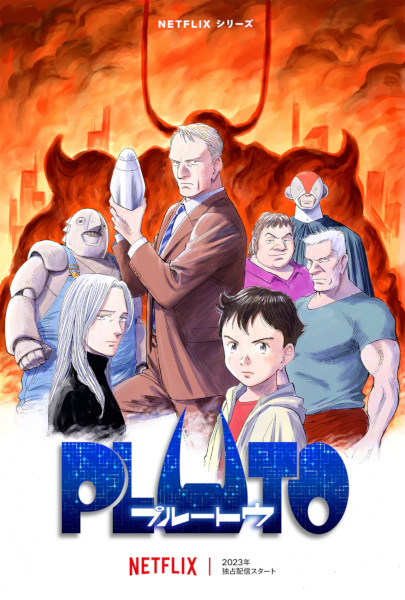
2. Pluto — 8.96
Studio M2's eight-episode adaptation of Urasawa's Tezuka reinterpretation lands at 8.96 — within 0.07 of Frieren on a rubric that is not graded on a curve. Themes 9.3, story 9.2, character 9.0, world 8.7, animation 8.3, cultural 7.8. The cultural number is depressed by Netflix's release strategy and Urasawa's deliberately unhurried pacing, not by anything internal to the show. What carries Pluto is what carried the manga: the willingness to spend an entire episode on Mont Blanc's funeral, or on North No. 2's piano lessons, when a less confident production would have cut to Gesicht's investigation. Studio M2 is not a household name the way Madhouse is, and the animation score reflects some compositing flatness in the action beats, but the directorial restraint is unimpeachable. The full coordinates of where Pluto sits on the seinen map are here; the short version is that it's the year's clearest argument for adaptation as craft rather than as content delivery.
3. Heavenly Delusion — 8.26
Production I.G's 13-episode Tengoku Daimakyou is the year's strongest worldbuilding play — 8.7 on world, against 8.5 story, 8.4 animation, 8.3 character, 8.0 themes, and a 6.5 cultural that reflects how thoroughly the show was buried by simulcast scheduling. Hirotaka Mori's direction commits to the dual-timeline structure without flinching, and the post-apocalyptic exteriors do more thematic work than most shows manage with explicit dialogue. The cultural score is the rubric's only honest move: the show was watched, but it did not enter the discourse the way its quality warranted. The 8.26 places it above Jujutsu Kaisen, which will surprise readers who only tracked Twitter clip counts.
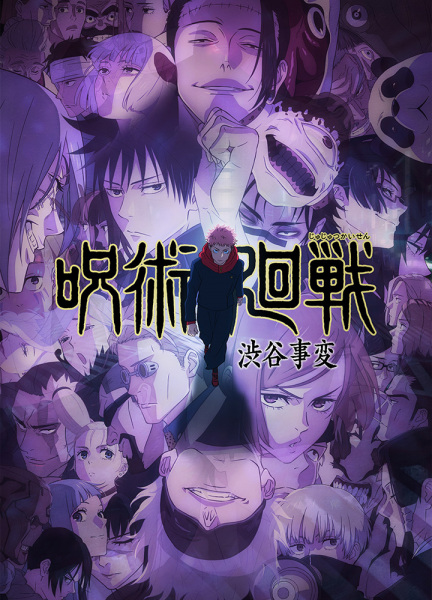
4. Jujutsu Kaisen (Shibuya Incident) — 8.23
MAPPA's 23-episode second season scores 8.23 — animation 9.0, character 8.5, story 8.0, themes 8.0, world 7.5, cultural 8.5. The animation number is the headline and deserves to be: episodes 17 and 19, the Gojo-Sukuna and Mahito-Yuji peaks, are among the highest-ceiling television sakuga of the decade. The story and themes numbers are where the rubric departs from the discourse. Akutami's plotting in Shibuya is competent but mechanical — characters arrive on screen because the next fight requires them — and the thematic content does not deepen beyond Season 1's curse-as-emotion premise. The fuller argument that Jujutsu Kaisen's writing is the floor and MAPPA's craft is the ceiling lives here. The 8.23 is what happens when a 9.0 on one criterion has to drag a 7.5 across the line.
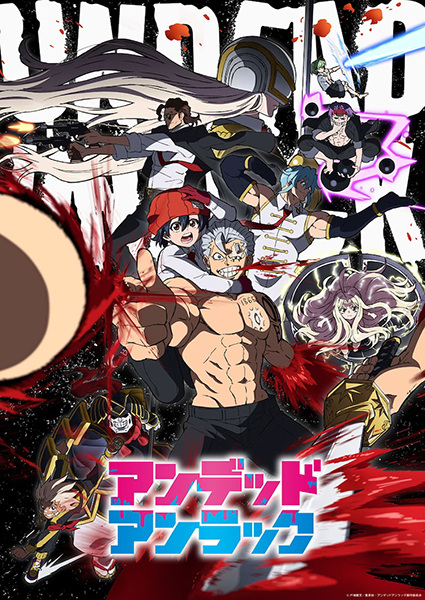
5. Undead Unluck — 7.64
David Production's 24-episode adaptation is the year's most underrated structural achievement, and the 7.64 reflects that with a world score of 8.3 and a character score of 8.0 against a cultural 6.0. Yoshifumi Sueda's direction sells Tozuka's rule-system premise — the Negators, the UMA, the Union — without the genre-typical exposition crutch. The story score of 7.2 is where the rubric is honest about the manga's pacing inheritance; the early arcs front-load worldbuilding at the cost of dramatic momentum. But David Production, fresh off Cells at Work and Fire Force, knows how to animate a show whose rules require legibility, and it shows.
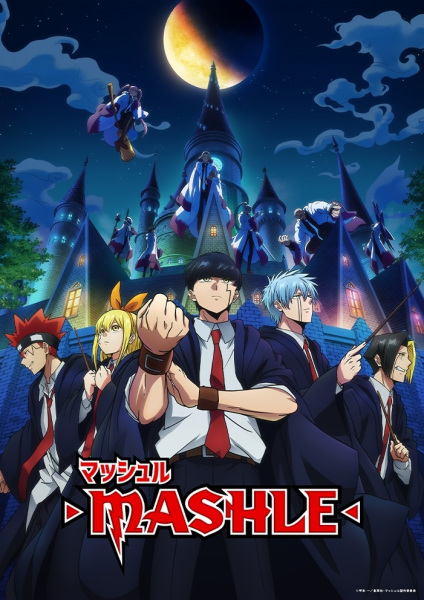
6. Mashle: Magic and Muscles — 5.63
A-1 Pictures' 12-episode Mashle is the catalogue's lowest-scoring 2023 entry, and the breakdown is unsentimental: animation 7.0, world 6.0, cultural 6.0, story 5.5, themes 5.0, character 5.0. The animation number is the only criterion where the show clears average, and even that is generous to a production that coasts on character-acting gags rather than choreography. Mashle is a one-joke comedy executed competently for one cour. The rubric does not penalize ambition it does not have; it penalizes the absence of anything to grade on themes or character beyond surface read.
The Counter-Argument: Shibuya Incident Was the Event of the Year
The honest defense of placing Jujutsu Kaisen above Frieren is cultural: Shibuya Incident was the season everyone watched simultaneously, the clips circulated globally, and MAPPA's animator labor crisis became mainstream news. By any popularity-weighted metric, JJK won 2023. The rubric does not dispute this — cultural impact at 8.5 is the show's second-highest criterion. What the rubric refuses to do is let one criterion overwrite five others. Frieren scores higher on themes, character, story, and animation. Pluto scores higher on themes, character, story, and world. The cultural premium does not close those gaps.
Verdict
The 2023 ranking is Madhouse, Studio M2, Production I.G, MAPPA, David Production, A-1 Pictures — in that order, by Codex score, not by quarter-aired or clip-count. Frieren wins because it scores above 9 on four of six criteria; Mashle finishes last because it scores below 6 on four. The discourse will not remember it this way. The rubric does not care.
Featured in the Codex


More from The Codex
The Seven Deadly Sins Is a 6.60 Wearing a 7.60 Costume: A One-Point Gap Earned by Groping Gags and Convenient Flashbacks
The Seven Deadly Sins scores 6.60 on the Codex against MyAnimeList's 7.60 because the crowd is grading a Netflix breakout and a Ban-and-King friendship, not the 24 episodes A-1 Pictures actually broadcast in 2014.
The 10.0 That Built a Sunday: How Sazae-san's Cultural Score Carries a 6.58 Scorecard
Sazae-san is a case study in how a single criterion — cultural — can define how a show is remembered, and the 10.0 the Codex hands Eiken's 1969 institution is doing every bit of the heavy lifting its other five scores refuse to.
The Sebastian Problem: Why Black Butler Sits 1.10 Below Its MAL Line and the Crowd Refuses to Notice
Black Butler (Kuroshitsuji) posts a 1.10-point gap between MyAnimeList's 7.65 and the Codex 6.55 because the crowd is grading Sebastian's silhouette and a Phantomhive aesthetic, not the anime-original finale A-1 Pictures actually shipped in 2009.
Discussion
Set a display name above to post.
Loading discussion…