The Best Anime of 2017, Ranked by the Codex Rubric: Made in Abyss Leads, Black Clover Stumbles
Year-end lists are usually recency-biased popularity polls. This one applies one consistent rubric to everything 2017 produced — and the order it generates is not the order the discourse remembers.
Year-end lists are usually recency-biased popularity polls. This one applies one consistent rubric to everything 2017 produced — and the order it generates is not the order the discourse remembers.
2017 is the year Kinema Citrus, a studio nobody was watching for prestige seinen, out-built every other worldbuilder of the decade. It is also the year Bones quietly stabilized the most influential shonen of the late 2010s, the year Signal.MD made the only josei worth defending without qualification, and the year Studio Pierrot began a 170-episode endurance test that the rubric refuses to grade on a curve. Five shows, one scoring system, no community polling.
What the consensus gets wrong about the best anime of 2017
The standard 2017 retrospective treats the year as a Made in Abyss coronation surrounded by shonen noise, with Inuyashiki dismissed as a curiosity and Recovery of an MMO Junkie filed under seasonal comfort food. The MyAnimeList aggregate roughly agrees: Made in Abyss sits at 8.62, Black Clover anomalously high at 8.14, My Hero Academia at 8.05, Inuyashiki at 7.62, MMO Junkie at 7.51. Those numbers are the product of fandom self-selection — Black Clover's 8.14 is what happens when a 170-episode shonen filters its audience down to the people who finished it.
Year-end lists are usually recency-biased popularity polls. This one applies one consistent rubric to everything 2017 produced. The six criteria — story, character, themes, world, animation, cultural impact — are weighted per genre, which is why a seinen ceiling and a shonen ceiling look different in the final tally and why MMO Junkie, a josei with no spectacle budget, is allowed to outscore a 170-episode tentpole.
Made in Abyss earns 8.60 on world and theme, not on cuteness
Made in Abyss posts the year's highest Codex score at 8.60, and the breakdown explains why it is the only 2017 show that belongs in any serious seinen conversation. Worldbuilding scores 9.5 — the highest single criterion of any show on this list — because Akihito Tsukushi's Abyss is one of the few fictional environments in modern anime where the spatial logic is the plot. The descending strata, the curse mechanics, the way Nanachi's backstory at the fourth layer recodes everything about Bondrewd before he appears, all of that is structural, not decorative.
Themes scores 9.0 because director Masayuki Kojima and Kinema Citrus refuse to soften the consequence engine. The Bondrewd arc in episodes 10 through 13 is the most upsetting sustained sequence of 2017, and it works because the show's earlier chibi register makes the cost legible rather than gratuitous. Animation at 9.0 reflects Kevin Penkin's score and the layered background work more than any sakuga cut. Story at 8.5 and character at 8.0 are the weaker pillars — Riko remains a function of the descent more than a person — but the rubric isn't asking Made in Abyss to be a character study. It scored where seinen is supposed to score. On the broader seinen map, this is upper-tier without being elite: well below where Pluto sits at 8.96, comfortably above the median.
My Hero Academia's 8.40 is a character score in a shonen suit
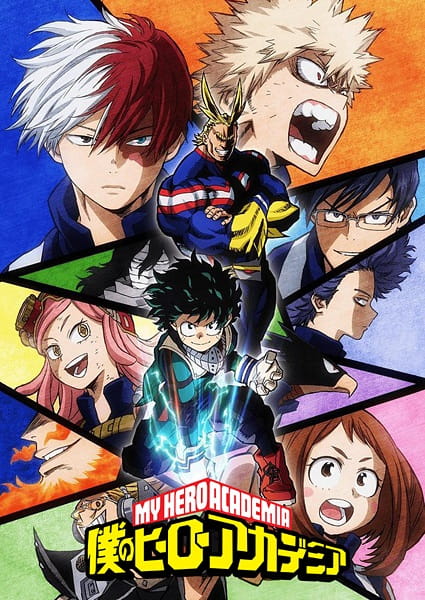
My Hero Academia Season 2 takes 8.40, and the load-bearing criterion is character at 9.0. The Sports Festival arc is the cleanest demonstration of ensemble writing in 2010s shonen — Todoroki's confrontation with Endeavor across episodes 23 through 24 is the season's structural keystone, and it works because Bones lets the fight stop for the conversation rather than the other way around. Cultural impact at 8.5 and animation at 8.7 reflect what Yutaka Nakamura and the Bones action team were doing with the Stain arc, which remains the show's high-water mark before the franchise's pacing began compounding against it.
Worldbuilding is the visible weakness at 7.5. Horikoshi's hero society is functional scaffolding, not the carefully constructed apparatus Made in Abyss is operating on. The Codex has argued at length that My Hero Academia is more good than great across its full run, and the 2017 entry is the season where that distinction was still flattering rather than damning.
Recovery of an MMO Junkie at 7.43 is the year's most honest small show
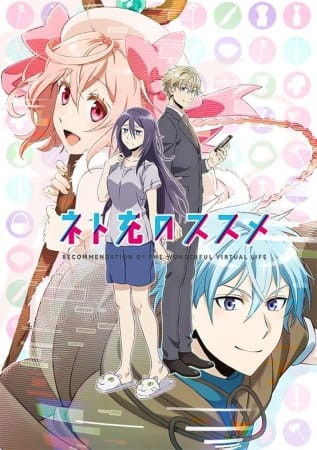
Recovery of an MMO Junkie posts 7.43 on story 7.5 and character 8.0, and the rubric's per-genre weighting is doing real work here. Signal.MD's ten-episode josei has no spectacle, no worldbuilding ambition, no cultural footprint to speak of, and it still clears Black Clover and Inuyashiki because Moriko Morioka is the most specifically written adult woman in 2017 anime. The Lily-Hayashi reveal isn't a twist; it's a character mechanism the show earns by spending its first six episodes treating online social capital as a load-bearing form of identity rather than a punchline. The MAL 7.51 undersells it because the show's audience was small. The Codex score reflects what it actually does on the criteria it bothers to compete on.
Black Clover at 6.52 and Inuyashiki at 6.35 are the year's structural failures
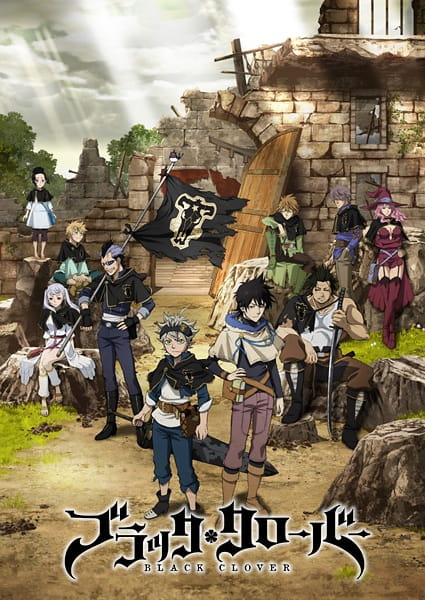
Black Clover's 6.52 is the most contested number in this list, given its 8.14 MAL average. The rubric reads it differently because the rubric grades the show as it aired in 2017 — Studio Pierrot's opening run, with its grey-on-grey compositing, its 6.0 animation floor, and Asta's screaming as a substitute for characterization. Story at 6.5, character at 6.8, themes at 6.7, world at 6.4: this is a show whose every criterion clusters in the watchable-not-good band, which is exactly what the score reflects. Pierrot improved the production later. The 2017 entry doesn't get retroactive credit for it.
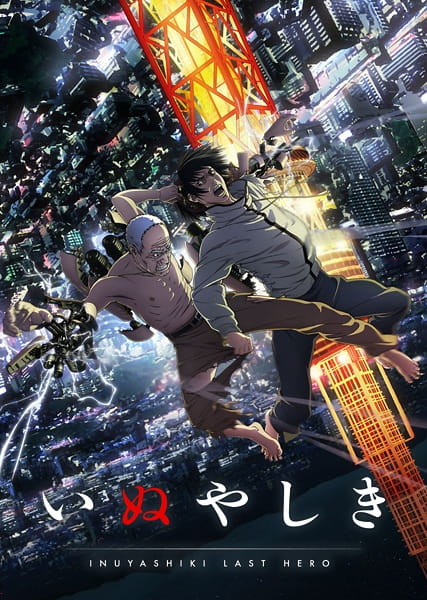
Inuyashiki at 6.35 is the more interesting failure. MAPPA's adaptation of Hiroya Oku's manga has the year's most provocative thematic premise — themes scores 7.0, the only criterion that performs — but world at 5.5 and character at 6.0 reveal what the rubric finds: a show that wants to interrogate empathy and aging and instead spends its runtime on Hiro Shishigami set pieces it can't afford to animate properly. The CG integration is the visible symptom; the structural problem is that Ichiro Inuyashiki disappears from his own show.
The strongest counter-argument: Black Clover's long tail
The honest objection is that grading Black Clover's 2017 cohort in isolation ignores what the show became — that the Spade Kingdom arc and the late-run animation lifts are part of the same project. The rubric refuses this on principle. A show that needed 100 episodes to become competent did not air a competent show in 2017. The same logic protects Made in Abyss from being penalized for the movies' tonal drift and protects MMO Junkie from being graded against a season two that never came. One rubric, one cohort, one year.
Made in Abyss is the only 2017 show that competes on the criteria seinen is supposed to win on, and it wins on them decisively. Everything below it is a study in which single criterion a show was willing to fund. That, more than any aggregate average, is what the year actually produced.
Featured in the Codex

More from The Codex
The Seven Deadly Sins Is a 6.60 Wearing a 7.60 Costume: A One-Point Gap Earned by Groping Gags and Convenient Flashbacks
The Seven Deadly Sins scores 6.60 on the Codex against MyAnimeList's 7.60 because the crowd is grading a Netflix breakout and a Ban-and-King friendship, not the 24 episodes A-1 Pictures actually broadcast in 2014.
The 10.0 That Built a Sunday: How Sazae-san's Cultural Score Carries a 6.58 Scorecard
Sazae-san is a case study in how a single criterion — cultural — can define how a show is remembered, and the 10.0 the Codex hands Eiken's 1969 institution is doing every bit of the heavy lifting its other five scores refuse to.
The Sebastian Problem: Why Black Butler Sits 1.10 Below Its MAL Line and the Crowd Refuses to Notice
Black Butler (Kuroshitsuji) posts a 1.10-point gap between MyAnimeList's 7.65 and the Codex 6.55 because the crowd is grading Sebastian's silhouette and a Phantomhive aesthetic, not the anime-original finale A-1 Pictures actually shipped in 2009.
Discussion
Set a display name above to post.
Loading discussion…