Made in Abyss Review: An 8.60 Carried by World-Building, Taxed on Character
Judged against one consistent rubric, Made in Abyss is best understood by which criteria carry it and which drag it down — not by a single number.
Judged against one consistent rubric, Made in Abyss is best understood by which criteria carry it and which drag it down — not by a single number.
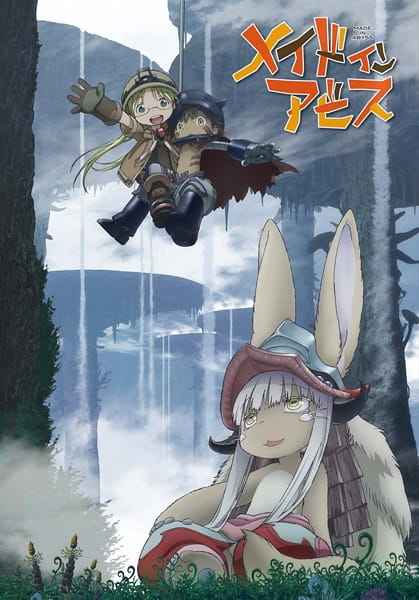
The chasm is the protagonist. That is the first honest thing to say about Akihito Tsukushi's 2017 Kinema Citrus adaptation, and the rubric confirms it: the show's highest score (9.5) is for its setting, and its lowest meaningful one (8.0) is for the children it sends into that setting. Made in Abyss is a 13-episode argument that geography can do the work of plot, and it wins that argument more often than it loses it.
What the consensus gets almost right
A Made in Abyss review that ignores the crowd is missing the most interesting data point. MyAnimeList parks the show at 8.62. The Anime Codex weighted score is 8.60. The gap is 0.02 — statistical noise, not disagreement. That alignment is rare enough to be worth interrogating, because the consensus position ("a beautiful, devastating adventure that earned its reputation") happens to land on roughly the right altitude for the wrong reasons. The crowd is grading on overall impression, dominated by the back half of the season. The rubric arrives at the same number by averaging across six criteria, three of which (story, character, cultural impact) actually pull the show down from the highs everyone remembers.
So this is not a case like Honey and Clover's 0.68 undercount, where the crowd is missing the character writing entirely. Made in Abyss is a show where the popular score happens to be load-bearing on the same pillars the rubric identifies — world and themes — but the popular reading flatters the story and character work in a way the rubric refuses to.
The world is doing more work than any other element
World-building scores 9.5, and it should. The Abyss is the rare modern setting where the geography is the power system. The strain of ascension worsening by layer means the cost of curiosity is encoded into elevation itself — there is no separate magic system to maintain, no power-scaling chart to update, because the chasm enforces its own escalation. The one-way logic of the descent makes every choice irreversible in a way most adventure anime spend entire arcs failing to engineer.
Tsukushi's restraint with relics, the White Whistle hierarchy, and stratum-specific ecology rewards attention without ever stooping to exposition dumps. The fourth layer's Sea of Corpses, the second layer's inverted forest — these are not setpieces, they are propositions about how the world functions, and the show trusts the viewer to extract the rules from the imagery. This is the kind of structural commitment that earns a place on any serious world-building shortlist.
Themes do the second-heaviest lifting
The 9.0 on themes is earned almost entirely by the back third. The Curse of the Abyss is the show's central metaphor made literal: ascending costs you your body, your sanity, sometimes your humanity, and the price is non-negotiable. This is what gives the Nanachi and Mitty sequence — episode 10 specifically — its weight. Reg's treatment of Mitty is not catharsis-as-cruelty; it is the show insisting that mercy and violence can occupy the same gesture, and that the children who chose this descent are now adults by virtue of having to decide.
The juxtaposition of chibi design language against body horror is the show's most-discussed feature and its most-misread. It is not aesthetic provocation. It is the thematic argument made visible: the things that look like they cannot be harmed are exactly the things being harmed. Whether that argument crosses into exploitation is a real critique, and the rubric acknowledges it without conceding the point.
Where the show actually loses altitude: story and character
Story scores 8.5, character 8.0, and both are correct downward adjustments. The early surface episodes — Riko's orphanage life, the introduction of Reg, the conventional setup before the descent acquires its tone — are competent and forgettable. The show does not become itself until the encounter with Ozen at the Seeker Camp in the second act, at which point pacing tightens, stakes clarify, and the descent acquires the irreversibility the premise promised from episode one. A first act that takes four or five episodes to ignite is a real cost, no matter how well it pays off.
Character is the more interesting deduction. Riko's reckless optimism and Reg's protective anxiety form a functional dynamic, and Reg's reckoning with his own capacity for violence — the cannon, the question of what he was built to do — gives him genuine interiority. Nanachi, when she arrives in the back third, immediately becomes the most complete figure in the cast: grief and pragmatism welded together, no wasted gesture. Ozen subverts the cruel-mentor archetype into something stranger and more useful.
But the leads are children whose growth is real and frequently subordinated to plot demand. Riko's resilience after the poisonous spike injury is dramatically necessary; it is not always psychologically tracked. The show is more interested in what the Abyss does to its characters than in what its characters do with what the Abyss does to them. That is a legitimate authorial choice — and a legitimate ceiling on the character score. It is the gap between the show this is and the shows that top the character axis.
Animation is high, cultural impact is honest
The 9.0 for animation belongs to Kinema Citrus's background department and to Kevin Penkin in roughly equal measure. The painterly vistas make the chasm legible as a space, not a series of locations, and Penkin's choral-orchestral score does the emotional load-bearing that the dialogue often refuses to. Episode 10's sound design — the restraint, the silences, the choice of when to let Mitty's cry become the only sound in the scene — is the single best directorial decision in the season. The CG creatures occasionally stiffen against the hand-drawn world, which is the only consistent technical complaint worth lodging.
Cultural impact at 8.0 is the score most likely to be challenged and the easiest to defend. Made in Abyss became 2017's defining "deceptively dark" title and lent its name to an entire mode of tonal contrast. It sustained a sequel film, a second season, a game, and a Western live-action project in development. But it remains cult-shaped within seinen — devoted, vocal, sales-strong, not mainstream-defining. An 8.0 is exactly the altitude where "important to the people who care" meets "not yet load-bearing for the medium."
The strongest counter-argument
The opposing read goes like this: the rubric's character deduction is too harsh because Made in Abyss is consciously a world-first narrative in the tradition of cosmic horror, and grading its child leads against the interiority of adult-led seinen misses the genre it is actually working in. There is real merit to this. Cosmic horror has always treated its protagonists as observers of forces larger than themselves, and Riko functions partly as that — a vector for the reader into a setting that does not care about her.
The rubric reads it differently because the show keeps insisting on character interiority when it serves the descent (Reg's violence, Nanachi's grief, Mitty's silence) and dropping it when it does not (Riko's recovery beats, the surface cast). You cannot have it both ways. A show that demonstrates it can write interior life owes that interiority to its leads, not just its supporting cast.
The 8.60 is not a compromise score. It is what happens when a 9.5 world, a 9.0 themes, and a 9.0 animation budget have to carry a story that takes too long to start and a lead character whose growth is occasionally a passenger on her own descent. Made in Abyss is exactly as good as its chasm — which is very good, and not the same thing as great.
Featured in the Codex
More from The Codex
The Seven Deadly Sins Is a 6.60 Wearing a 7.60 Costume: A One-Point Gap Earned by Groping Gags and Convenient Flashbacks
The Seven Deadly Sins scores 6.60 on the Codex against MyAnimeList's 7.60 because the crowd is grading a Netflix breakout and a Ban-and-King friendship, not the 24 episodes A-1 Pictures actually broadcast in 2014.
The 10.0 That Built a Sunday: How Sazae-san's Cultural Score Carries a 6.58 Scorecard
Sazae-san is a case study in how a single criterion — cultural — can define how a show is remembered, and the 10.0 the Codex hands Eiken's 1969 institution is doing every bit of the heavy lifting its other five scores refuse to.
The Sebastian Problem: Why Black Butler Sits 1.10 Below Its MAL Line and the Crowd Refuses to Notice
Black Butler (Kuroshitsuji) posts a 1.10-point gap between MyAnimeList's 7.65 and the Codex 6.55 because the crowd is grading Sebastian's silhouette and a Phantomhive aesthetic, not the anime-original finale A-1 Pictures actually shipped in 2009.
Discussion
Set a display name above to post.
Loading discussion…