The 9.0 That Carries Cross Game: How One Character Relationship Lifts an 8.08 Above Its Production
Cross Game is a case study in how a single criterion — character — can define how a show is remembered, even when animation, world-building, and cultural reach pull the scorecard in the other direction.
Cross Game is a case study in how a single criterion — character — can define how a show is remembered, even when animation, world-building, and cultural reach pull the scorecard in the other direction.
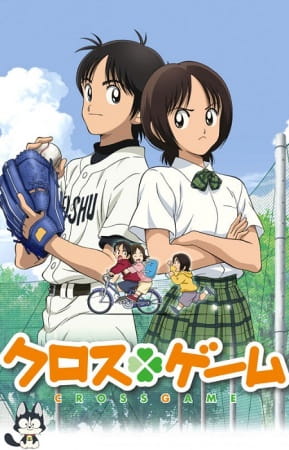
Mitsuru Adachi has been writing the same baseball story for forty years, and Cross Game is the one where the writing finally outran the template. The Codex puts the 2009 SynergySP adaptation at 8.08 across six criteria, but the number that does the actual heavy lifting — the 9.0 on character — is the only one that explains why people still bring this show up sixteen years later. Everything else on the scorecard is solid-to-modest. The Kou-Aoba relationship is not.
The Cross Game character question, and why the consensus undersells it
The MyAnimeList crowd scores Cross Game at 8.38, which sounds generous until you realize that number is doing the work of a single average — flattening a 9.0 on character and a 6.8 on animation into one undifferentiated impression. The aggregate read is "good Adachi, slow start, worth it for the romance." That's not wrong. It's just unhelpful, because it treats the show as a uniform object when in fact Cross Game is one of the most lopsided scorecards in shonen drama: a near-elite character criterion shouldering a production that, on its own, would put this at a 7.5 ceiling.
The Cross Game character question is whether Kou Kitamura and Aoba Tsukishima — two leads whose relationship is conveyed almost entirely through what they don't say — can carry fifty episodes against a 6.8 animation score and a 6.5 cultural footprint. The Codex answer is yes, and the case is worth making in specifics rather than vibes. This is the same pattern that defined Maison Ikkoku at 8.37: a character writing peak that drags the production along behind it. Adachi has been here before. He's just better at it now.
What the 9.0 is actually measuring
The Codex 9.0 on character rests on a specific claim: Kou and Aoba's growth is conveyed through glances, baseball, and what goes unsaid, not through monologues. This is harder than it sounds, and it's where Adachi separates from every shonen romance writer working in 2009. Wakaba dies in the first arc. The next forty-eight episodes are about two people who refuse to talk about her, who organize their entire interior lives around her absence, and who slowly — without ever saying it — recognize that the thing pulling them together is the thing they share about her.
Aoba is the engine here. Her arc isn't romantic recognition; it's the gradual, agonizing realization that Kou is becoming exactly the pitcher Wakaba predicted in her childhood dream-journal. That recognition is never spoken aloud. It's communicated through her face when she watches him throw, through the way she stops correcting his form, through a tsundere posture that the show treats as armor rather than comedy. Adachi gives her the dignity of an interior life the camera doesn't intrude on. The supporting cast does real work too — Akaishi's quiet captaincy, Senda's brattish ambition curdling into respect, and Akane, the late-arriving girl whose physical resemblance to Wakaba is a deliberate provocation that forces both leads to admit, to themselves, what they've been avoiding. A few teammates remain functional roster pieces. Most of them get real arcs.
This is character writing that earns the 9.0 the way Honey and Clover earns its character score — through restraint, observation, and a refusal to externalize what's better felt.
Where the scorecard pushes back
The story criterion lands at 8.5, which is high but not the show's peak, and the reason is structural. The central baseball plot — rival schools, the climb toward Koshien, the climactic Seishu High games — is conventional Adachi architecture. He wrote it in Touch. He wrote it again here. The first ten or so episodes meander before the throughline crystallizes, and the rival-school beats are recognizable from a dozen sports manga. What elevates the 8.5 is not the plot shape but how Wakaba's death — placed deliberately in the first arc rather than withheld as a twist — saturates every subsequent scene with melancholy without ever tipping into sentimentality.
Themes earn 8.7 for the same reason: Wakaba's dream-journal prediction of Kou pitching at Koshien is one of the most quietly devastating engines in shonen drama. The grief is metabolized into action. The dead are honored through pitching mechanics. Adachi never explains this. He just lets the seasons turn.
The 7.0 on world is fair. The Tsukishima batting center and the Kitamura sporting-goods shop are lived-in, internally consistent spaces, but the premise — childhood rivals bound by a shared lost love — is recognizable Adachi territory rather than fresh ground.
The production is the ceiling
SynergySP's animation lands at 6.8, and this is where the conversation has to be honest. Character designs are clean and faithful to Adachi's manga. The baseball animation during the Seishu games is competent. But the budget shows — static backgrounds, repeated stock motion during dialogue scenes, conservative camera work throughout. What rescues the production is direction rather than animation: the editing rhythm, the lingering silent beats, the cutaways to sky and weather that Adachi adaptations have used since Touch to do emotional work the keyframes can't afford.
Cultural impact sits at 6.5. The manga won the 54th Shogakukan Manga Award. The anime did not become Touch. It remains a respected, niche title, beloved by Adachi devotees and baseball-manga readers, largely invisible to the broader 2009 audience that was watching Bakemonogatari and K-On!. The show has the reputation of a hidden gem because, functionally, it is one.
The steelman: maybe character isn't enough
The honest opposing case is that a 6.8 on animation and a 6.5 on cultural reach across fifty episodes is a lot of mediocre production to ask any single criterion to absorb. Sports anime lives or dies on its set pieces, and if the Seishu games don't quicken your pulse — if the static backgrounds and the modest in-between work pull you out — then no amount of Aoba's silent recognition will close the gap. Viewers who want catharsis, who want the relationship spoken aloud, who want the baseball to look like Ping Pong the Animation or Haikyuu!!, will find Cross Game muted to the point of frustration.
The rubric reads it differently because character at 9.0 with themes at 8.7 is not a single criterion doing the work — it's two reinforcing each other, the relationship and the meaning of the relationship locked in step. The animation doesn't have to soar. The direction is doing the lift.
Verdict
Cross Game at 8.08 is exactly what its scorecard says: a show whose character writing is genuinely elite, whose themes earn the weight that character gives them, and whose production is too modest to push it into the canon. It's neither the masterpiece its devotees claim nor the slow, dated curiosity its detractors dismiss. It's a 9.0 relationship carrying a 6.8 production across fifty episodes — and that the relationship wins is the only reason this review exists.
Featured in the Codex



More from The Codex
The Seven Deadly Sins Is a 6.60 Wearing a 7.60 Costume: A One-Point Gap Earned by Groping Gags and Convenient Flashbacks
The Seven Deadly Sins scores 6.60 on the Codex against MyAnimeList's 7.60 because the crowd is grading a Netflix breakout and a Ban-and-King friendship, not the 24 episodes A-1 Pictures actually broadcast in 2014.
The 10.0 That Built a Sunday: How Sazae-san's Cultural Score Carries a 6.58 Scorecard
Sazae-san is a case study in how a single criterion — cultural — can define how a show is remembered, and the 10.0 the Codex hands Eiken's 1969 institution is doing every bit of the heavy lifting its other five scores refuse to.
The Sebastian Problem: Why Black Butler Sits 1.10 Below Its MAL Line and the Crowd Refuses to Notice
Black Butler (Kuroshitsuji) posts a 1.10-point gap between MyAnimeList's 7.65 and the Codex 6.55 because the crowd is grading Sebastian's silhouette and a Phantomhive aesthetic, not the anime-original finale A-1 Pictures actually shipped in 2009.
Discussion
Set a display name above to post.
Loading discussion…