The 9.5 That Built Cardcaptor Sakura's Legacy: How One Criterion Carries an 8.30
Cardcaptor Sakura scores 8.30 on the Codex rubric, but its 9.5 on cultural impact is the single number that explains why a 1998 shoujo still defines the magical-girl form a quarter-century later.
Cardcaptor Sakura scores 8.30 on the Codex rubric, but its 9.5 on cultural impact is the single number that explains why a 1998 shoujo still defines the magical-girl form a quarter-century later.
Cardcaptor Sakura is a case study in how a single criterion — cultural — can define how a show is remembered. The Codex score lands at 8.30. The cultural mark lands at 9.5. That 1.2-point spread between one criterion and the weighted total is the entire story of CLAMP's 70-episode Madhouse production, and it is the lens through which every other number on the scorecard has to be read.
The Consensus Misses the Asymmetry
MyAnimeList parks Cardcaptor Sakura at 8.18, which is fine, defensible, and almost entirely beside the point. A flat aggregate score treats the show as an average of its parts, when in fact Cardcaptor Sakura is one of the most lopsided entries in the magical-girl canon — a series whose worldbuilding rates a competent 7.0 and whose cultural footprint rates a 9.5, and where the gap between those two numbers is the only honest way to talk about it. The crowd score smooths that asymmetry into a polite, B-plus shrug. The Codex doesn't.
What the consensus position gets wrong isn't the rating — 8.18 and 8.30 are within rounding noise — it's the explanation. The MyAnimeList read of CCS is "lovely classic, gentle stakes, good vibes." The Codex read is sharper: a structurally tidy children's shoujo with one of the richest supporting casts in the genre, lifted into the pantheon by a cultural contribution most successors are still cribbing from. Neither a hit piece nor a puff piece — the numbers say what they say.
What the Cardcaptor Sakura Cultural Score Actually Buys
The 9.5 isn't sentiment. It's three concrete claims.
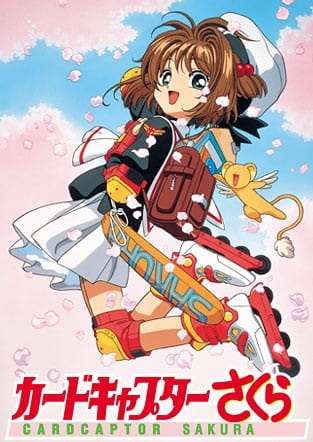
First, the transformation-outfit-per-episode aesthetic. Tomoyo's bespoke battle costumes are not a gag; they are the template. Every magical girl series after 1998 that varies its protagonist's silhouette episode-to-episode — and that is most of them — is operating inside an idiom Cardcaptor Sakura codified. Sailor Moon gave the genre the henshin sequence. CCS gave it the wardrobe department. Madoka, fifteen years later, is in conversation with both, and the Codex's list of the most influential anime ever made reads CCS as the load-bearing beam between those two eras.
Second, the queer affection. Touya and Yukito are not coded; their relationship is depicted with the same matter-of-fact tenderness as Sakura's crush on Yukito or Syaoran's slow thaw. Tomoyo's adoration of Sakura is not subtext, it is the supporting cast's emotional spine. Rika and Terada are handled with a lightness modern viewers will and should interrogate, but the absence of moralizing across any of these threads in a 1998 NHK BS2 children's broadcast is genuinely landmark. The show didn't argue for inclusion; it simply drew it.
Third, the localization disaster. The "Cardcaptors" edit — Nelvana's reordering, the cuts to Syaoran's screen time, the erasure of the queer threads — became the canonical worked example in every subsequent localization seminar. That negative cultural footprint counts. Knowing what not to do is a form of influence.
Add those together and 9.5 is not a generosity. It is a measurement.
The 7.5 Story and 7.0 World Are Honest Numbers
Credit real strengths where they exist, and be critical where the data is critical. The story criterion sits at 7.5 because the card-of-the-week structure does sag — the middle stretch of the Clow Card arc has episodes that are functionally interchangeable, and the show is honest enough about its own children's-shoujo register that it never tries to disguise this with manufactured stakes. The escalation into the Sakura Card arc, with Eriol revealed as Clow Reed's reincarnation and the Final Judgement atop Tokyo Tower paying off the Yue setup, is the kind of structural patience that retroactively justifies the lulls. It does not erase them.
Worldbuilding at 7.0 is the same honest mark. The Clow Card system is elegant, each card has a distinct elemental personality, and the star staff transformation externalizes Sakura's claim on her own power with a clarity most magical-girl shows fumble. Tomoeda itself is a thinly sketched idyll, deliberately so — this is not a series interested in geography or politics, and pretending otherwise to inflate the score would be dishonest. CCS isn't underrated on world. It's correctly rated on world.
The 9.0 on Character Is the Other Thing Doing Real Work
The cultural score gets the headline, but Cardcaptor Sakura's 9.0 on character is the criterion that earns the show its rewatch value rather than its historical importance. Sakura's "everything will surely be all right" is not a catchphrase — it is a tracked psychological arc from a panicky fourth-grader to a magical girl who has internalized her own competence. Syaoran's progression from cold rival to devoted partner is paced across the full 70 episodes rather than flipped in a single confession scene. Tomoyo's quietly aching one-sided love is given room to be one-sided. Touya gets real emotional weight around the family's late mother. This is a depth of bench that most shoujo of the period — and most magical-girl shows of any period — simply do not have. The Codex's broader argument that character writing is the medium's highest-scoring criterion finds one of its cleanest demonstrations here.
Director Morio Asaka's framing matters, too. The Yukito rooftop confession and the Final Judgement sequence are not standard TV-anime coverage; they are composed. Madhouse's animation holds an 8.5, and the card-capture set pieces have aged better than nearly anything else on 1998 broadcast television.
The Steelman: Maybe Cultural Is Doing Too Much Lifting
The honest counter is that a 9.5 cultural mark can flatter a show whose moment-to-moment storytelling is, by the rubric's own admission, gentle and occasionally interchangeable. If you stripped CCS of its historical position and watched it cold in 2024, would the 8.30 hold? Probably not — you'd be left with the 7.5 story and 7.0 world more vividly than the 9.0 character, because the character work reveals itself across runtime, and modern viewers ration runtime carefully.
The rubric's answer is that cultural impact is not a sentimentality tax — it is a measurement of what the work changed downstream, and shoujo weights it accordingly. CCS did not benefit from the magical-girl genre. The magical-girl genre benefited from CCS. The 9.5 reflects causation, not nostalgia.
Verdict
The 9.5 cultural score is not a participation trophy for being old; it is the rubric correctly identifying that Cardcaptor Sakura wrote the grammar a generation of successors are still speaking. The 8.30 weighted total is the show's honest worth as an artifact — gentle story, thin world, exceptional cast, foundational influence — and the spread between criteria is the only review of CCS that means anything. Watch it for the character writing. Remember it for everything it built.
Featured in the Codex



More from The Codex
The Seven Deadly Sins Is a 6.60 Wearing a 7.60 Costume: A One-Point Gap Earned by Groping Gags and Convenient Flashbacks
The Seven Deadly Sins scores 6.60 on the Codex against MyAnimeList's 7.60 because the crowd is grading a Netflix breakout and a Ban-and-King friendship, not the 24 episodes A-1 Pictures actually broadcast in 2014.
The 10.0 That Built a Sunday: How Sazae-san's Cultural Score Carries a 6.58 Scorecard
Sazae-san is a case study in how a single criterion — cultural — can define how a show is remembered, and the 10.0 the Codex hands Eiken's 1969 institution is doing every bit of the heavy lifting its other five scores refuse to.
The Sebastian Problem: Why Black Butler Sits 1.10 Below Its MAL Line and the Crowd Refuses to Notice
Black Butler (Kuroshitsuji) posts a 1.10-point gap between MyAnimeList's 7.65 and the Codex 6.55 because the crowd is grading Sebastian's silhouette and a Phantomhive aesthetic, not the anime-original finale A-1 Pictures actually shipped in 2009.
Discussion
Set a display name above to post.
Loading discussion…