Is Captain Tsubasa Overrated? A 6.68 That Rides Soccer's Real-World Debt Into Numbers Tsuchida's 128 Episodes Won't Earn on the Pitch
Captain Tsubasa sits 0.71 points below its MAL line because the crowd is grading a cultural footprint the size of the J-League, not the 1983 Tsuchida production that keeps players sprinting down elongated fields.
Captain Tsubasa sits 0.71 points below its MAL line because the crowd is grading a cultural footprint the size of the J-League, not the 1983 Tsuchida production that keeps players sprinting down elongated fields.
The gap between Captain Tsubasa's reputation and its rubric score is the story. Name what the crowd is rewarding that the rubric won't: an entire sport in Japan, half the professional roster at Serie A in the late nineties, and Lionel Messi picking up a ball because Tsubasa Ozora told him it was his friend. That is a real inheritance. It is also not, strictly speaking, an anime.
Is Captain Tsubasa overrated by the crowd? The numbers say yes — but only by the margin the rubric already predicts
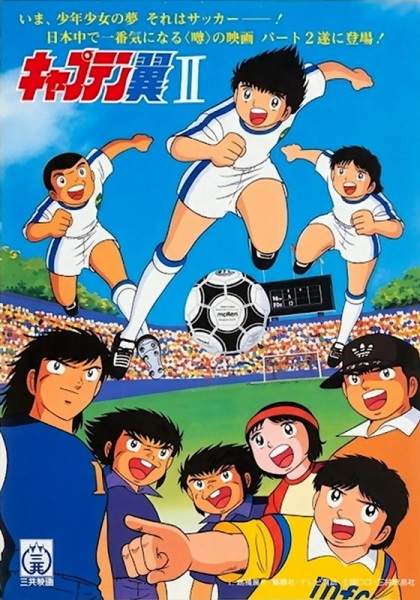
MyAnimeList lands Captain Tsubasa at 7.39. Anime Codex weighs it at 6.68. The 0.71-point delta is smaller than most of the gaps we've catalogued — smaller than Fire Force's 1.04, smaller than Angel Beats!'s 1.34 — and that's because the consensus, in this case, isn't wildly wrong. It's just averaging the wrong things. The MAL score is a weighted memory of what Youichi Takahashi's manga did to the sport of association football. The rubric score is what Tsuchida Productions put on TV Tokyo between 1983 and 1986 across 128 episodes. Those are not the same object. One is a cultural artifact. The other is an animated series with a 5.5 animation score and a formula that repeats until the ladder runs out of rungs.
Engage the consensus directly: the 7.39 is not defending the show as a piece of craft. It is defending Tsubasa Ozora's status as a founding document. Fine. The rubric doesn't dispute the founding. It disputes the craft, and specifically it disputes 128 episodes of matches decided at the buzzer.
The 9.5 cultural score is doing the heavy lifting — and everyone knows it
The catalogue awards Captain Tsubasa a 9.5 for cultural impact, which is the ceiling this site tends to reserve for shows that materially changed an industry or a nation. It earns it. Hidetoshi Nakata, Alessandro Del Piero, Fernando Torres, Messi — the roll call of professional footballers who cite Tsubasa as the reason they picked up a ball is not a marketing exercise, it is a demographic event. The show effectively invented the modern sports shonen template that every subsequent entry in the genre — Kuroko's Basketball included — has been iterating on for four decades.
That 9.5 is also what warps the MAL average upward. Cultural weight bleeds into how viewers grade everything else. A voter who took up soccer because of the Drive Shoot is not going to score the still frames honestly. This is the mechanism. The crowd is compressing six criteria into one — "did this show matter?" — and the rubric is refusing to.
The 5.5 animation score is not a technicality, it is the show
Tsuchida Productions in 1983 was not a well-resourced house, and Captain Tsubasa is where that shows most cruelly. The infamous elongated pitch — players sprinting for two full minutes without arriving at midfield — is not a fan joke, it is a budget symptom. Stock footage of running loops. Stills held on determined faces while narration does the work motion should be doing. A single Tiger Shot from Kojiro Hyuga can consume an episode of setup, held frame, impact line, and reaction cut, because the alternative is drawing the actual soccer.
There is craft in the direction — Hitoshi Nanba's storyboards understand how to squeeze tension out of held close-ups and dramatic angles, and the overhead bicycle kick has been iconography for forty years for a reason. But by even 1983 standards, this is sparse motion. Contemporaneous shonen action shows were doing more per cel. The 5.5 is not the rubric being harsh; it is the rubric refusing to grade a cultural document as if it were a Production I.G court sequence.
The story is a ladder, not a plot — and 128 episodes is too long a ladder
The 6.5 for story acknowledges the escalation architecture works: Nankatsu's elementary tournaments feed into the national stage, which feeds into international play. That is a satisfying shape. The Nankatsu-vs-Toho final against Hyuga is the structural high point of the whole run, and it earns its place. But the beats between the peaks are formula: rival appears, rival's technique is introduced, match is close, Tsubasa wins at the buzzer, next rival appears. Across 128 episodes, the diminishing returns are severe. Misugi's heart condition, Matsuyama's northern-team stoicism — these give the rival-of-the-week structure just enough backstory to register, but the ladder never becomes a novel. It stays a ladder.
Compare the pacing complaint to D.Gray-man's middle stretch: both shows have a strong spine and let episode count dissolve it. Tsubasa is more disciplined than most about staying on the pitch, but discipline about location is not the same as discipline about narrative.
Character work is real, but static — growth is a new technique, not an inner change
The 6.8 on character is generous, and it's generous because of the supporting cast. Tsubasa himself is a frictionless idealist whose arc consists mostly of learning new shots. Hyuga is the show's actual emotional engine: the volatility, the fatherless-family burden, the way soccer becomes the only path out. Genzo Wakabayashi's pride and Taro Misaki's golden-duo chemistry with Tsubasa give the rivalries their texture. These are memorable figures. They are also fixed. Development in Captain Tsubasa is expressed through the acquisition of named techniques — the Drive Shoot, the Skylab Hurricane — not through anyone changing who they are. The rubric reads that as arrested growth, and correctly.
The steelman: this is the ur-text, and you cannot grade an ur-text on its sequels' terms
Here is the strongest version of the opposing view. Captain Tsubasa is the show that made sports shonen a genre. Grading its animation against later productions is anachronism; grading its formula against later, tighter shows is grading it against its own descendants. The 9.5 cultural score exists precisely because the show gets to be judged on what it started, not on what it looks like next to Haikyuu.
The rubric's answer is that it already accounts for this. The 9.5 is where originality-of-influence gets paid. The 7.0 on world explicitly credits the premise for inventing the template. What the rubric refuses to do is let cultural weight subsidize the animation and story scores. A 5.5 on motion is a 5.5 on motion regardless of who the show inspired. Messi's career is not a cel count.
The 6.68 is not a hit piece. It is what happens when you refuse to let one criterion carry the other five.
Verdict
Captain Tsubasa is a genuine founding document with a 9.5 cultural footprint and a 5.5 animation floor, and the 6.68 is the honest average of those two truths. The MAL 7.39 is the crowd politely refusing to grade the still frames. The rubric is not polite.
Featured in the Codex


More from The Codex
The Seven Deadly Sins Is a 6.60 Wearing a 7.60 Costume: A One-Point Gap Earned by Groping Gags and Convenient Flashbacks
The Seven Deadly Sins scores 6.60 on the Codex against MyAnimeList's 7.60 because the crowd is grading a Netflix breakout and a Ban-and-King friendship, not the 24 episodes A-1 Pictures actually broadcast in 2014.
The 10.0 That Built a Sunday: How Sazae-san's Cultural Score Carries a 6.58 Scorecard
Sazae-san is a case study in how a single criterion — cultural — can define how a show is remembered, and the 10.0 the Codex hands Eiken's 1969 institution is doing every bit of the heavy lifting its other five scores refuse to.
The Sebastian Problem: Why Black Butler Sits 1.10 Below Its MAL Line and the Crowd Refuses to Notice
Black Butler (Kuroshitsuji) posts a 1.10-point gap between MyAnimeList's 7.65 and the Codex 6.55 because the crowd is grading Sebastian's silhouette and a Phantomhive aesthetic, not the anime-original finale A-1 Pictures actually shipped in 2009.
Discussion
Set a display name above to post.
Loading discussion…