Is D.Gray-man Overrated? A 6.81 That Rides Akuma Horror and a Gothic Palette Into Numbers 103 Episodes of TMS Filler Refuse to Earn
D.Gray-man scores 6.81 on the Codex against MyAnimeList's 8.00 — a 1.19-point gap earned when the crowd grades Allen's cursed eye and a Noah's Ark set piece, not the middle stretch TMS actually broadcast.
D.Gray-man scores 6.81 on the Codex against MyAnimeList's 8.00 — a 1.19-point gap earned when the crowd grades Allen's cursed eye and a Noah's Ark set piece, not the middle stretch TMS actually broadcast.
The Yeegar General dies in a stairwell, whispering apologies to Akuma he could not save, and for a moment D.Gray-man is the darkest Weekly Shōnen Jump adaptation of its decade. Then it becomes a monster-of-the-week. That whiplash — between a genuinely gothic premise and a production that keeps forgetting it — is the show's real signature, and it's the reason the rubric can't meet the crowd where the crowd is standing.
The gap between D.Gray-man's reputation and its rubric score is the story
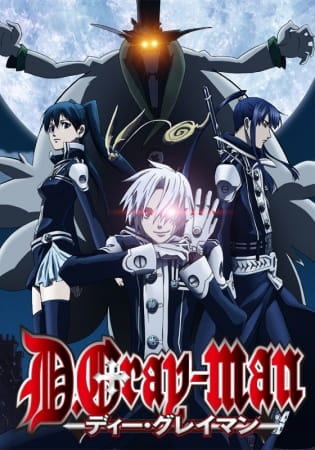
MyAnimeList scores D.Gray-man an 8.00. The Codex weighted score is 6.81. That 1.19-point delta is not noise, and it is not the rubric being contrarian. It is a specific accounting of what a 103-episode TMS Entertainment production shipped in 2006 versus what its devoted audience remembers watching. The consensus is grading Allen Walker's cursed eye, Katsura Hoshino's Victorian character design, and the emotional register of a handful of standout episodes. The rubric is grading all 103 broadcasts, including the ones where the show settles into episodic Akuma-of-the-week churn and forgets its own thesis.
Name what the crowd is rewarding that the rubric won't: premise, aesthetic, and vibes-of-tragedy. Name what the rubric is grading that the crowd elides: pacing across a hundred episodes, character arcs that don't complete, a story that ends mid-invasion because Hoshino's manga couldn't keep pace. This is the same reading pattern that shows up when Hellsing Ultimate carries Alucard's silhouette into a 1.49-point gap — the crowd is scoring the highlights reel, not the runtime.
The story score is 6.8 because the middle stretch is not the show people remember
The Rewinding Town two-parter and the early Black Order episodes establish something rare in mid-2000s Jump: a tragic premise where the antagonist weaponizes grief itself. The Millennium Earl doesn't recruit villains, he manufactures them out of bereaved parents and widows who wanted their dead back. That's a real idea. The Suman Dark episode and the Yeegar General's death are the show at full altitude, using the Akuma mechanic as horror rather than shonen escalation.
Then the middle of the run happens. TMS pads. The narrative slips into filler and episodic contract-work before the Noah's Ark arc yanks it back into shape. And then, because the manga was still crawling forward through Hoshino's hiatuses, the anime stops — not concludes, stops — around the Lulubell-led invasion of the Order. The central conflict with the Earl is left mid-sentence. A story score of 6.8 is what you get when the beginning and one late arc are genuinely strong and the middle third is a different show entirely.
Character work stalls at 6.5 because Allen Walker is the only one who gets a full sentence
Allen is an unusually good shonen lead for the era — polite, self-sacrificial, defined less by ambition than by an eye that refuses to let him ignore what an Akuma actually is. That's a 7-tier lead in a 6-tier ensemble. Kanda is cold and legible; Lenalee's institutional attachment to the Order is drawn with more care than most Jump adaptations bother with; Lavi is a functional third. But the anime keeps introducing Exorcists and Generals whose backstories it never intends to develop. General Cross is a promise the show never cashes. Allen's past is teased and then abandoned inside the 103-episode window.
A rubric that grades what actually aired can't give credit for a Cross arc the anime deferred to a manga still on hiatus. This is the same trap that dropped Saiyuki's character score below its bishounen reputation — a devoted cast the audience has projected depth onto, while the runtime only funds one full portrait.
Themes score a 7.2 — the highest number on the card — and it still isn't enough
Here is where the crowd is closest to right. The "destroyer who saves" framing — Allen's obligation to kill the Akuma because that is how you free the soul trapped inside it — is the best idea in the show, and it's better than most of what Jump was publishing in 2004. The Mater arc and the Suman Dark episode weaponize this well. Grief-as-fuel is a genuinely dark theological engine.
The 7.2 is real. It is also the ceiling, because the anime dilutes its own gothic melancholy every time it drops into a filler slot and asks the audience to laugh at Komui's inventions or watch a one-off Akuma get punched by the beach. Tonal inconsistency is not a small tax on a show whose entire thematic weight depends on maintaining a register of dread. The themes are strong. The execution around them is not consistently working in their favor.
World-building at 7.5 is the show's second-highest score and its most defensible flex
The Innocence system is genuinely distinct. Finite, semi-sentient divine substance, split into Equipment and Parasite types, with Akuma leveling into higher evolutionary tiers that produce real escalation rather than arbitrary shonen power creep. The Noah clan as inheritors of biblical memory, the Ark as a traversable space, the whole Victorian-industrial aesthetic TMS renders in muted greys and blacks — this is worldbuilding with architecture. Skin Bolic and Tyki Mikk exist inside a system that feels designed rather than invented episode-to-episode.
Where the world drops points: Synchronization rates and Innocence compatibility get introduced faster than the anime bothers to explain them, and internal consistency wobbles when the mechanics need to bend for a fight. Distinctive, not fully sealed.
Animation at 6.7 is where the runtime penalty gets brutal
TMS lands the atmosphere. Character designs are sharp, Akuma horror imagery is memorable, the openings sell the melancholy better than most of the episodes they precede. The Skin Bolic fight and the Tyki confrontations in the Noah's Ark arc are the visual peaks and they're genuinely good. But budget across 103 episodes is not a flat line, and it shows. Filler episodes look flatter, action choreography settles into serviceable rather than composed, direction gets static and repetitive in the routine slots. A show that shipped 103 episodes in 2006–2008 is going to have valleys, and the rubric grades the valleys.
The counter-argument: the highlights really are that good
The strongest version of the 8.00 case: forget the middle, forget the ending, judge D.Gray-man on Rewinding Town, on Suman Dark, on Yeegar's death, on Noah's Ark. Those episodes are top-decile mid-2000s Jump. Allen's eye is one of the best moral-mechanical devices in shonen. Hoshino's designs are iconic enough that a 2016 reboot happened. If you weight peaks over averages, 8.00 is coherent.
The rubric doesn't weight peaks over averages, and it shouldn't. It grades a broadcast object. The 5.5 on cultural impact is the honest measure of what that broadcast object accomplished — solid mid-2000s recognition, a devoted cult, and a legacy fragmented by Hoshino's hiatuses and the Hallow reboot that split the anime canon. D.Gray-man never touched Bleach or Fullmetal Alchemist's footprint, and the numbers know it. It sits in the same taxonomic slot as Katekyo Hitman Reborn!'s Varia-carried 6.98 — a devoted fandom scoring the highlight beats while a long production run underneath them refuses to average up.
Verdict
D.Gray-man is a 6.81 that contains a 7.5 world and a 7.2 thematic engine, and those two numbers are why the crowd's 8.00 feels defensible even when it isn't. The rubric is not saying the show is bad. It is saying the show is a strong premise adapted by a production that couldn't sustain it across 103 episodes and had to stop before the story finished. That's a cult favorite, not a genre-definer, and the gap between reputation and score is the ledger being honest about which is which.
Featured in the Codex



More from The Codex
The Seven Deadly Sins Is a 6.60 Wearing a 7.60 Costume: A One-Point Gap Earned by Groping Gags and Convenient Flashbacks
The Seven Deadly Sins scores 6.60 on the Codex against MyAnimeList's 7.60 because the crowd is grading a Netflix breakout and a Ban-and-King friendship, not the 24 episodes A-1 Pictures actually broadcast in 2014.
The 10.0 That Built a Sunday: How Sazae-san's Cultural Score Carries a 6.58 Scorecard
Sazae-san is a case study in how a single criterion — cultural — can define how a show is remembered, and the 10.0 the Codex hands Eiken's 1969 institution is doing every bit of the heavy lifting its other five scores refuse to.
The Sebastian Problem: Why Black Butler Sits 1.10 Below Its MAL Line and the Crowd Refuses to Notice
Black Butler (Kuroshitsuji) posts a 1.10-point gap between MyAnimeList's 7.65 and the Codex 6.55 because the crowd is grading Sebastian's silhouette and a Phantomhive aesthetic, not the anime-original finale A-1 Pictures actually shipped in 2009.
Discussion
Set a display name above to post.
Loading discussion…