Black Jack Review: A 7.63 That Rides Themes and Cultural Weight, Pays for It on Story
Tezuka Productions' 2004 adaptation of Osamu Tezuka's unlicensed surgeon scores 7.63 on the Codex against MyAnimeList's 7.70 — a gap explained entirely by what a 61-episode procedural refuses to become.
Tezuka Productions' 2004 adaptation of Osamu Tezuka's unlicensed surgeon scores 7.63 on the Codex against MyAnimeList's 7.70 — a gap explained entirely by what a 61-episode procedural refuses to become.
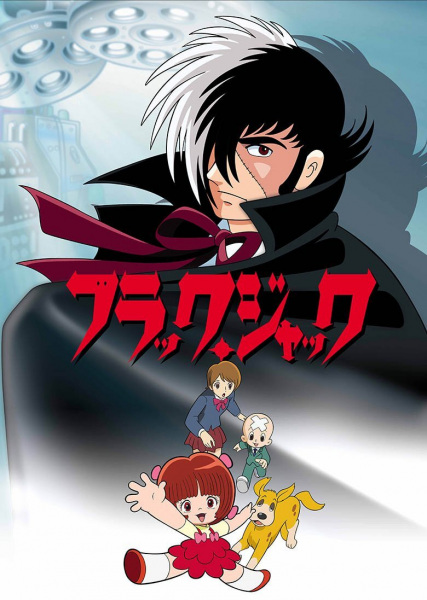
Sixty-one episodes is a long time to tease a bombing scar and never cut into it. That is the central problem with the 2004 Black Jack, and it is also why the show scores where it does — a 7.63 that lives on themes and cultural inheritance, and that gets held back by a story criterion which refuses to accumulate. Judged against one consistent rubric, Black Jack is best understood by which criteria carry it and which drag it down — not by a single number.
The Consensus, and Where the Rubric Departs
The MyAnimeList crowd scores it 7.70. That is the number to engage. The 0.07-point gap between the crowd and the Codex is small on its face, but it hides a structural disagreement: MAL rewards the show for what it is — a faithful, dignified transcription of Tezuka's manga, guided by Osamu Dezaki's name in the director's chair — and forgives what it isn't. The Codex, applying weighted criteria to a shonen catalogue entry, penalizes the same things the community shrugs off. Chief among them: a story score of 7.5 that reflects sixty-one hours of self-contained morality plays and almost no cumulative arc.
This is not a hit piece. Black Jack earns 8.2 on themes and 8.5 on cultural impact, and those are the numbers the show should be argued from. It is also not a defense. A 61-episode procedural that treats Dr. Honma as background lore is a 61-episode procedural with a structural refusal to develop.
Story: The Case-of-the-Week Ceiling
The episodic architecture is well-suited to the medical procedural premise. The conjoined-twins dilemmas work because the runtime of a single episode is exactly the runtime of an ethical trap that has no clean answer. The recurring appearances of Dr. Kiriko — the euthanasia advocate whose entire worldview is a rebuttal of Black Jack's — are the closest the series gets to a sustained through-line, and they function as the show's sharpest narrative device because they are the only device that returns with weight.
Everything else stays sealed. Kuroo Hazama's mysterious past, the bombing that scarred his face, his formative relationship with Dr. Honma — these are teased across the run rather than developed. The 2004 series treats them as atmosphere, not material. That is the ceiling on 7.5. A show can be episodic and still build; this one chooses parable over accumulation and pays for the choice.
The problem is familiar to anyone who has looked at how the rubric handles other prestige-adjacent episodic works — Master Keaton's 7.77 lives on world and character precisely because it accepts the same trade-off and finds a different way to compensate. Black Jack does not.
Character: Kuroo Hazama Carries, the Cast Cannot
The character score of 7.8 is the highest non-thematic mark on the sheet, and it is earned by one figure. Kuroo Hazama is a genuine study in contradiction: a mercenary who charges impossible fees and waives them at will, an atheist surgeon who defers to the stubbornness of nature, a man whose interiority the show refuses to over-explain. Dezaki's direction is disciplined about this. The postcard-memory freeze frames — Dezaki's signature — are deployed on patients and moments of decision rather than on Black Jack's backstory, which is the correct instinct.
Pinoko does the emotional work the protagonist won't. Her origin as a teratoma given a body is the show's cleanest fusion of body-horror premise and domestic warmth, and she supplies the comic register the series needs to keep Hazama's coldness legible. She does not, however, grow. The doting-child archetype is where she starts and where she ends. Kiriko deepens the ensemble in his handful of appearances. Most patients are single-episode vessels.
That is a strong lead, a functional deuteragonist, one recurring foil, and a rotating cast of one-off cases. It is enough for 7.8. It is not enough for more.
Themes: The 8.2 That Does the Actual Work
This is where the show earns its keep. Tezuka's lifelong preoccupation — the tension between rigorous medical science and the irreducible fact that people die, love, and refuse to make sense — is the engine of nearly every episode. The Kiriko episodes pose the euthanasia question without cheating either side. The recurring plots in which patients survive against all clinical probability are not miracles for their own sake; they are Black Jack being made humble by the material he cuts into.
The humanist claim — that medicine serves dignity and not profit — lands because the show refuses to soften Hazama's fees to make the point. He charges. He also waives. The rubric registers 8.2 because the thematic argument is coherent across sixty-one episodes even when the story architecture is not.
World-Building: Original Premise, Sketch-Like Setting
The 7.0 on world is the honest number. The premise — an unlicensed genius operating in legal and ethical gray zones, moving between underworld clients and desperate families — is genuinely original, and the fantastical-surgery conceit functions almost as a shonen power system, letting Tezuka invent whatever operation the parable requires. The recurring cast of rivals and mentors gives the medical milieu internal consistency.
What it does not do is cohere into a lived-in place. The broader world stays instrumental to each episode's lesson. Hospital interiors recycle. Geography is a rumor. This is a setting that exists to host parables, not one that persists between them.
Animation: Classical, Restrained, Budget-Bound
Tezuka Productions' choice was to preserve rather than modernize, and the 7.3 reflects that faithfully. Muted palettes, the iconic character design intact, surgical sequences built on close-ups and pacing rather than gore. Dezaki's directorial tension carries the operating-room scenes further than the base animation would on its own. But budget shows in static conversation scenes and reused backgrounds, and the show is competent-atmospheric rather than ambitious. This is not the OVA. It was never trying to be.
Cultural Impact: The 8.5 That Anchors the Score
Black Jack the character is a pillar of Tezuka's legacy and one of the most adapted properties in the medium's history. Every medical drama in anime is downstream of him. The 2004 series specifically is less discussed than the OVAs — a fair observation — but the cultural criterion scores the franchise's imprint, not one adaptation's reception, and 8.5 is where that lands. This is the same mechanism that carries Doraemon's 7.69 on the strength of a 9.5 cultural score: institutional weight the rubric is designed to register.
The Steelman: Faithfulness Is the Point
The strongest defense of the 2004 series is that it was never meant to arc. It was a Tezuka commemoration, an anthology tribute, a faithful transcription of a manga that was itself a hundreds-of-chapters collection of self-contained stories. Judging it for failing to develop Hazama's backstory is judging it for not being the OVA — a different work with different intentions.
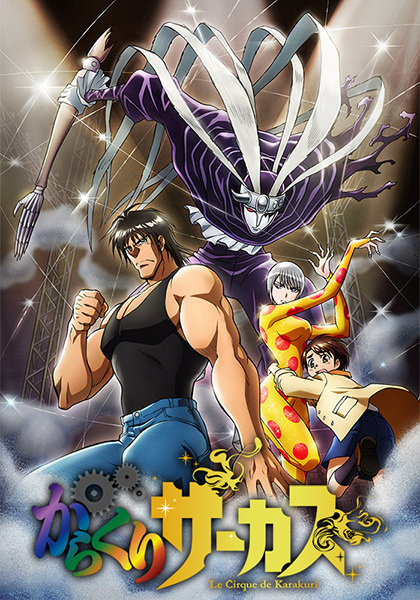
The rubric hears this and still marks it down. A shonen entry running sixty-one episodes is scored as a sixty-one-episode shonen entry. The manga's structure is not a defense of the adaptation's choices; it is context for them. Faithfulness that declines to compensate for its own structural cost is faithfulness the story criterion cannot fully credit. Karakuri Circus faces the inverse problem — ambition without the cultural tail — and lands at 7.68 for its own reasons. Neither show gets a pass on the axis where it declines to work.
Verdict
Black Jack scores 7.63 because themes and cultural weight do the heavy lifting and story refuses to build. That is not a failure of the show; it is a description of what it chose to be. The 0.07-point gap under MyAnimeList is the crowd forgiving a structural choice the rubric priced honestly.
Featured in the Codex




More from The Codex
The Seven Deadly Sins Is a 6.60 Wearing a 7.60 Costume: A One-Point Gap Earned by Groping Gags and Convenient Flashbacks
The Seven Deadly Sins scores 6.60 on the Codex against MyAnimeList's 7.60 because the crowd is grading a Netflix breakout and a Ban-and-King friendship, not the 24 episodes A-1 Pictures actually broadcast in 2014.
The 10.0 That Built a Sunday: How Sazae-san's Cultural Score Carries a 6.58 Scorecard
Sazae-san is a case study in how a single criterion — cultural — can define how a show is remembered, and the 10.0 the Codex hands Eiken's 1969 institution is doing every bit of the heavy lifting its other five scores refuse to.
The Sebastian Problem: Why Black Butler Sits 1.10 Below Its MAL Line and the Crowd Refuses to Notice
Black Butler (Kuroshitsuji) posts a 1.10-point gap between MyAnimeList's 7.65 and the Codex 6.55 because the crowd is grading Sebastian's silhouette and a Phantomhive aesthetic, not the anime-original finale A-1 Pictures actually shipped in 2009.
Discussion
Set a display name above to post.
Loading discussion…