The 9.5 That Built Doraemon: How One Cultural Score Carries a 7.69 Scorecard
Doraemon scores 9.5 on cultural impact and 6.8 on animation — the gap between those numbers is the entire argument for why a formulaic kids' show is remembered as a national institution.
Doraemon scores 9.5 on cultural impact and 6.8 on animation — the gap between those numbers is the entire argument for why a formulaic kids' show is remembered as a national institution.
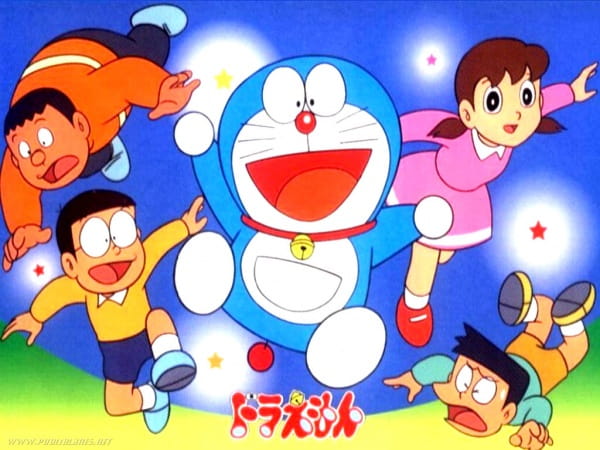
Doraemon is a case study in how a single criterion — cultural — can define how a show is remembered. Shin-Ei Animation's 1979 adaptation runs 1,787 episodes on a formula so reliable it borders on liturgy, and the Codex rubric puts it at a modest 7.69. But the 9.5 it earns on cultural impact is doing something no other number on the scorecard can do: it is buying the show a permanent seat at the table of the medium, regardless of what the weekday animation budget looks like.
The MyAnimeList 7.90 Misses the Point in Both Directions
The MyAnimeList crowd scores it 7.90, which is a strange number to land on. It is too high if you are reading Doraemon as a piece of televised craft — the animation, judged against the best kodomomuke of any era, is functional at best. It is too low if you are grading the thing that Doraemon actually is, which is one of the two or three most consequential cultural exports Japanese animation has ever produced. The consensus score splits the difference and lands nowhere useful. It treats a national institution like a mid-tier seasonal watch.
Anime Codex's 7.69 is not a repudiation of that consensus so much as a decomposition of it. The rubric refuses to let the cultural score smother the animation score, and it refuses to let the flat weekday production drag the cultural weight down to invisibility. Both are true at once. What follows is the argument for why the 9.5 is not a participation trophy — and why, despite it, the show cannot climb higher than the high sevens.
The Doraemon Cultural Footprint Is Doing Work No Other Anime Score Can Match
Start with what the 9.5 actually represents. Doraemon has been an official Anime Ambassador of Japan since 2008. Fujiko F. Fujio's blue robotic cat has been running on Japanese television, in one adaptation or another, since 1973 — the Shin-Ei run began in 1979 and has never meaningfully stopped. The franchise's 45 tankōbon volumes, its annual theatrical films distributed by Toho, its Tezuka Osamu Cultural Prize in 1997, its Japan Cartoonists Association Awards in 1973 and 1994, its 300-plus million copies sold — these are not marketing figures. They are the shape of a cultural object that has become load-bearing infrastructure for how multiple generations across Asia understand what a children's story looks like.
The Take-copter, the Anywhere Door, the Small Light — these are not gadgets, they are shared vocabulary. A Japanese schoolchild in 1985 and a Vietnamese schoolchild in 2015 can both name what a Translation Konjac does. That kind of transnational, transgenerational fluency is the ceiling of what "cultural impact" as a criterion can measure, and it is why the rubric awards 9.5 rather than a more polite 8.5. There is no reasonable comparison bench where Doraemon isn't near the top. Cardcaptor Sakura's 9.5 on culture buys it status as the show that defined magical-girl grammar; Doraemon's 9.5 buys it status as a piece of civic architecture.
What the Cultural Score Cannot Buy
But the rubric is honest about the ceiling. Doraemon's story score of 7.5 reflects a real limit: 1,787 episodes running the same three-beat formula — Nobita fails, Doraemon produces a gadget, Nobita misuses the gadget, consequences arrive. It is a near-perfect delivery system for kodomomuke morality plays, and the tightness of the loop is why the Anywhere Door and Time Machine episodes work as self-contained fables. But reliability is not the same as reach. Across nearly two thousand weekday episodes, the formula almost never surprises. The narrative ambition lives in the annual theatrical films — the dinosaur story, the underworld story — where the direction opens up and the runtime allows a real second act. The TV series is the delivery mechanism for the culture; the films are where the actual craft is.
The 6.8 on animation is the other honest number. Shin-Ei's weekday production is warm, legible, and cheap. Rounded character designs, clean comic timing, stock cuts recycled with the shamelessness that only a daily broadcast schedule permits. Compare it against the theatrical films — where Tatsuya Ishihara storyboarded episodes 1169, 1260, and 1276, and where the direction actually breathes — and you can see the animation gap inside the franchise itself. The weekday show is the delivery vehicle. The films are the art object.
Character Is Where the Culture Actually Roots
The reason the cultural score does not feel unearned — the reason it does not feel like sentimentality wearing a critical badge — is that the show's 7.8 on character is more honest than it looks. Nobita Nobi is not an aspirational protagonist. He is lazy, cowardly, mediocre at school, and easily bullied by Gian. That honesty is rare in children's animation, and it is why the small courage moments actually land when they arrive. Gian's film-arc bravery works because his weekday bullying is real. Suneo's sycophancy is drawn without redemption. Shizuka is a stabilizer, not a prize.
The deliberate weakness — flagged in the rubric — is the reset-to-status-quo format. Nobita rarely retains his lessons across episodes. That is a genre feature, not a bug, but it caps the character score at 7.8 rather than the high eights that a serialized shonen protagonist with the same base honesty could reach. Compare it to how character writing carries Cross Game past its production limitations — Adachi's serialization lets his cast grow permanently. Doraemon's format will not permit that. The 7.8 is the price.
The themes score of 8.0 does the quiet, unglamorous work. The recurring "Goodbye Doraemon" stories and the Nobita's grandmother episode achieve genuine poignancy that most kodomomuke never reaches. The future-poverty framing gives the series a soft, persistent stakes about consequence. Underneath every gadget misuse is the same message: shortcuts do not substitute for character. That thematic consistency across a 45-year run is itself part of what makes the cultural footprint stick.
The Steelman: Should Cultural Weight Just Count for More?
The strongest counter is that the Codex under-weights cultural impact for kodomomuke specifically. If a show is functionally a national institution — if it has taught two generations of Asian children what a moral story sounds like — why not let the 9.5 pull harder on the weighted average? The MyAnimeList 7.90 might, on this reading, be closer to a lived truth than the rubric's 7.69.
The answer is that a rubric that lets cultural weight dominate becomes a popularity contest wearing critical clothes. The correlation between popularity and quality is real but loose, and a scorecard that collapses under a single dominant criterion stops being diagnostic. The 7.69 is more useful than a 8.4 built on cultural inflation, because it tells you exactly what the show is: a modestly crafted delivery system for one of the most powerful cultural objects the medium has produced.
Verdict
Doraemon's 7.69 is the correct number, and its 9.5 on culture is the correct reason to still be talking about it in 2024. The weekday animation will not carry it, the formula will not carry it, and the reset-to-status-quo character writing will not carry it — but the blue cat is load-bearing anyway. That is the whole argument for what a cultural score is supposed to measure.
Featured in the Codex



More from The Codex
The Seven Deadly Sins Is a 6.60 Wearing a 7.60 Costume: A One-Point Gap Earned by Groping Gags and Convenient Flashbacks
The Seven Deadly Sins scores 6.60 on the Codex against MyAnimeList's 7.60 because the crowd is grading a Netflix breakout and a Ban-and-King friendship, not the 24 episodes A-1 Pictures actually broadcast in 2014.
The 10.0 That Built a Sunday: How Sazae-san's Cultural Score Carries a 6.58 Scorecard
Sazae-san is a case study in how a single criterion — cultural — can define how a show is remembered, and the 10.0 the Codex hands Eiken's 1969 institution is doing every bit of the heavy lifting its other five scores refuse to.
The Sebastian Problem: Why Black Butler Sits 1.10 Below Its MAL Line and the Crowd Refuses to Notice
Black Butler (Kuroshitsuji) posts a 1.10-point gap between MyAnimeList's 7.65 and the Codex 6.55 because the crowd is grading Sebastian's silhouette and a Phantomhive aesthetic, not the anime-original finale A-1 Pictures actually shipped in 2009.
Discussion
Set a display name above to post.
Loading discussion…