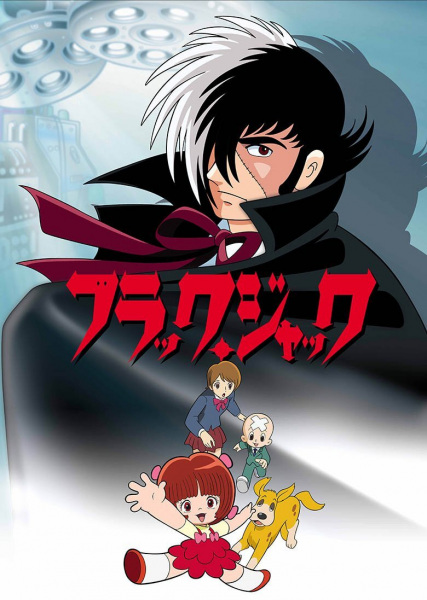
Black Jack
Is Black Jack worth watching?
Yes, it's worth watching. Anime Codex rates Black Jack 7.63 out of 10 — scored on six criteria (story, characters, themes, world-building, animation, and cultural impact), not crowd votes. 76th of 226 on the Codex rubric — top 34% of the catalogue. The crowd rates it 0.07 higher than the rubric does — the Codex is harder on it than on 19% of the catalogue.
Where to watch
What the data says
Computed from the Codex rubric across the whole catalogue.
Summary
Black Jack (2004) is a faithful, dignified adaptation of one of Osamu Tezuka's most enduring creations, and it succeeds best as a humanist medical anthology rather than a conventional shonen. Its strongest asset is thematic: every episode wrestles with the friction between cold scientific rigor and the stubborn mysteries of life, love, and mortality, crystallized in the brilliant Dr. Kiriko episodes where a death-dealing doctor becomes Black Jack's philosophical mirror. The title surgeon is a magnetic contradiction — mercenary yet quietly compassionate — and Pinoko adds warmth and comic levity. Its weaknesses are structural: the rigidly episodic format and reluctance to develop Black Jack's mysterious past mean the series prizes self-contained parables over momentum, so character growth and serialized payoff are thin across 61 episodes. The animation is classical and atmospheric but budget-conscious, leaning on Tezuka's iconic designs rather than spectacle. Within the shonen demographic it stands apart from the action mainstream, offering a mature, ethically serious procedural that trusts its audience with questions about euthanasia, dignity, and profit. It is good and frequently moving, occasionally great in its best installments, but its episodic repetition and underused backstory keep it short of definitive.
Criterion breakdown
Story & narrative
The episodic case-of-the-week structure suits the medical procedural premise well, with standout episodes like the conjoined-twins dilemmas and the recurring confrontations with Dr. Kiriko, whose euthanasia philosophy provides Black Jack's sharpest narrative foil. The downside is that the 2004 series favors self-contained morality plays over sustained arcs, so Black Jack's mysterious past and his bombing scar are teased far more than they are meaningfully developed across 61 episodes, leaving threads like his relationship with Dr. Honma underexplored.
Character writing & growth
Black Jack himself is a compelling study in contradiction — a cold mercenary who charges absurd fees yet repeatedly waives them for the poor or for nature's stubbornness, and the show wisely keeps his interiority guarded rather than over-explained. Pinoko provides genuine warmth and comic relief, and her teratoma origin grounds her in the show's body-horror science, though she rarely grows beyond the doting-child archetype. Recurring figures like Kiriko deepen the cast, but most patients are one-episode vessels who don't evolve.
Themes & emotional resonance
This is the show's strongest dimension: Tezuka's lifelong tension between rigorous medical science and the irreducible mysteries of life, love, and death animates nearly every episode. The Kiriko episodes pose the question of whether a doctor should ever choose death, and recurring plots where patients survive against all clinical logic dramatize Black Jack's reluctant humility before nature. The humanist core — that medicine serves dignity, not profit — lands with real emotional weight.
World-building & power system
Read as setting depth, the premise of an unlicensed genius surgeon operating in legal and ethical gray zones is genuinely original and internally consistent, with the recurring cast of rivals, mentors, and underworld clients building a coherent medical milieu. The 'fantastical surgery' conceit functions almost as a power system, letting Tezuka invent impossible operations as plot engines. It loses points because the broader world stays sketch-like, serving each episode's parable rather than cohering into a lived-in setting.
Animation & direction
Tezuka Productions delivers a deliberately classical, muted look faithful to Tezuka's manga lineage, with restrained color palettes and the iconic Black Jack character design preserved intact rather than modernized. Surgical sequences are handled with surprising directorial tension through close-ups and pacing rather than gore. The animation is competent and atmospheric but rarely ambitious; budget limits show in static conversation scenes and recycled hospital interiors.
Cultural impact
Black Jack is a pillar of Tezuka's legacy and one of the most adapted properties in anime/manga history, with the character an enduring icon of the medical-drama genre that influenced countless successors. The original manga's prestige carries the 2004 series, which served as a faithful tribute timed around Tezuka commemorations. While this particular adaptation is less discussed than the OVAs, the franchise's overall imprint on the medium is substantial.
Synopsis (from MAL)
Black Jack is an "unregistered" doctor with a clouded, mysterious past. He works with his little assistant Pinoko (who has a massive crush on the doctor), dealing with medical cases not very well known, which can be strange, dangerous, or not known at all. But he is a genius, and can save almost any of his patients' life (as long as they have the money for it, that is), and is known to many around the world, especially to those of medicine and science. He's a man of science himself, and does not believe much until he has seen it, yet it is many times he is surprised by love and nature often overpowering the science he bases his life in. (Source: ANN)
Ranked nearby


Explore rankings
Discussion
Set a display name above to post.
Loading discussion…