Anime Like Cowboy Bebop: 5 the Rubric Says You'll Love, Ranked by Critical Proximity
Fans of Cowboy Bebop respond to its strongest criteria — cultural weight, animation, themes — and these five picks deliver the same qualities, ranked by how close their critical profile sits to it, not by vibes.
Fans of Cowboy Bebop respond to its strongest criteria — cultural weight, animation, themes — and these five picks deliver the same qualities, ranked by how close their critical profile sits to it, not by vibes.
The recommendation genre has a Bebop problem. Every list on the internet points you at Samurai Champloo because Watanabe directed both, then shrugs. That's aesthetic matchmaking, not criticism. Sunrise's 1998 series earns its Codex 8.71 on a specific set of criteria, and if you actually break the scorecard down, the shortlist of shows that share its critical profile is stranger, shorter, and better than the usual suggestions.
What Cowboy Bebop is actually scoring on
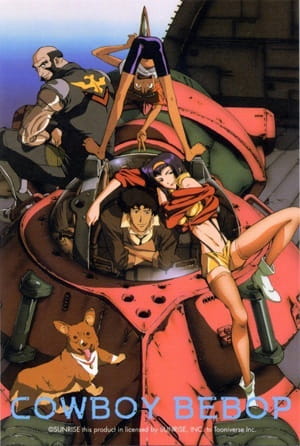
Before recommending anything, name the machine. Cowboy Bebop's 8.71 is powered by a 9.5 on cultural impact — it was the Toonami gateway, the show that taught the West to take anime seriously — a 9.3 on animation, where Watanabe's direction and Yoko Kanno's genre-hopping score fuse into the church shootout of "Ballad of Fallen Angels" and the jazz-timed editing of the entire run, and an 8.8 on themes: loneliness, the past as prison, found families that cannot hold. Character sits at 8.7, story at 8.5, world at 8.2. The world criterion is the softest because Bebop's 2071 is atmospheric bricolage — noir, Western, blaxploitation — rather than a rigorous system.
That distribution matters. The consensus MyAnimeList 8.75 collapses all six axes into a single blob, and popular discourse then reaches for "space-Western tone" as the recommendation vector. That's why "anime like Cowboy Bebop" lists keep returning the same four titles regardless of what you actually liked about it. If Kanno and the church shootout are your reason, you need one recommendation. If it's Spike's fatalism and the found-family-that-shatters, you need another. This list ranks by which criteria overlap, not by whether the protagonist wears a coat.
Trigun: the fatalist gunman, minus the animation budget
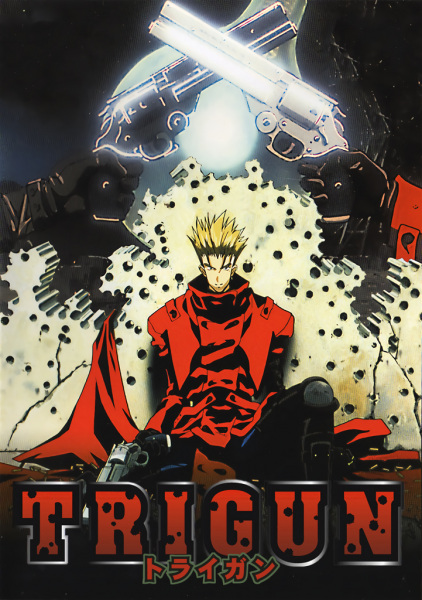
Trigun (Codex 7.53, Madhouse, 26 episodes, 1998) sits first because it arrived the same year and shares Bebop's exact thematic backbone: a fatalist gunslinger dragging a past he cannot outrun, episodic bounty structure giving way to a serialized reckoning in the final third. Its themes score of 8.0 and character score of 8.0 track directly against Bebop's 8.8 and 8.7 — Vash the Stampede is doing the work Spike does, just louder and with a pacifist thesis instead of a jazz-noir shrug.
Where the gap opens is animation: Trigun scores 6.5 against Bebop's 9.3. Madhouse in 1998 was not Sunrise-with-Watanabe in 1998, and the show visibly rations its budget for the Wolfwood arcs and the Legato confrontation. Accept that tax and you get the closest thematic sibling on this list. The cultural score at 8.5 is real too — Trigun was the other Adult Swim gateway.
Black Lagoon: the world Bebop only sketched
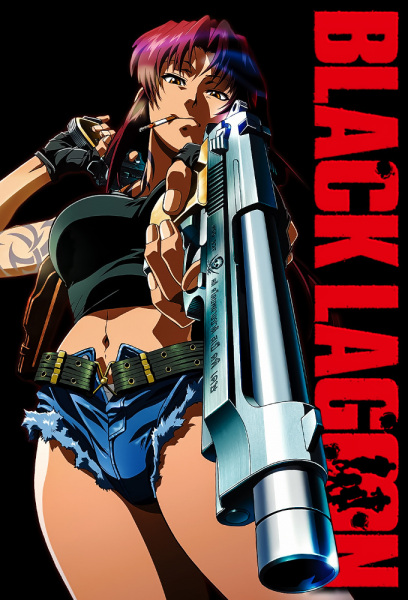
If what pulled you in was the grimy bounty economy — the lived-in criminal texture of Callisto and Ganymede, the sense that people work jobs and lose them — then Black Lagoon (Codex 7.75, Madhouse, 12 episodes, 2006) is doing that criterion harder than Bebop itself. Its world score of 8.5 clears Bebop's 8.2, and Roanapur is the reason: a Thai port city rendered with a specificity Bebop's solar system deliberately refuses. The Codex justification on Bebop's world explicitly calls its originality "atmospheric and genre-fusional rather than mechanical" — Black Lagoon inverts that, giving you a single hyper-detailed setting instead of nine terraformed sketches.
Character at 8.0 tracks Bebop's 8.7 closely because Revy is a Faye Valentine who committed. Where it falls short is the connective tissue: story 7.5, a series that refuses to arrive at a destination, which the Codex has previously walked through in more detail in the full Black Lagoon review. Twelve episodes of atmosphere, no Vicious payoff.
Gungrave: the past-as-prison thesis, taken further than Bebop takes it
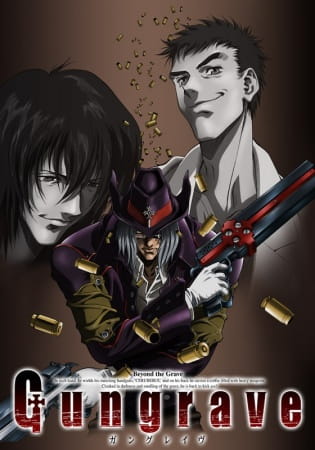
Gungrave (Codex 8.23, Madhouse, 26 episodes, 2003) is the pick that will surprise people who only know it as a video-game tie-in. Its character score of 9.0 exceeds Bebop's 8.7, and its themes score of 8.5 sits on top of Bebop's 8.8 — this is the show that takes the "inescapability of the past" motif Watanabe threads through Spike's flashbacks and makes it the entire spine. Brandon Heat's arc from loyal soldier to betrayed revenant is the thirty-episode version of what "Ballad of Fallen Angels" compresses into twenty-two minutes.
Story at 8.5 matches Bebop exactly. Where Gungrave loses ground is animation (7.0) and cultural impact (6.5) — it was never a gateway, it never got the Kanno soundtrack, and Madhouse's production is functional rather than exemplary. What you're trading is the church-shootout aesthetics for a more sustained thematic argument. Read the character score.
Lupin III Part 1: the DNA sample
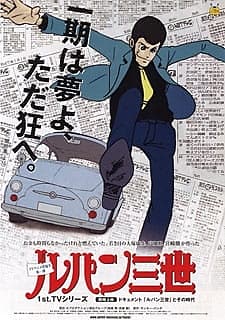
Lupin III Part 1 (Codex 7.26, Tokyo Movie Shinsha, 23 episodes, 1971) is here because Bebop does not exist without it. The episodic caper structure, the ensemble of criminals with specialties, the jazz score, the willingness to be tonally unstable episode to episode — all of it is Miyazaki-and-Takahata-era Lupin refracted through Watanabe twenty-seven years later. Cultural score 9.0 sits nearly level with Bebop's 9.5 for the same reason: this is a foundational text, not a derivative one.
The other criteria are lower — story 7.0, character 7.5, themes 6.5 — because 1971 Lupin is not attempting the melancholy Bebop is attempting. It is attempting cool, and inventing the vocabulary Bebop would later use to be sad. Animation at 7.8 is strong for its era. Watch it as a genealogy exercise and it plays.
Pluto: the highest ceiling on this list
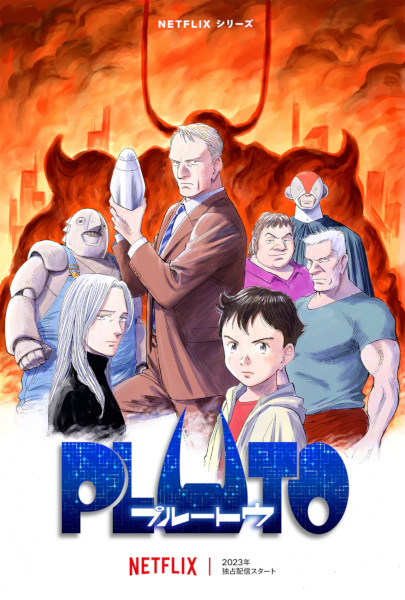
Pluto (Codex 8.96, Studio M2, 8 episodes, 2023) is the only recommendation here that scores higher than Bebop overall, and it earns the placement on themes (9.3 against Bebop's 8.8) and story (9.2 against 8.5). Urasawa's Tezuka reconstruction is doing the "restrained backstory revelation" mode that "Speak Like a Child" and "Black Dog Serenade" operate in, but sustained across all eight episodes and pointed at grief, memory, and the ethics of retribution. Character at 9.0 clears Bebop's 8.7.
What it lacks is cultural weight — 7.8, because it's a 2023 Netflix drop rather than a generational gateway — and the animation at 8.3 is strong but not Watanabe-Kanno. If you loved Bebop for the ideas underneath the style, Pluto is the recommendation with the highest ceiling.
The steelman: doesn't this ignore Samurai Champloo?
The obvious objection: any list of anime like Cowboy Bebop that omits Champloo, Space Dandy, or Michiko & Hatchin is being perverse. Watanabe's fingerprints are the closest surface match, and readers coming to this list want the auteur continuity.
The rubric disagrees on grounds of criterion overlap. Champloo shares Bebop's animation and cultural profile but hollows out the themes score — the "chained to the past" motif is decorative there, not structural. Space Dandy is a comedy-first anthology; the thematic weight is a fraction of Bebop's 8.8. The five picks above each match Bebop on at least two of its top-three criteria (cultural, animation, themes). Auteur-matching feels correct and scores worse.
Vibes are easy. Critical proximity is the whole job.
The verdict
Cowboy Bebop's 8.71 is a weighted portrait, not a mood, and the honest recommendation ladder tracks the portrait: Trigun for thematic siblinghood, Black Lagoon for the world Bebop sketched, Gungrave for the past-as-prison thesis taken further, Lupin III Part 1 for the DNA, Pluto for the ceiling. Watch them in that order and the shape of what you loved about Bebop becomes legible. Watch Champloo instead and you'll just be watching Watanabe.
Featured in the Codex
More from The Codex
The Seven Deadly Sins Is a 6.60 Wearing a 7.60 Costume: A One-Point Gap Earned by Groping Gags and Convenient Flashbacks
The Seven Deadly Sins scores 6.60 on the Codex against MyAnimeList's 7.60 because the crowd is grading a Netflix breakout and a Ban-and-King friendship, not the 24 episodes A-1 Pictures actually broadcast in 2014.
The 10.0 That Built a Sunday: How Sazae-san's Cultural Score Carries a 6.58 Scorecard
Sazae-san is a case study in how a single criterion — cultural — can define how a show is remembered, and the 10.0 the Codex hands Eiken's 1969 institution is doing every bit of the heavy lifting its other five scores refuse to.
The Sebastian Problem: Why Black Butler Sits 1.10 Below Its MAL Line and the Crowd Refuses to Notice
Black Butler (Kuroshitsuji) posts a 1.10-point gap between MyAnimeList's 7.65 and the Codex 6.55 because the crowd is grading Sebastian's silhouette and a Phantomhive aesthetic, not the anime-original finale A-1 Pictures actually shipped in 2009.
Discussion
Set a display name above to post.
Loading discussion…