Karakuri Circus at 7.68: The 5.5 Cultural Score That Decides How Fujita's Puppet War Gets Remembered
Karakuri Circus posts strong marks on character, themes, and world — but its 5.5 cultural score is the number that keeps a genuinely ambitious adaptation off the shonen canon shelf.
Karakuri Circus posts strong marks on character, themes, and world — but its 5.5 cultural score is the number that keeps a genuinely ambitious adaptation off the shonen canon shelf.
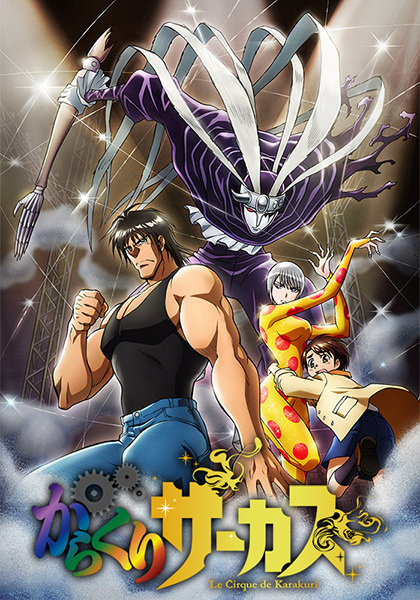
Karakuri Circus is a case study in how a single criterion — cultural — can define how a show is remembered. Studio VOLN's 36-episode 2018 adaptation clears 8.0 on themes and 8.2 on character; it lands a Codex weighted 7.68. But the cultural line reads 5.5, and that number does more damage to Fujita's legacy than the CGI puppets or the collapsed final arc ever could. This is the Karakuri Circus cultural problem in a sentence: the show is better than it is remembered, and the rubric can prove it without absolving it.
The MyAnimeList Consensus and Its Blind Spot
MyAnimeList scores Karakuri Circus at 7.20. That is the score of a show the community respects but does not evangelize — a rating you give a series after you have finished it, closed the tab, and moved on. The consensus reads the 2018 adaptation as a decent-but-rushed curio: worthy of Fujita's name, unworthy of the shelf next to Hunter x Hunter or Fullmetal Alchemist: Brotherhood. That read is not wrong, exactly. It is incomplete. The MAL crowd is scoring the impact of the show without interrogating why the impact is so muted for a work this structurally ambitious. The Codex 7.68 sits nearly half a point above the community number, and the gap lives almost entirely in the criteria the crowd forgets to isolate — themes, character, world — while the cultural drag is precisely the thing MAL is unconsciously punishing. Same conclusion, different math.
This is a pattern the Codex has flagged before: popularity and quality correlate loosely at best, and shows with strong internal criteria and weak cultural reach get punished twice — once by the market, then again by the memory of the market.
Cultural at 5.5: Cult Respect Is Not Canonization
Kazuhiro Fujita has exactly two flagship works — Ushio and Tora and Karakuri Circus — and both have been adapted, and both live in a strange purgatory where the manga readership is fervent and the anime footprint is thin. The 2018 adaptation aired via Amazon in the West, which was a distribution strategy that, in 2018, was a graveyard. Netflix and Crunchyroll dominated the conversation; Amazon's anime slate was an afterthought. A 36-episode shonen with a Chinese historical flashback and a middle-aged martial-artist protagonist needed evangelists, and the platform gave it none.
That is what a 5.5 cultural score encodes. It is not a claim that the show is unimportant to the people who found it — the cult respect is real and durable. It is a claim that Karakuri Circus never entered the shared shonen vocabulary. Nobody argues about Narumi the way they argue about Gon. Nobody references ZONAPHA Syndrome the way they reference Hunter Exam structure. The Midnight Circus is not a shorthand. When a show's cultural weight is confined to the people who already sought it out, the criterion caps hard, and the criterion caps here.
What the Rubric Actually Rewards
Strip cultural away and Karakuri Circus posts numbers that would embarrass a lot of better-remembered shonen. Character at 8.2 is earned on the back of a protagonist configuration you rarely see in the genre: Narumi Katou is a middle-aged man whose defining trait is self-sacrifice and whose medical condition — laughter as literal respiration — turns the shonen convention of comic relief into life support. Masaru's arc from frightened heir to committed fighter is paced properly across the run, and the dual-identity mystery structured around Shirogane (Eleonore and Angelina) gives the female lead a spine most shonen female leads never receive. Faceless as an antagonist is the kind of tragic villain the genre only occasionally attempts and rarely lands.
Themes at 8.0 is the criterion where the show reaches highest. The central conceit — that the entire puppet war is downstream of one man's grief-warped devotion to Francine, whose only wish was to see people laugh — fuses horror and comedy into a thesis about love as weapon. It is not subtext; it is the engine. The marionette motif is not decorative; it is the argument. The circus is not aesthetic; it is the shape of who pulls whose strings.
World at 7.9 does the supporting work — Aqua Vitae, the Nakamaza, the soul-transfer mechanics, the Bai Yin flashback that recontextualizes centuries of the conflict at the midpoint of the run. Story at 7.8 survives brutal compression: 43 volumes into 36 episodes is a compression ratio that would kill most adaptations, and the fact that the interwoven Narumi/Masaru/Shirogane structure holds at all is a testament to how well Fujita architected the source.
Where the Adaptation Actively Bleeds Score
Animation at 6.8 is the second drag on the scorecard, and it is not unrelated to the cultural problem. Studio VOLN delivers strong character acting and eerie set pieces in the circus sequences — the tonal shift into the Bai Yin flashback is directed with real confidence — but the CGI puppet integration clashes visibly against hand-drawn work in the busier fights, and the truncated Aquarium and final battle stretches show the budget dying in real time. Yuki Kajiura's score is doing more emotional lifting than the visuals warrant in the closing episodes.
Production strain is legible on screen, and legible production strain is a cultural depressant. Shows that go viral tend to have one perfect episode people can point at — Chainsaw Man's premiere, Jujutsu Kaisen's Season 2 Shibuya sakuga. Karakuri Circus has no such artifact. The best material is the Bai Yin flashback, and it is a slower, quieter, historically-inflected sequence — beautiful, but not the kind of thing that seeds a fandom. Compare it to a show like Kids on the Slope, where a low cultural score similarly caps a work that scores strongly elsewhere: quiet excellence does not travel.
The Case for a Higher Cultural Score
The strongest counter-argument is that cult status is cultural weight, just distributed differently. Fujita's readership is committed. Ushio and Tora and Karakuri Circus are name-checked by manga critics who take the medium seriously. The 2018 adaptation, whatever its flaws, is the version that got the story out of Japanese-only circulation and into a global streaming catalogue. Cultural impact is a long game, and 2018 is recent.
The rubric does not deny this. A 5.5 is not a dismissal; it is a floor plus recognition of the cult tail. The question is whether Karakuri Circus has entered the vocabulary of shonen the way Rurouni Kenshin or Yu Yu Hakusho have — the way a work becomes a reference point rather than a recommendation. It has not. The compressed adaptation, the Amazon distribution, the absence of a memetic character or scene, and the sheer density of the source all conspire to keep it a connoisseur's pick. The rubric reads the reality, not the potential.
The Codex 7.68 credits every strength the show earns and refuses to inflate the one thing it hasn't. Karakuri Circus is better than its reputation and less important than its ambition, and the cultural line is where those two truths meet on the page. Watch it for Narumi; do not expect the shelf to remember him.
Featured in the Codex


More from The Codex
The Seven Deadly Sins Is a 6.60 Wearing a 7.60 Costume: A One-Point Gap Earned by Groping Gags and Convenient Flashbacks
The Seven Deadly Sins scores 6.60 on the Codex against MyAnimeList's 7.60 because the crowd is grading a Netflix breakout and a Ban-and-King friendship, not the 24 episodes A-1 Pictures actually broadcast in 2014.
The 10.0 That Built a Sunday: How Sazae-san's Cultural Score Carries a 6.58 Scorecard
Sazae-san is a case study in how a single criterion — cultural — can define how a show is remembered, and the 10.0 the Codex hands Eiken's 1969 institution is doing every bit of the heavy lifting its other five scores refuse to.
The Sebastian Problem: Why Black Butler Sits 1.10 Below Its MAL Line and the Crowd Refuses to Notice
Black Butler (Kuroshitsuji) posts a 1.10-point gap between MyAnimeList's 7.65 and the Codex 6.55 because the crowd is grading Sebastian's silhouette and a Phantomhive aesthetic, not the anime-original finale A-1 Pictures actually shipped in 2009.
Discussion
Set a display name above to post.
Loading discussion…