The 10 Best Josei Anime for Animation & Direction, According to the Anime Codex Rubric
Most "best anime" lists rank by overall vibe. This one isolates a single axis — animation & direction — and lets the rubric pick the winners.
Most "best anime" lists rank by overall vibe. This one isolates a single axis — animation & direction — and lets the rubric pick the winners.
The prevailing map of josei animation is drawn by ensemble scores and character warmth. A show like Honey and Clover clears an 8.66 on the Codex because Chika Umino's cast does the work — not because J.C.Staff outdrew anyone in 2005. Rank by animation and direction alone and the geography shifts. Shinichirō Watanabe walks in from Noitamina and takes the top slot from a field that includes a Production I.G family drama, an unreleased Shuka title with a witch in the title, and a Manglobe circus that never earned its costumes.
What the Rubric Isolates
Anime Codex weights six criteria per genre. Josei generally rewards character and theme; animation is one of six inputs, and its per-criterion score frequently disagrees with the overall verdict. Honey and Clover is a canonical example — 8.66 overall, 7.8 on animation. Nodame Cantabile is another — a 7.85 Codex, a 7.0 on the axis in question. MyAnimeList averages flatten this. The crowd rewards how a show feels; the rubric isolates whether the boards, the cuts, and the layouts justify the feeling. The ten titles below are ordered by animation and direction only. The Codex overall score is included in parentheses so the gap is visible.
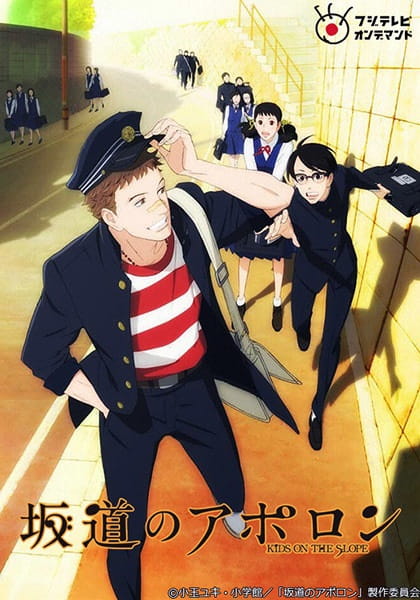
1. Kids on the Slope — 9.0 (Codex 8.10)
Watanabe directing jazz at Tezuka Productions in 2012, with Yoko Kanno on the score and Nobuteru Yūki on characters, is the closest josei ever came to a directorial thesis statement. The rotoscoped piano-and-drums sessions — Sentarō's kit work in episode 7, the school festival performance — are animated to the eighth-note. Hand position, wrist rotation, and pedal weight all read as musician-accurate rather than symbolic. Watanabe stages the rooftop conversations in wide, patient two-shots and lets Kanno's arrangements carry the cuts. Nine on the axis reflects choreography, not budget: the show is not lavishly drawn, but every camera decision is load-bearing. The overall 8.10 sits lower because story (7.5) and cultural (6.5) never match the direction.
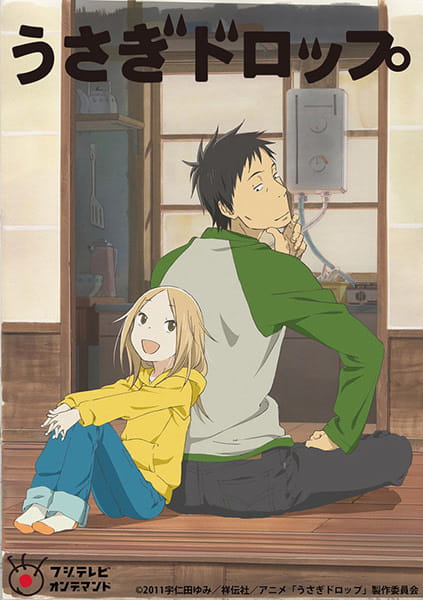
2. Usagi Drop — 8.2 (Codex 8.32)
Kanta Kamei's 2011 Production I.G adaptation opens with watercolor backgrounds that literally bleed into the frame — a directorial choice that reads as commitment rather than decoration. Rin's body language across the eleven-episode run is animated with a specificity the medium rarely gives four-year-olds: the way she grips Daikichi's finger in episode 1, the funeral posture, the kindergarten farewell. The 8.2 rewards restraint. Kamei refuses reaction-shot inflation, holds on faces past the comfort point, and lets the storyboard breathe. The Codex 8.32 overall is carried by an 8.7 on character; animation is the second-highest criterion and it earns its rank.
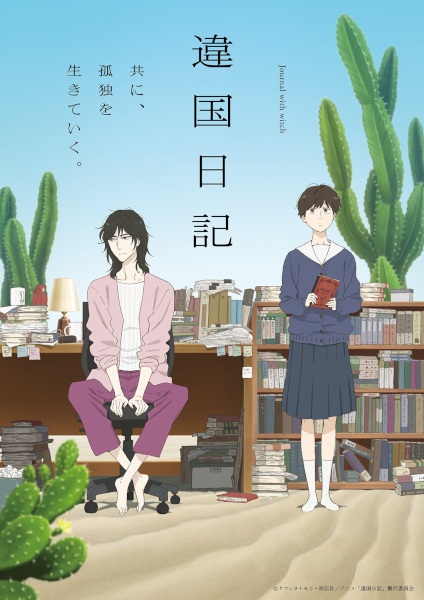
3. Journal with Witch — 8.0 (Codex 8.46)
Shuka's 2026 thirteen-episode production posts the highest overall Codex among josei on this list (8.46) on the strength of a 9.0 character score and an 8.7 on themes. The 8.0 on animation and direction is the ceiling for a studio whose house style — inherited from the Durarara!! and 3-gatsu no Lion lineage — favors staging over sakuga. Shuka's boarding here trades in long dialogue holds and interior geography; the witch's workroom is blocked with the same architectural care Shinbo's disciples used to bring to Shaft. It is not a spectacle show, and the score reflects that honesty.
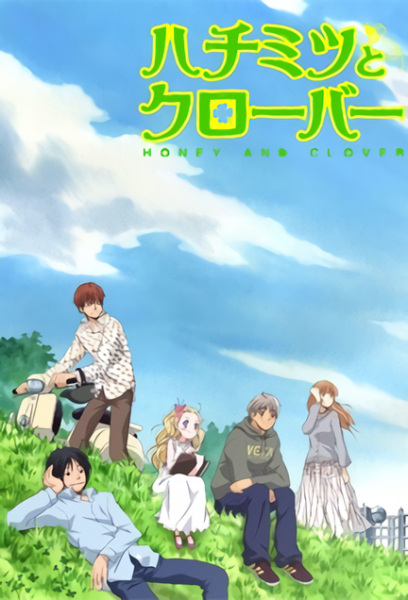
4. Honey and Clover — 7.8 (Codex 8.66)
Kenichi Kasai's 2005 J.C.Staff production remains the reference text for art-school josei, and its 8.66 Codex is the highest overall on this list. Animation lands at 7.8 because the show's visual identity — watercolor washes, insert-song montages, the Ferris wheel confession — is directorial rather than animated. The Hagu-and-Morita sequences are staged; the character motion itself is economical. Seven-point-eight is precise: better than baseline J.C.Staff work of the period, short of what the direction on Kids on the Slope achieves.
5. Nodame Cantabile — 7.0 (Codex 7.85)
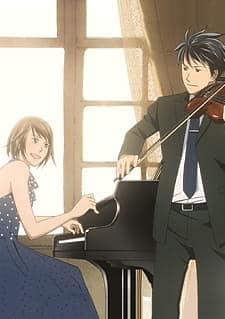
Kasai again, two years later, at the same studio. The 2007 twenty-three-episode run has to animate performance — Rachmaninoff, Beethoven, Gershwin — and largely opts for hand-inserts, conductor cutaways, and audience reaction rather than sustained keyboard work. That is a defensible directorial choice for a comedy, but it is the axis on which Watanabe outscores Kasai by two full points. The 7.0 is generous for what the show actually draws; the 7.85 overall leans on an 8.5 on character and an 8.2 on world.
6. Wotakoi: Love is Hard for Otaku — 7.0 (Codex 6.75)
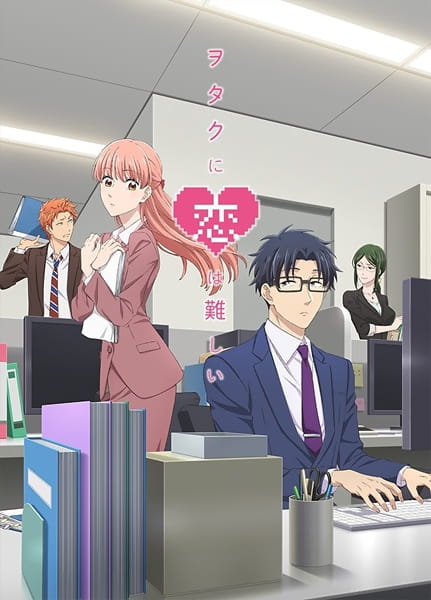
A-1 Pictures' 2018 adaptation is the only entry on this list where animation outperforms the overall score. Wotakoi lands a 7.0 on the axis and a 6.75 Codex — an inversion driven by a story score of 6.5 and themes of 6.7. The direction is competent office-comedy work: clean layouts, readable gag timing, functional character acting during the arcade sequences. Nothing here is ambitious; nothing here is broken. The rubric's full verdict on why Wotakoi's comfort doesn't translate upward sits 1.16 below the MyAnimeList 7.91 for reasons that have nothing to do with the animation grade.
7. 07-Ghost — 6.5 (Codex 6.33)
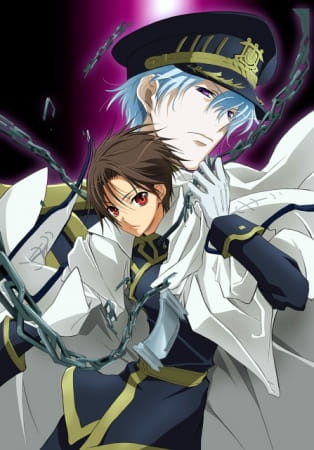
Studio Deen in 2009, twenty-five episodes, a gothic-military aesthetic borrowed from the Amemiya and Ichihara manga. The 6.5 rewards the character design's translation more than the animation itself; Teito and Frau are on-model, the church interiors are lit with intent, and the wing effects hold up. Deen's action animation is the ceiling — episode 13's confrontation is the highest the show reaches, and it does not reach far.
8. Karneval — 6.5 (Codex 5.91)
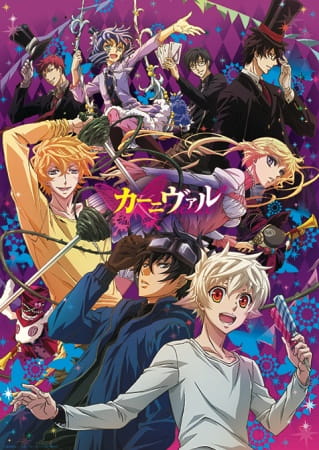
Manglobe's 2013 adaptation is a case where the character designs — Touya Mikanagi's ornate circus costumes — outrun the animation budget. The direction attempts to compensate with color-saturated backgrounds and Yuki Kajiura's score, and the 6.5 acknowledges the attempt. The 5.91 overall is dragged by a 5.2 on story; the show cannot resolve its own worldbuilding in thirteen episodes, and no amount of directorial polish rescues that.
9. Loveless — 6.0 (Codex 6.33)
J.C.Staff in 2005, the same studio-year as Honey and Clover, on a fraction of the ambition. Yoko Kobayashi's direction commits to the cat-ears conceit and the word-battle staging, but the twelve-episode run animates its fights in tight framings that hide motion. Six is the honest number: it looks like mid-2000s J.C.Staff television anime, no more, no less.
10. Saiyuki — 5.8 (Codex 6.90)
Studio Pierrot's fifty-episode 2000 broadcast is the oldest entry here and it shows. The 5.8 is not a punishment for age — it is a description of what a long Pierrot production from that era could sustain. Sanzo's ensemble carries a 7.8 character score and a 7.0 on themes; the animation is the criterion pulling the 6.90 Codex down, not up.
The Case Against Ranking on One Axis
The strongest objection is that direction cannot be cleanly severed from story, and Watanabe on Kids on the Slope proves the point — his staging is inseparable from Yuki Kodama's manga. The counter is that the rubric already accounts for this by scoring story separately. When Kids on the Slope posts 9.0 on animation and 7.5 on story, that is not a flaw in the methodology. That is the methodology surfacing a real, defensible gap between what Watanabe drew and what he was given to adapt. The show's overall 8.10 tells you the whole; the 9.0 tells you what it did best.
The ranking above is what the rubric produces when a single axis is isolated. Watanabe takes the top slot because his direction on Kids on the Slope is the only josei entry in the Codex database currently scoring 9.0 on animation and direction. Everything below is a study in how much further the rest of the field has to travel.
Featured in the Codex
More from The Codex
The Seven Deadly Sins Is a 6.60 Wearing a 7.60 Costume: A One-Point Gap Earned by Groping Gags and Convenient Flashbacks
The Seven Deadly Sins scores 6.60 on the Codex against MyAnimeList's 7.60 because the crowd is grading a Netflix breakout and a Ban-and-King friendship, not the 24 episodes A-1 Pictures actually broadcast in 2014.
The 10.0 That Built a Sunday: How Sazae-san's Cultural Score Carries a 6.58 Scorecard
Sazae-san is a case study in how a single criterion — cultural — can define how a show is remembered, and the 10.0 the Codex hands Eiken's 1969 institution is doing every bit of the heavy lifting its other five scores refuse to.
The Sebastian Problem: Why Black Butler Sits 1.10 Below Its MAL Line and the Crowd Refuses to Notice
Black Butler (Kuroshitsuji) posts a 1.10-point gap between MyAnimeList's 7.65 and the Codex 6.55 because the crowd is grading Sebastian's silhouette and a Phantomhive aesthetic, not the anime-original finale A-1 Pictures actually shipped in 2009.
Discussion
Set a display name above to post.
Loading discussion…