The 10.0 That Built the Industry: How One Cultural Score Carries Astro Boy's 6.87 Scorecard
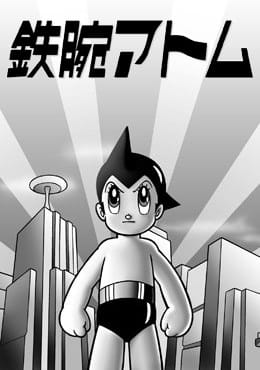
Astro Boy (Tetsuwan Atom) is a case study in how a single criterion — cultural — can define how a show is remembered, and Mushi Production's 1963 experiment is the reason weekly TV anime exists at all.
Astro Boy (Tetsuwan Atom) is a case study in how a single criterion — cultural — can define how a show is remembered, and Mushi Production's 1963 experiment is the reason weekly TV anime exists at all.
Every weekly production schedule in Japanese animation, every merchandising tie-in, every held cel and repeated flight cycle across sixty years of TV anime traces back to one 1963 broadcast on Fuji TV. That is not hyperbole. That is the Anime Codex cultural score of 10.0 doing what the other five criteria on Astro Boy's rubric cannot: single-handedly justifying a 6.87 composite for a Mushi Production series whose animation grade is a flat 5.5 and whose story reads, in 2024, as an uneven procession of self-contained morality plays.
The Astro Boy (Tetsuwan Atom) Cultural Argument, Stated Plainly
The MyAnimeList crowd scores it 7.22, which is the number you get when a viewership samples the historical importance, respects it, and then quietly admits the episodes themselves are hard to sit through cold. The Codex 6.87 is the more honest reckoning — lower on the composite precisely because the rubric refuses to fold cultural weight back into story, character, and animation grades where it does not belong. Astro Boy (Tetsuwan Atom) cultural impact is not the same thing as Astro Boy's writing quality across 193 episodes, and the two numbers only cohere if you grade them separately, which is exactly what the Codex does.
This is the same phenomenon the site has documented on Pokémon's 7.02 scorecard and, in a different register, on Urusei Yatsura's 9.0 cultural line. A single dimension outruns everything else on the rubric, and the show's reputation is built on that dimension alone.
What the 10.0 Actually Represents
The cultural justification on this scorecard is not "influential robot show." It is a set of specific, verifiable industry firsts. Osamu Tezuka's Mushi Production shipped the first weekly serialized thirty-minute animated series in Japan, and to make the math work on a television budget in 1963 they had to invent — or at least codify and popularize — the entire production grammar of limited animation. Held cels. Three-frame mouths. Repeated flight loops. Bank footage of Atom's takeoff. Every studio that followed inherited both the schedule and the shortcuts, because the schedule was only survivable with the shortcuts.
The merchandising model came with it. Meiji's chocolate tie-ins funded the show, which meant Astro Boy also invented the sponsorship-and-toys economic model that Bandai would later ride into the mecha era. When Codex writes that no discussion of the medium's origins is complete without it, that is the compressed version of a much longer argument about production economics, scheduling, and IP monetization — all of which Atom either originated or standardized.
The downstream fiction inheritance is the easier half of the case. Doraemon is unthinkable without Atom. Pluto — Naoki Urasawa's direct reworking of the "Greatest Robot on Earth" chapter — exists because Atom's moral universe was worth returning to sixty years later. Every synthetic-child-with-a-conscience story from Chii to Vivy runs through Tenma's laboratory.
Where the Rest of the Rubric Refuses to Follow
Here is where the celebratory register has to be honest. Story sits at 6.5, and it sits there for defensible reasons. The 1963 series is fundamentally episodic — most installments are self-contained lessons about robot rights, scientific hubris, or human prejudice, and the weekly reset erodes the tragic weight of the setup. Tenma builds Atom to replace his dead son Tobio, rejects him, sells him to the circus — one of the most emotionally potent origin arcs in early manga-to-anime adaptation — and then the format walks away from it, returning only glancingly across 193 episodes. Strong scripts adapted directly from Tezuka's chapters sit alongside filler-grade adventures. The unevenness is real.
Character comes in at 6.8, and the irony is almost too neat. Tenma's complaint that Atom "cannot grow" is dramatized by a production schedule that literally cannot let him grow — the episodic format demands he reset to the same compassionate powered child each week. Atom's kindness toward the "wretched kin" robots of the circus and toward the humans who fear him is genuinely moving as a static portrait, but it is a portrait, not an arc. Ochanomizu is warmly drawn and functionally identical from episode one to episode one hundred and ninety-three.
The 5.5 That Everyone Learned From
Animation at 5.5 is the number that requires the most careful handling, because it is simultaneously the show's weakest technical grade and its most historically important technical achievement. The visuals are crude by any generous standard — static holds, minimal in-betweens, the same reaction cels recycled across episodes. But Mushi Production was not failing at full animation; they were inventing the alternative to it because full animation could not be produced weekly on a television budget. Tezuka's character designs — Atom's twin peaks of hair, the round eyes, the boot-jets — carry astonishing expressive weight through the constraints, and the panel-to-screen storyboarding wrings clarity from cels that barely move.
You cannot separate the 5.5 from the 10.0. The limitations are the innovations. The reason later shows have better animation is that Astro Boy demonstrated a television production model existed at all, which funded the studios that eventually outpaced it. This is the pattern the site tracked in a different direction on Dragon Ball's 6.93 — foundational works whose scorecards are lower than their historical footprint suggests, because the rubric refuses to grade influence as if it were craft.
Themes at 7.8 Is Where the Show Actually Earns Its Keep as a Text
The one dimension besides cultural where Astro Boy still holds up on its own terms — not as history but as watchable drama — is themes, and the 7.8 is the honest number. The circus arc's treatment of robots as disposable tools reads as a meditation on labor and dignity that most 1963 children's programming would not have touched. Tenma's grief-driven cruelty is not softened. Ochanomizu's advocacy for robot personhood is framed as a moral position with opposition, not a foregone conclusion. The reset-button format blunts the resonance in isolated episodes, but the aggregate moral seriousness is unmistakable and real.
The Counter-Argument: The 7.22 Is Not Wrong, It Is Just Measuring Something Else
The MyAnimeList consensus of 7.22 is a defensible number if you accept that historical importance and craft quality should be graded together. That is a legitimate methodology; it just is not the Codex methodology. When a viewer scores Astro Boy a 7 or an 8 on MAL, they are correctly registering that this show matters more than its individual episodes are watchable — and averaging those two facts into a single verdict. The Codex 6.87 refuses that average. It grades the cultural impact at 10.0, the animation at 5.5, and lets the reader see both figures at once instead of splitting the difference.
Astro Boy is not overrated by the crowd. It is rated by a different rubric.
Verdict
Astro Boy (Tetsuwan Atom) earns its 6.87 on the strength of a 10.0 cultural line and a 7.8 on themes, and it earns nothing more, because the format Mushi Production invented in 1963 was designed for survival, not for the character depth or animation quality the rubric weights alongside influence. This is the foundational text of TV anime, and it should be watched the way you visit the ruins of a city that built everything downstream — with reverence for what it made possible, and no obligation to pretend the walls still stand.
Featured in the Codex





More from The Codex
The Seven Deadly Sins Is a 6.60 Wearing a 7.60 Costume: A One-Point Gap Earned by Groping Gags and Convenient Flashbacks
The Seven Deadly Sins scores 6.60 on the Codex against MyAnimeList's 7.60 because the crowd is grading a Netflix breakout and a Ban-and-King friendship, not the 24 episodes A-1 Pictures actually broadcast in 2014.
The 10.0 That Built a Sunday: How Sazae-san's Cultural Score Carries a 6.58 Scorecard
Sazae-san is a case study in how a single criterion — cultural — can define how a show is remembered, and the 10.0 the Codex hands Eiken's 1969 institution is doing every bit of the heavy lifting its other five scores refuse to.
The Sebastian Problem: Why Black Butler Sits 1.10 Below Its MAL Line and the Crowd Refuses to Notice
Black Butler (Kuroshitsuji) posts a 1.10-point gap between MyAnimeList's 7.65 and the Codex 6.55 because the crowd is grading Sebastian's silhouette and a Phantomhive aesthetic, not the anime-original finale A-1 Pictures actually shipped in 2009.
Discussion
Set a display name above to post.
Loading discussion…