Is Dragon Ball Overrated? A 6.93 That Rides Namek and a Cultural 10 Into Numbers 291 Episodes of Toei Padding Won't Actually Earn
Dragon Ball posts a 1.28-point gap between MyAnimeList's 8.21 and the Codex 6.93 because the crowd is scoring Super Saiyan against Frieza and a generational footprint, not the 291-episode Toei production the rubric has to actually sit through.
Dragon Ball posts a 1.28-point gap between MyAnimeList's 8.21 and the Codex 6.93 because the crowd is scoring Super Saiyan against Frieza and a generational footprint, not the 291-episode Toei production the rubric has to actually sit through.
The gap between Dragon Ball's reputation and its rubric score is the story. Ask whether Dragon Ball is overrated and you're really asking what the crowd is rewarding that a criterion-weighted read refuses to grade — because on a rubric that weighs story, character, themes, and world-building alongside spectacle, the show cannot hold the number its cultural silhouette suggests it should.
The Consensus Number, and What It's Actually Measuring
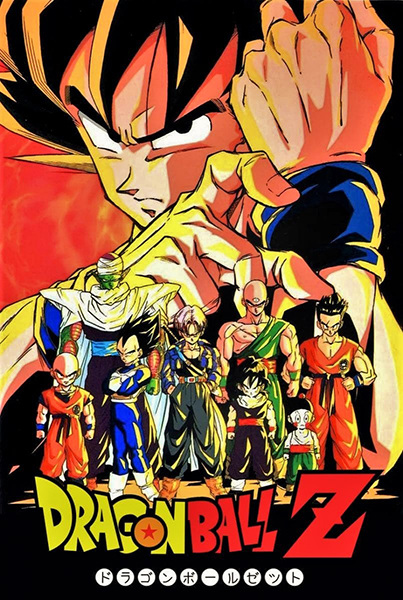
MyAnimeList scores Dragon Ball at 8.21. The Codex, applying its six-criterion shonen weighting to the 1989 Toei Animation production across its full 291-episode run, arrives at 6.93. That's a 1.28-point delta, and it is not a rounding error or a taste dispute — it is a structural disagreement about what the aggregate score is supposed to describe.
The 8.21 is doing a specific job. It rewards the Super Saiyan transformation on Namek, the Kamehameha silhouette, Vegeta's arc, and the fact that a generation encountered anime through Toonami blocks and Latin American dubs where DBZ was the vehicle. That is real, and the rubric grades it at the ceiling — a 10.0 on cultural impact, the maximum the criterion allows. The consensus over-weights that footprint into a total-score claim the other five criteria can't sustain. This is the same problem the Codex has repeatedly flagged in shonen tentpoles: One Punch Man's 1.19-point gap runs on Madhouse sakuga and a meme, and Fist of the North Star's 0.94 runs on ATATATATA and a wasteland silhouette. Dragon Ball's gap is the largest of the three, and it is the largest for a reason.
The Story Is a Repeating Circuit, and Namek Is the Exception
The Codex grades story at 7.5, and the score is generous. The Frieza arc on Namek is the high point of sustained tension in the entire run — a single planetary theatre, a countdown mechanic, a villain who scales in three visible phases, and stakes that hold because the Dragon Balls are physically out of reach on the wrong world. It is the arc most defensible on structural grounds.
Everything else runs the same circuit. A stronger antagonist appears; Gokuu or Gohan trains; a new transformation clears the threshold; a last-minute win closes the arc; a stronger antagonist appears. Saiyan, Frieza, Cell, Buu — the escalation is memorable, but the mechanism is one loop with new paint. And the loop pays a real cost in the anime-original padding endemic to a 291-episode run: the infamous Namek "five minutes" that stretched across an absurd number of episodes is the canonical example, but the pattern — extended standoffs, recap-heavy cold opens, filler diversions that arrest all forward motion — is the show's structural default, not an aberration.
A rubric that separates arc design from episode-level execution has to grade both. The design is a 7.5. The execution — the actual watching of the actual episodes as broadcast — pulls it there from higher.
The Cast Shrinks While Gokuu Stays Still
Character comes in at 6.5, and this is where the rubric departs most sharply from the crowd. Vegeta is the strongest character arc in the franchise — genocidal Saiyan prince, grudging rival, eventually a father whose tearful sacrifice against Buu is the single most-earned emotional beat the show produces. Gohan's trajectory from the timid child of the Saiyan arc to the Cell Games warrior gives the series its actual emotional spine. Those are real, and the rubric credits them.
The problem is the surrounding erosion. Kuririn, Tien, Yamcha, and to a lesser extent Piccolo are gradually written down into spectators — characters who arrive at the battlefield to react to power levels rather than affect them. And Gokuu himself, the protagonist, is functionally static across the run. He gains transformations; he does not gain interiority. His personality at the end of Buu is his personality at the beginning of Saiyan, adjusted for hair color. A shonen protagonist who does not change while the world around him changes is a design choice, not a flaw — but it is a choice the character criterion has to grade honestly against shonen where the lead is a person rather than a delivery vehicle for the next escalation.
The World Inflates Itself Out of Consequence
World-building lands at 7.0. Toriyama's additions — the Saiyan backstory, scouters, Namekian Dragon Balls, fusion mechanics, the codified ki system with visible auras — are the genre's foundation stones, copied so widely that later shonen inherits the vocabulary without attribution. That is a genuine 7.
The 7 doesn't go higher because internal consistency collapses under the weight of the escalation. Power levels are introduced as the readable currency of threat, then abandoned once the numbers outrun the scouters' capacity to render them. Senzu beans and Dragon Ball resurrection functionally reset stakes on demand — death is a scheduling problem, not a consequence — and the escalating multipliers stop meaning anything once "over nine thousand" becomes millions becomes irrelevant. A system that codified the visible-transformation grammar for the entire genre also demonstrated why the grammar breaks: numbers without ceilings stop being information.
Toei's Production Betrays the Iconography
Animation comes in at 6.5, and this is the criterion where the reputation and the reality diverge most visibly. Toei's direction produces era-defining moments — the Super Saiyan transformation against Frieza, the Spirit Bomb, the Kamehameha silhouette — and the key animation on those specific cuts is strong enough to have survived thirty-five years of imitation. Those are the frames the fandom remembers.
The frames the fandom does not remember are the recycled footage, the motion-line backgrounds substituting for actual movement during charged standoffs, and the whole episodes where nothing animates because the schedule and budget of a 291-episode weekly production could not sustain climactic quality across a run that length. This is the same production compromise the Codex has flagged in other long-running Toei shonen, and it is why animation grades at 6.5 rather than the 8-plus the highlight reel implies.
The Steelman: Cultural Weight Is Doing Real Work
The strongest defense of the MAL 8.21 is that Dragon Ball's cultural impact is not decorative — it is load-bearing for the entire modern battle shonen. Naruto, One Piece, and Bleach inherit its transformation grammar, its tournament structure, its power escalation, its rival-to-ally template. Global reach through Toonami and dubbing pipelines into Latin America and Europe made it a gateway that produced the audience the rest of the industry now serves. The Codex agrees, which is why the criterion scores 10.0 — the ceiling. The disagreement is not whether cultural weight matters. The disagreement is whether it should absorb the shortfalls on story execution, character stasis, world-building consistency, and animation reliability into a single number that reads as an 8.2. The rubric says no. The rubric weights the other five criteria at their actual scores and lets the 10 be what it is: one criterion, load-bearing, but not total.
Verdict
Dragon Ball is a 6.93 with a cultural 10 stapled to it, and the crowd is scoring the staple. The Namek arc, Vegeta's evolution, and Gohan against Cell are real, and the rubric credits them at real numbers. The 1.28-point gap is what happens when you separate what a show made possible from what the show, watched episode by episode across 291 broadcasts, actually is.
Featured in the Codex





More from The Codex
The Seven Deadly Sins Is a 6.60 Wearing a 7.60 Costume: A One-Point Gap Earned by Groping Gags and Convenient Flashbacks
The Seven Deadly Sins scores 6.60 on the Codex against MyAnimeList's 7.60 because the crowd is grading a Netflix breakout and a Ban-and-King friendship, not the 24 episodes A-1 Pictures actually broadcast in 2014.
The 10.0 That Built a Sunday: How Sazae-san's Cultural Score Carries a 6.58 Scorecard
Sazae-san is a case study in how a single criterion — cultural — can define how a show is remembered, and the 10.0 the Codex hands Eiken's 1969 institution is doing every bit of the heavy lifting its other five scores refuse to.
The Sebastian Problem: Why Black Butler Sits 1.10 Below Its MAL Line and the Crowd Refuses to Notice
Black Butler (Kuroshitsuji) posts a 1.10-point gap between MyAnimeList's 7.65 and the Codex 6.55 because the crowd is grading Sebastian's silhouette and a Phantomhive aesthetic, not the anime-original finale A-1 Pictures actually shipped in 2009.
Discussion
Set a display name above to post.
Loading discussion…