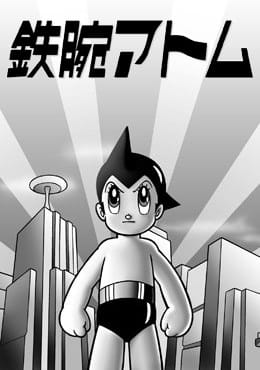
Astro Boy (Tetsuwan Atom)
Is Astro Boy (Tetsuwan Atom) worth watching?
Worth a look. Anime Codex rates Astro Boy (Tetsuwan Atom) 6.87 out of 10 — scored on six criteria (story, characters, themes, world-building, animation, and cultural impact), not crowd votes. 146th of 226 on the Codex rubric — bottom 36% of the catalogue. The crowd rates it 0.35 higher than the rubric does — the Codex is harder on it than on 38% of the catalogue.
Where to watch
Streaming availability varies by region — check your local services.
Trailer
What the data says
Computed from the Codex rubric across the whole catalogue.
Summary
Astro Boy is less a great series by modern standards than the cornerstone that made the medium possible. Its origin — Tenma forging Atom from grief over Tobio, then coldly discarding him to a robot circus — remains a startlingly tragic premise for children's programming, and the show's recurring meditations on robot personhood, prejudice, and moral worth lend it thematic seriousness far ahead of its 1963 peers. Atom himself is an enduring protagonist precisely because he answers cruelty with compassion. The weaknesses are real and largely structural: 193 largely episodic installments mean little sustained growth, frequent filler, and a powerful central tragedy that the weekly format rarely revisits with the weight it deserves. The limited animation Mushi Production invented here is crude and repetitive even for its era, a product of necessity rather than artistry. Yet its world-building — a coherent mixed human-robot society — and Tezuka's expressive designs carry it. Judged within shonen, it is a flawed but historically monumental work whose thematic ambition and incalculable cultural impact comfortably outweigh its dated craft. It is the show every later anime is descended from, and it still rewards viewing for its heart.
Criterion breakdown
Story & narrative
The 1963 series is fundamentally episodic, with most installments self-contained morality plays about robot rights, crime, or scientific hubris rather than serialized arcs. The foundational origin — Tenma building Atom to replace Tobio, then rejecting and selling him to the circus — remains one of the most emotionally potent setups in early manga-to-anime adaptation, but the weekly format dilutes that tragedy by rarely returning to it with sustained weight. Strong individual scripts (often adapted directly from Tezuka's chapters) coexist with filler-grade adventures, making the whole uneven.
Character writing & growth
Atom himself is a remarkably durable protagonist for 1963: a powered child who chooses kindness toward both the 'wretched kin' robots of the circus and the humans who fear him, embodying compassion rather than triumphalism. However, the era's episodic constraints mean Atom does not truly grow — fittingly ironic given Tenma's complaint that he 'cannot grow,' yet a real limitation as character writing. Supporting figures like Ochanomizu are warmly drawn but largely static archetypes serving the week's lesson.
Themes & emotional resonance
This is the show's strongest dimension: it interrogates what personhood and worth mean for an artificial being decades before such questions became genre staples. The circus arc's treatment of robots as 'disposable tools,' Tenma's grief-driven cruelty, and Ochanomizu's advocacy for robot dignity give the series genuine moral seriousness rare for children's programming of its time. Emotional resonance is occasionally blunted by the format's reset button, but the core pathos lands.
World-building & power system
The mixed human-robot society is conceptually rich and internally coherent for 1963, with robot labor, prejudice, and rights forming a consistent social backdrop rather than mere set dressing. Atom's 'power system' — his enumerated abilities like flight, super-strength, and searchlight eyes — is iconic and clearly defined, foundational to later super-robot tropes. The setting depth is impressive for its era, though it rarely deepens beyond the premise across 193 episodes.
Animation & direction
Mushi Production pioneered limited-animation television techniques here out of brutal budgetary necessity, relying heavily on held cels, repeated cycles, and minimal in-betweens. Judged against the best of its demographic, the visuals are crude and static even allowing for 1963 — but Tezuka's expressive character designs and inventive panel-to-screen direction wring real charm and clarity from the constraints. It is historically pivotal more than aesthetically excellent.
Cultural impact
Astro Boy is the foundational text of the entire TV anime industry — the first weekly serialized 30-minute animated series in Japan, establishing the production economics, scheduling, and merchandising model every later show inherited. Its influence on robot fiction, from Doraemon to Pluto, is incalculable. No discussion of the medium's origins is complete without it.
Synopsis (from MAL)
Devastated over losing his only child in a car accident, Dr. Umatarou Tenma, the director of the Ministry of Science, mobilizes the institution's entire staff to create Atom: an ultimate technology robot made in his late son Tobio's exact image. Aside from unmatched power and intelligence, the robot also possesses the innocence and playfulness of a young boy. However, Atom fails to meet Tenma's expectations when the latter realizes that Tobio's replacement cannot grow. Unable to recognize Atom for what he is, Tenma wishes to forget the whole affair. Dismissing the feelings of what he considers just a machine, he cruelly sells the android to a robot circus that treats its performers as merely disposable tools. Despite his predicament, Atom shows kindness to his wretched kin and humans alike, sparing no effort in times of crisis to keep everyone safe. Soon, fortune smiles on the mechanical boy, as Dr. Ochanomizu—a visionary who fights against the abuse of robots—frees him from the circus. Under Ochanomizu's guidance and with a chance to forge a path in their mixed human-robot society, Atom fights tirelessly to make the world a peaceful place while also discovering its vast complexity. [Written by MAL Rewrite]
Ranked nearby

Explore rankings
Discussion
Set a display name above to post.
Loading discussion…