Anime Like Tokyo Ghoul: 5 the Codex Rubric Says You'll Actually Love
Fans of Tokyo Ghoul respond to its strongest criteria — themes, cultural weight, character — and these five picks deliver the same qualities, ranked by how close their critical profile sits to it, not by vibes.
Fans of Tokyo Ghoul respond to its strongest criteria — themes, cultural weight, character — and these five picks deliver the same qualities, ranked by how close their critical profile sits to it, not by vibes.
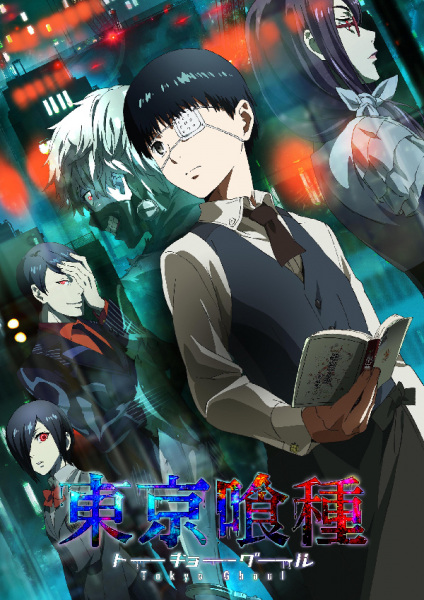
Kaneki's white-haired break in episode 12, mantra-counting through Yamori's torture, is the single image that built a decade of anime iconography. Studio Pierrot's 2014 adaptation of Sui Ishida's manga sits at a Codex 6.93 — not a masterpiece by the rubric, but a show whose strongest criteria (cultural impact 8.5, themes 7.5, character 7.0, world 7.0) explain why it stuck. The recommendations below aren't built on tonal adjacency or "dark seinen" as a vibe. They're ranked by how closely their critical profile maps to Tokyo Ghoul's.
What the Discourse Gets Wrong About Tokyo Ghoul
The MyAnimeList 7.79 reads about right as a community number, but the conversation around the show has spent a decade collapsing the original 12-episode Pierrot run into the disaster of its sequels. The first season is not the franchise. It's a tightly compressed, sometimes muddy, occasionally brilliant horror-action piece carried by a single transformation arc and a thematic core — what it means to retain humanity while becoming a monster — that sits comfortably in the upper register of seinen morality plays. The animation is the weak link (Codex 6.0; the heavy shadow-masking on TV broadcast genuinely degraded the fight choreography), but Yutaka Yamada's score and Shuhei Morita's monochrome torture sequence are real direction, not pretext.
So when fans of Tokyo Ghoul ask for anime like Tokyo Ghoul, the honest answer isn't "more body horror." It's "shows that score where Tokyo Ghoul scores highest." That means cultural weight, thematic seriousness about monstrosity and identity, and a protagonist whose interior gets broken on camera. The five picks below are ordered by proximity to that profile.
Parasyte: The Maxim — The Closest Critical Twin
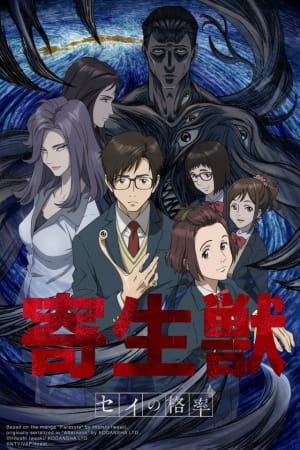
Parasyte: The Maxim (Codex 7.93) is the recommendation that matters most because it's not adjacent to Tokyo Ghoul — it's the upgrade. Madhouse's 24-episode 2014 adaptation (MyAnimeList 8.32) is doing exactly what Pierrot's show is doing, with a longer runtime and a steadier hand. Shinichi Izumi's gradual erosion of human affect after Migi colonizes his right hand is the same arc as Kaneki's — the timid protagonist who survives by becoming the thing he feared — but Parasyte gets 24 episodes to dramatize it where Tokyo Ghoul gets twelve.
The criterion match is unusually clean. Parasyte's character score (8.3) tracks Kaneki's exact trajectory with more room to breathe. Its themes (7.8) interrogate the same human/monster symmetry, and the Reiko Tamura sequence — her motherhood arc and final confrontation — is the kind of moral-symmetry beat Tokyo Ghoul gestures at with Mado and Amon but doesn't have time to land. The story score (8.0) is what Tokyo Ghoul's 6.5 should have been with twice the episodes. If you watched Tokyo Ghoul for Kaneki's break, Parasyte is the first and only recommendation that actually delivers the same payload.
Berserk (1997) — Themes, Character, and the Ceiling of Seinen Tragedy
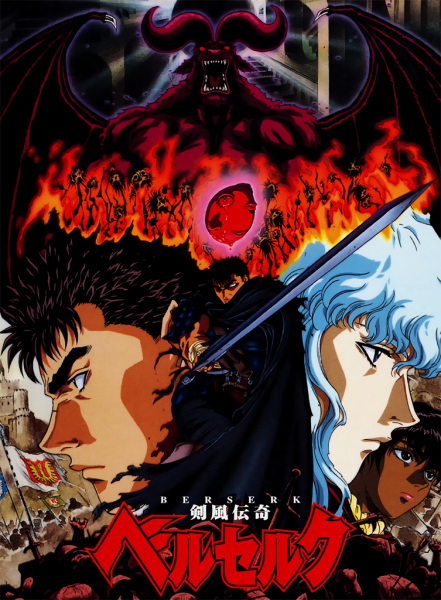
Berserk (Codex 8.53), OLM's 25-episode 1997 adaptation, sits at MyAnimeList 8.61 and posts the highest character (9.0) and themes (9.0) scores in this list. The Golden Age Arc is, more than any single anime, the show Tokyo Ghoul is reaching toward when it puts Kaneki in a chair with Yamori — a story about a man whose identity gets dismantled by a torturer he can't escape. Griffith and the Eclipse do to Guts what Yamori does to Kaneki, slower and with infinitely more thematic weight.
The animation (6.5) is genuinely limited — late-90s OLM working under brutal constraints, with motion that creaks and a soundtrack (Susumu Hirasawa) doing more dramatic lifting than the cels. That maps onto Tokyo Ghoul's own animation deficit (6.0). What carries Berserk is identical to what carries Tokyo Ghoul's best moments: cultural impact (9.5), thematic seriousness, and a protagonist whose interior is the show. If you want to see what Tokyo Ghoul's strongest criteria look like at the top of the genre, Berserk is the reference point. It's also one of the highest-scoring seinen entries on the Codex, period — relevant if you're already thinking about where seinen actually delivers as a demographic.
Inuyashiki — The Other Hideaki Anno-Adjacent Body-Horror Pick
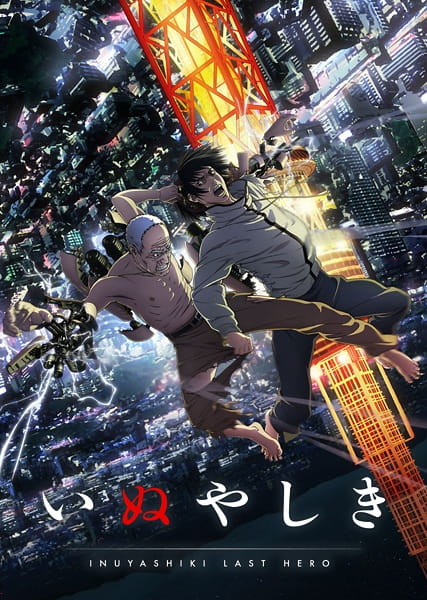
Inuyashiki (Codex 6.35) is the lowest-scoring pick here, and it's on the list for a specific reason: it's Hiroya Oku (Gantz) doing exactly the kind of urban-horror body-modification premise Tokyo Ghoul runs on, with MAPPA's 2017 production (11 episodes, MyAnimeList 7.62) sitting almost on top of Tokyo Ghoul's overall profile.
The themes score (7.0) matches Tokyo Ghoul's 7.5 almost exactly — both shows interrogate what happens to a human consciousness inside a body that's no longer human. Hiro Shishigami's villain arc is the Yamori function: a monster the protagonist defines himself against. The story (6.5) and animation (6.5) scores are nearly identical to Tokyo Ghoul's, which is the point. This is the recommendation for viewers who liked Tokyo Ghoul specifically and want a show that sits in the same critical neighborhood without pretending to be Berserk.
Re:Zero — Psychological Torture as the Engine of Character
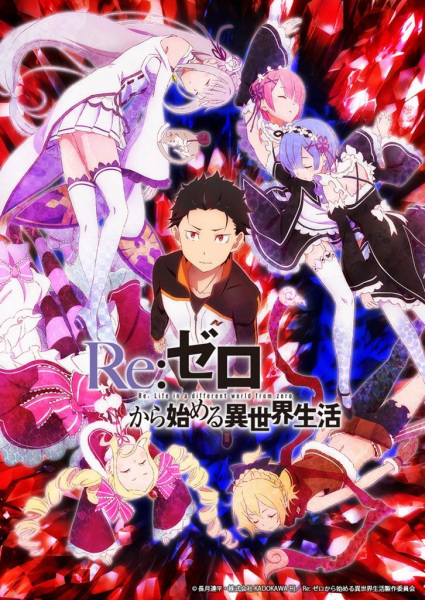
Re:Zero (Codex 8.50), White Fox's 2016 series (25 episodes, MyAnimeList 8.25), is the pick that looks wrong on paper and is correct on the rubric. Subaru Natsuki is Kaneki Ken with a different genre wrapper — a protagonist whose psyche gets shattered repeatedly on camera, whose worst episode is a torture sequence (the mansion loops, Rem's death cycles), and whose character arc is the show's spine.
Character (9.0) and themes (8.5) are where Re:Zero outscores Tokyo Ghoul on every axis Tokyo Ghoul cares about. The isekai trappings are misdirection; the actual show is a seinen psychological drama about a man being broken by repetition until something new is left over. If Kaneki's mantra-counting under Yamori was the Tokyo Ghoul image that lodged in you, Subaru's collapse in the Roswaal mansion is the closer analog than anything else this side of Madoka.
Akira — The Cultural Ceiling
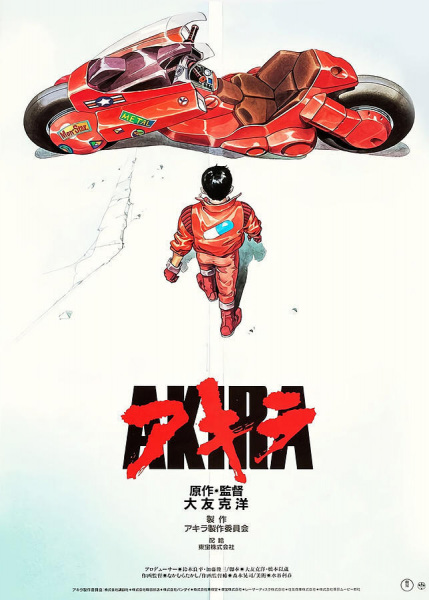
Akira (Codex 7.98), Tokyo Movie Shinsha's 1988 film (MyAnimeList 8.16), is on the list because its cultural impact score (10.0) is what Tokyo Ghoul's 8.5 is trying to be. Both works are urban-Tokyo body-horror parables about a young man whose body becomes the thing the institutions around him want to control. Tetsuo's mutation in the climactic Olympic stadium sequence is the visual grammar Kaneki's transformation inherits — Katsuhiro Otomo's direction and the legendary 327-color palette set the template for what "anime body horror in Tokyo" looks like.
The animation (9.8) is the inverse of Tokyo Ghoul's weakness — if Pierrot's shadow-masked fights frustrated you, Akira is the corrective, one of the best-animated works in the medium's history. The world-building (9.0) is what Tokyo Ghoul's 7.0 only gestures at.
The Counter-Argument: Tone Isn't a Criterion
The honest objection: none of these except maybe Parasyte and Inuyashiki feel like Tokyo Ghoul. Berserk is medieval fantasy. Re:Zero is isekai. Akira is a 1988 film. A reader who came to Tokyo Ghoul for ghouls-in-Tokyo body horror specifically will find Berserk's structure and Re:Zero's premise alien.
That's true and beside the point. The rubric isn't measuring tonal adjacency. It's measuring whether the criteria that made Tokyo Ghoul work — character interiority under pressure, thematic weight, cultural reach — get delivered at a higher level. They do. Tone is a discovery mechanism; criteria are why you stay.
Verdict
Tokyo Ghoul's 6.93 is a show carried by its peaks — the torture sequence, the Unravel OP, Kaneki's break — and dragged by Pierrot's compressed adaptation. The five shows above each deliver one or more of those peaks at higher altitude, with Parasyte the closest critical twin and Berserk the genre ceiling. Watch them in that order.
Featured in the Codex
More from The Codex
The Seven Deadly Sins Is a 6.60 Wearing a 7.60 Costume: A One-Point Gap Earned by Groping Gags and Convenient Flashbacks
The Seven Deadly Sins scores 6.60 on the Codex against MyAnimeList's 7.60 because the crowd is grading a Netflix breakout and a Ban-and-King friendship, not the 24 episodes A-1 Pictures actually broadcast in 2014.
The 10.0 That Built a Sunday: How Sazae-san's Cultural Score Carries a 6.58 Scorecard
Sazae-san is a case study in how a single criterion — cultural — can define how a show is remembered, and the 10.0 the Codex hands Eiken's 1969 institution is doing every bit of the heavy lifting its other five scores refuse to.
The Sebastian Problem: Why Black Butler Sits 1.10 Below Its MAL Line and the Crowd Refuses to Notice
Black Butler (Kuroshitsuji) posts a 1.10-point gap between MyAnimeList's 7.65 and the Codex 6.55 because the crowd is grading Sebastian's silhouette and a Phantomhive aesthetic, not the anime-original finale A-1 Pictures actually shipped in 2009.
Discussion
Set a display name above to post.
Loading discussion…