Anime Like Hunter × Hunter (2011): 5 the Codex Rubric Says You'll Love
Fans of Hunter × Hunter (2011) respond to its strongest criteria; these five picks deliver the same qualities, ranked by how close their critical profile sits to it — not by vibes.
Fans of Hunter × Hunter (2011) respond to its strongest criteria; these five picks deliver the same qualities, ranked by how close their critical profile sits to it — not by vibes.
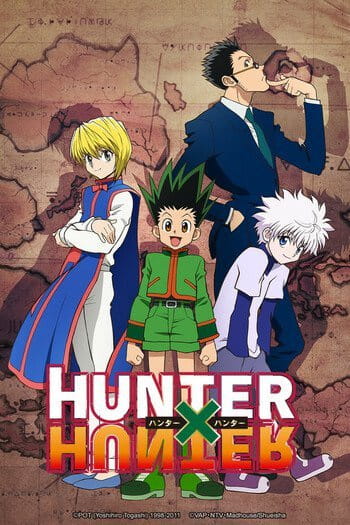
Hunter × Hunter (2011) sits at 9.23 on the Anime Codex rubric because Madhouse and Hiroshi Kōjina did something almost no long-running shonen manages: they built a 148-episode adaptation where the story (9.5), characters (9.5), and world-building (9.5) all hit the ceiling simultaneously. Most "anime like Hunter × Hunter (2011)" lists hand you Naruto and Bleach and call it a day. That's vibes. The rubric reads Togashi's show differently — as a structural feat — and the recommendations have to match the structure.
What the Codex Actually Rewards in Hunter × Hunter (2011)
Strip the fandom rhetoric and the picture is clean. The Chimera Ant arc isn't beloved because it's "dark"; it's a 9.5-tier story because Togashi spends sixty episodes converting Meruem from antagonist into ethical problem, and Madhouse animates that conversion without flinching. Killua's defection from the Zoldyck household, Kurapika's chain-jail logic, Hisoka's threat economy — these are 9.5-tier characters because every one of them carries a coherent want into every scene. Nen is a 9.5-tier power system because it imposes costs, and the world around it (Heavens Arena, Greed Island, NGL, the Dark Continent reveal) keeps widening without contradicting its own rules.
Animation lands at 8.5 — strong, occasionally extraordinary in the Yoshimatsu-led stretches, but not a Mappa-era spectacle. Cultural impact also 8.5: enormous inside the medium, less universally felt than Dragon Ball or Naruto. Themes 9.0. That's the profile. Now match it.
The MyAnimeList consensus (9.03) treats Hunter × Hunter as a top-five anime full stop. The Codex agrees on altitude and disagrees on why — and as the decade-by-decade numbers show, shows this load-bearing on story and character don't arrive on a schedule. You chase them deliberately.
One Piece — The Only Shonen That Matches the Character Ceiling
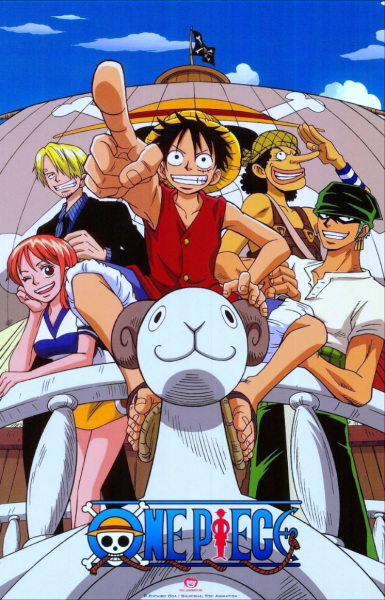
One Piece at 8.58 is the closest critical profile on the board. Toei's adaptation is structurally messier than Madhouse's — pacing fluctuates, filler exists — but the character axis lands at 9.0, within striking distance of Hunter × Hunter's 9.5, and the story sits at 8.5. Oda is doing what Togashi is doing: expanding a world that keeps proving consistent under pressure. Water 7, Enies Lobby, Marineford, Dressrosa, Wano — each arc adds geography and political stakes without retconning what came before. The Straw Hat ensemble carries the same load Gon, Killua, Kurapika, and Leorio carry, with more bodies and less psychological precision.
If Chimera Ant rewired your sense of what shonen could put a child protagonist through, Marineford is the closest neighbouring shock. Themes at 8.7 match Hunter × Hunter's 9.0 closely enough that the tonal range — freedom, inheritance, the weight of a name — registers as familiar.
Magi: The Labyrinth of Magic — The World-Building Comparison
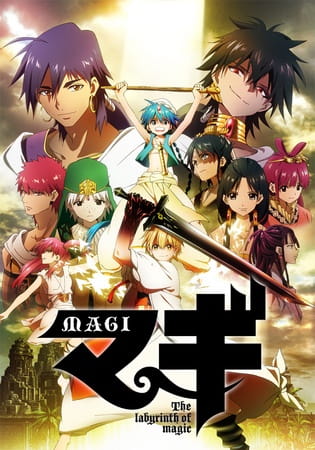
Magi: The Labyrinth of Magic at 7.40 is the rubric's cleanest world-building neighbour. A-1 Pictures' 25-episode adaptation scores 8.5 on world — the same number Hunter × Hunter posts on the same criterion. That isn't an accident. Ohtaka's Dungeons, the Kou Empire's expansion, the Magi/King Vessel hierarchy — the system has layered economic, religious, and magical rules that all interact, the way Nen interacts with Hunter politics and the Phantom Troupe's class resentment.
Where Magi falls short is character (7.0) and story (7.5) — Aladdin and Alibi never reach Gon-and-Killua precision, and the plot leans on tournament beats Hunter × Hunter sidesteps. But if the Greed Island arc is what hooked you — a constructed world with discoverable rules — Magi is the rubric's most honest follow-up. The political dimension in the Balbadd arc, in particular, scratches the same itch as Kurapika's Yorknew City work.
Dragon Quest: The Adventure of Dai — The Character Arc Twin
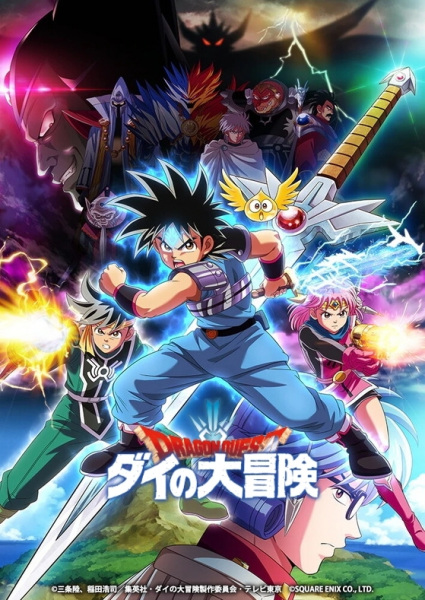
Dragon Quest: The Adventure of Dai at 7.40 earns the second slot because its character score (8.0) is the highest on this list outside One Piece. Toei's 2020 hundred-episode adaptation does what Gon's arc does: takes a wide-eyed protagonist with a complicated parentage and forces him through escalating moral weight without softening the cost. Dai's relationship to Avan, Popp's coward-to-hero conversion, Hadlar's villain rehabilitation — these are 8.0-tier character beats that any Hunter × Hunter viewer will read fluently.
Story at 7.5 and themes at 7.3 sit below Hunter × Hunter's ceiling, and world at 6.8 is the weak axis — the Dragon Quest mythology is functional but doesn't expand the way Nen or the Dark Continent do. That said, the 2020 production sharpens the original 1991 series into something Madhouse-adjacent in directorial discipline. If Killua's Zoldyck arc made you cry, Popp's spear-throw moment is on the menu.
The Seven Deadly Sins — The Ensemble Adventure Pick
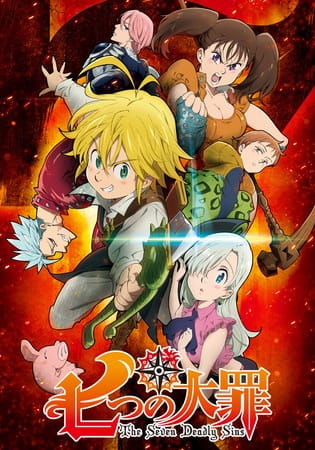
The Seven Deadly Sins at 6.60 is the most uneven recommendation here, and it's earning its slot on a specific axis: animation at 7.2 (A-1's first season is unusually fluid for a 24-episode adventure shonen) and cultural impact at 7.0. The ensemble — Meliodas, Ban, King, Diane — operates on the same Hunter Exam logic that introduces Gon's circle: throw misfits with incompatible power profiles into proximity and let the chemistry do the work.
Story at 6.8 and themes at 6.0 are well below Hunter × Hunter's tier, and the post-season-one drop-off is steep. But the first cour specifically — the Baste Dungeon and Vaizel Fight Festival stretch — captures the same picaresque travel-and-collect-allies rhythm as Gon and Killua's early road through Heavens Arena. Take it for what the first season does and exit when the animation does.
Fairy Tail — The Weakest Profile Match, and Why It's Still Here
Fairy Tail at 6.25 is the lowest score on this list. Satelight's 175-episode run posts a story score of 6.0 — half a Hunter × Hunter — and the rubric isn't going to pretend otherwise. It's here because the guild structure, the magic-system breadth, and the long-form ensemble travel pattern map onto the Hunter Association/Phantom Troupe/Zoldyck-family geometry more directly than any other shonen on the catalogue not already listed above.
If you finished Hunter × Hunter and the thing you miss is the quantity — the sheer hours of watching a roster of named fighters develop signature techniques across arcs — Fairy Tail delivers that volume at a lower per-episode quality. As the popularity-versus-quality data suggests, volume and quality aren't strangers, but they aren't married either. Watch it for the guild, not the writing.
The Counter-Argument: Hunter × Hunter Is Sui Generis and Nothing Compares
The strongest opposing position: Togashi's manga is a genuine outlier — philosophically denser, structurally bolder, and more willing to abandon its protagonist than anything else in the medium — and recommending One Piece or Fairy Tail to a Hunter × Hunter fan is like recommending a podcast to someone who just finished a novel. There's truth in this. None of the five above scores 9.0+ across story, character, and world simultaneously. The Chimera Ant arc has no twin.
The rubric reads this differently. "Closest critical profile" isn't "equivalent achievement." It's the honest map of where the same load-bearing criteria appear next, even at lower altitude. One Piece's 9.0 character score is real. Magi's 8.5 world is real. Dragon Quest: The Adventure of Dai's 8.0 character is real. You don't replace Hunter × Hunter. You triangulate around it.
Hunter × Hunter (2011) is a 9.23 because Madhouse and Togashi stacked three 9.5s on top of each other and nobody flinched. The five shows above each carry one or two of those axes into their own register, and that's what makes them defensible recommendations rather than vibes-based ones. Start with One Piece. End with Fairy Tail. Don't pretend any of them are Chimera Ant.
Featured in the Codex
More from The Codex
The Seven Deadly Sins Is a 6.60 Wearing a 7.60 Costume: A One-Point Gap Earned by Groping Gags and Convenient Flashbacks
The Seven Deadly Sins scores 6.60 on the Codex against MyAnimeList's 7.60 because the crowd is grading a Netflix breakout and a Ban-and-King friendship, not the 24 episodes A-1 Pictures actually broadcast in 2014.
The 10.0 That Built a Sunday: How Sazae-san's Cultural Score Carries a 6.58 Scorecard
Sazae-san is a case study in how a single criterion — cultural — can define how a show is remembered, and the 10.0 the Codex hands Eiken's 1969 institution is doing every bit of the heavy lifting its other five scores refuse to.
The Sebastian Problem: Why Black Butler Sits 1.10 Below Its MAL Line and the Crowd Refuses to Notice
Black Butler (Kuroshitsuji) posts a 1.10-point gap between MyAnimeList's 7.65 and the Codex 6.55 because the crowd is grading Sebastian's silhouette and a Phantomhive aesthetic, not the anime-original finale A-1 Pictures actually shipped in 2009.
Discussion
Set a display name above to post.
Loading discussion…