Anime Like Fire Force: 5 the Rubric Says You'll Love, Ranked by Critical Proximity
Fans of Fire Force respond to its strongest criteria — David Production's 8.5 animation, a 7.0 world built on Spontaneous Human Combustion and the cult of Sol — and these five picks deliver the same qualities, ranked by how close their critical profile sits to it, not by vibes.
Fans of Fire Force respond to its strongest criteria — David Production's 8.5 animation, a 7.0 world built on Spontaneous Human Combustion and the cult of Sol — and these five picks deliver the same qualities, ranked by how close their critical profile sits to it, not by vibes.
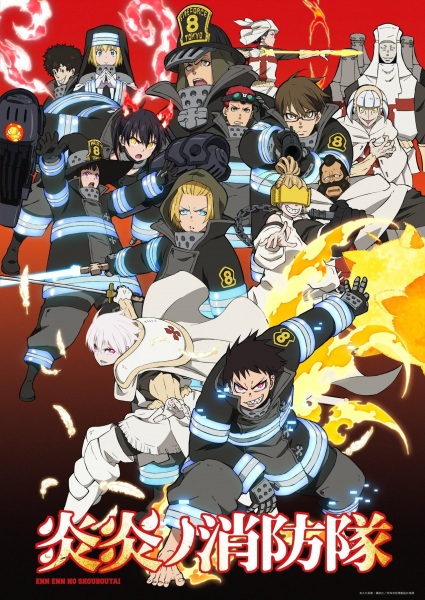
Fire Force is not, on the Codex, a great show. It is a 6.68 whose scorecard tells you exactly where the pleasure lives: David Production's kinetic flame choreography lands an 8.5 on animation, the theocratic Tokyo of the Solar Era pushes world-building to a 7.0, and everything else — story, character, themes — sits stubbornly in the low sixes. That asymmetry is the show's fingerprint, and it is also the map for finding what to watch next.
What the Fire Force scorecard actually rewards
MyAnimeList sits Atsushi Ohkubo's 24-episode 2019 series at 7.72, which is the number you'd expect from a Weekly Shonen Magazine title with over a million MAL members and a Soul Eater pedigree in its DNA. The Codex disagrees, and the disagreement is instructive. Season 1 sets up a mystery — the Evangelist, the fire that killed Shinra's family, Sho and the White-Clad — and then wastes long stretches on Infernal-of-the-week structure before the Asakusa arc jolts the plot alive. Company 8 charms without developing; Tamaki's fanservice gag actively regresses her. The rubric does not forgive that.
What the rubric does reward is the thing you actually remember: Shinra's foot-ignition speedwork, the Company 7 katana beats, the sacral melancholy of "laying souls to rest" in that early sister-Infernal episode. David Production's direction is the reason the show has cultural traction at all. So the honest recommendation question isn't "what else is a shonen firefighter show." It's "what else spikes on animation and worldbuilding, tolerates uneven story, and hits that same religious-industrial mood." Five titles do it, ranked by how close their critical profile sits to Fire Force's — not by aesthetic association, not by tag overlap, not by what the crowd is grading.
1. Kaiju No. 8 — the closest structural mirror
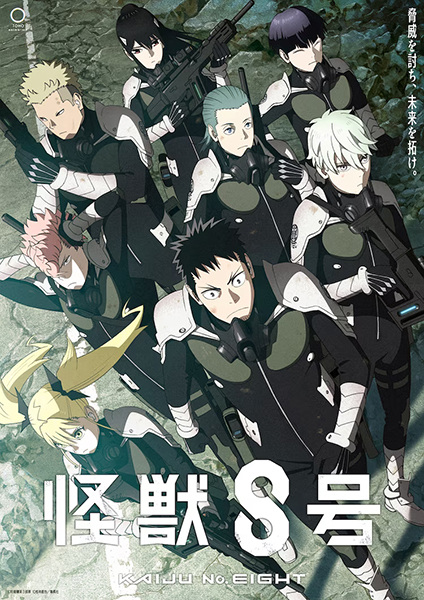
Kaiju No. 8 posts a Codex 6.82 to Fire Force's 6.68, and the two scorecards are near-siblings. Story 6.8, character 6.5, themes 6.3, world 6.7 — every criterion sits within a fifth of a point of Fire Force's numbers, with cultural weight (7.5) slightly ahead on the back of a 2024 marketing push that MAL rewarded with an 8.21. Production I.G's 12-episode run replaces firefighters with the Defense Force, Infernals with kaiju, and Shinra's Devil's Footprints with Kafka Hibino's transformation gimmick, but the fundamental shape — a civil-service premise dressed as monster response, a protagonist whose body is the anomaly he hunts — is the same.
What Kaiju No. 8 shares with Fire Force most exactly is the trade-off. The action set pieces are legible and physical, the world's institutional logic is worked out with real thought, and the character interiority is thinner than the premise deserves. If Company 8's roster dynamics were your entry point, Kafka and Reno's partnership scans the same. If the Evangelist mystery was, the Yojiro Hoshina reveal beats operate on the same clockwork.
2. D.Gray-man — the theocratic long game
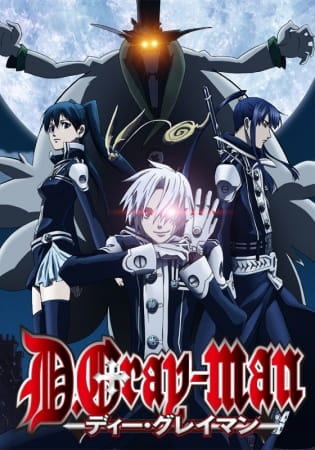
D.Gray-man at Codex 6.81 is where Fire Force's underdeveloped religious ambition finally gets room to breathe. TMS Entertainment's 2006 run stretches 103 episodes, which is both its advantage and the reason MAL parks it at 8.00; the length lets the Millennium Earl, the Noah, and the Innocence-Akuma cosmology accrete the kind of thematic density Fire Force only gestures at in season 1.
The criteria proximity is specific. World 7.5 outperforms Fire Force's 7.0 on the same axis — a fictional theology powering a specialized military order — and themes at 7.2 delivers what Fire Force's 6.0 promises but doesn't cash. Story at 6.8 has the same shape too: episodic missions punctuated by revelation arcs. Allen Walker's cursed eye is functionally cousin to Shinra's tic-as-trauma; both are body-level metaphors for the cost of the job. If the Sol conspiracy was what pulled you in and not what pushed you out, D.Gray-man is the same instinct executed with more real estate.
3. Chainsaw Man — the ceiling on what this template can do
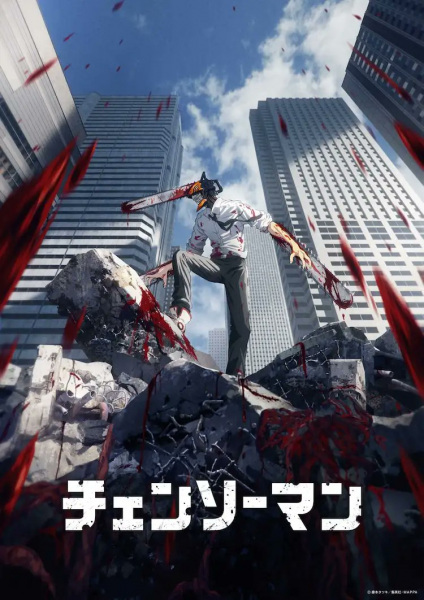
Chainsaw Man at 7.90 is the highest-ranked title on this list because MAPPA's 12-episode adaptation is what happens when the Fire Force template — devil-hunting civil service, a body-horror protagonist, religious grammar smuggled into shonen — gets executed by a studio operating at peak. Story 7.5, character 8.0, cultural 8.5, and a MAL 8.43 that reflects it.
The proximity here is thematic and structural rather than tonal. Denji's Public Safety contract is Company 8 with the metaphysics turned up; the devils are Infernals with names and negotiating power. Where Fire Force's Codex penalizes shallow character growth, Chainsaw Man's rewards Aki Hayakawa and Power as fully-drawn arcs across a single cour. This is the recommendation that asks whether you loved Fire Force's animation ceiling and wanted the writing to meet it. Ryu Nakayama and MAPPA's team say yes.
4. Edens Zero — the concession pick
Edens Zero is here because Hiro Mashima's J.C.Staff 25-episode 2021 series sits at Codex 5.58, MAL 7.26, and shares Fire Force's exact failure mode: a strong hook diluted by uneven plotting (story 5.8), fanservice cutaways that break tonal momentum, and a supporting cast that stays static. If the criticism-proof part of your Fire Force affection is the shonen-magazine rhythm itself — new location, new power, new arc — this delivers it in space-opera clothing.
This is not a recommendation the rubric makes proudly. It is the pick that tells you which Fire Force viewer you are. If you skipped the Tamaki gag and stayed for the Asakusa arc, skip this. If the gag didn't cost you, Edens Zero will not either.
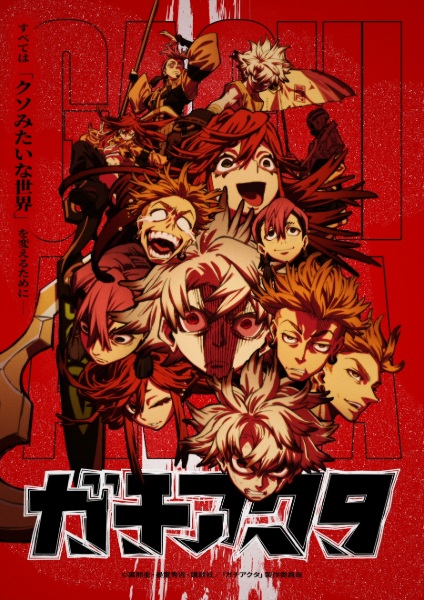
5. Gachiakuta — the Bones upgrade
Gachiakuta at Codex 7.40 is where the animation-first pleasure of Fire Force gets translated into a 2025 Bones Film production. Animation lands at 8.3 — within striking distance of David Production's 8.5 — and the world-building at 8.0 outclasses Fire Force's 7.0 outright, with a caste-and-refuse cosmology that gives the visual grammar somewhere to point. Story 7.2, character 6.8, themes 7.5, and a MAL 8.21 that reflects a critical reception the rubric largely endorses.
Rudo's Vital Instrument gloves are the structural echo of Shinra's ignition powers — a personal, physical, close-range gimmick built for animator showcase. If Fire Force's OP energy and the Company 7 katana sequences were the moments you rewound, Bones Film is delivering that same animation-forward pleasure on a stronger narrative chassis.
The counter-argument: none of these is Fire Force
The steelman: Fire Force's specific pleasure is the fusion — firefighting procedural, Ohkubo character design, David Production sakuga, a Kenichiro Suehiro score doing sacral-industrial work in the background. Kaiju No. 8 shares the institutional frame but not the religious weight. D.Gray-man shares the theology but is a 2006 TMS production with the pacing to prove it. Chainsaw Man is tonally sharper and darker. Gachiakuta swaps flame for trash. Edens Zero swaps everything for stars.
Fair. The rubric answers that no recommendation is a substitute; it is a proximity ranking. These five titles hit the same criteria Fire Force spikes on — animation, worldbuilding, institutional-mystery story — with variable strengths at the places Fire Force is weakest. Nothing else on the Codex sits this close.
Verdict
Fire Force's 6.68 is the sound of an 8.5 animation score dragging a 6.0 character score uphill, and the recommendations that matter are the ones with the same shape. Kaiju No. 8 is the mirror, Chainsaw Man is the ceiling, and Gachiakuta is the version with Bones Film doing the heavy lifting. Watch in that order and the rubric will not have lied to you.
Featured in the Codex

More from The Codex
The Seven Deadly Sins Is a 6.60 Wearing a 7.60 Costume: A One-Point Gap Earned by Groping Gags and Convenient Flashbacks
The Seven Deadly Sins scores 6.60 on the Codex against MyAnimeList's 7.60 because the crowd is grading a Netflix breakout and a Ban-and-King friendship, not the 24 episodes A-1 Pictures actually broadcast in 2014.
The 10.0 That Built a Sunday: How Sazae-san's Cultural Score Carries a 6.58 Scorecard
Sazae-san is a case study in how a single criterion — cultural — can define how a show is remembered, and the 10.0 the Codex hands Eiken's 1969 institution is doing every bit of the heavy lifting its other five scores refuse to.
The Sebastian Problem: Why Black Butler Sits 1.10 Below Its MAL Line and the Crowd Refuses to Notice
Black Butler (Kuroshitsuji) posts a 1.10-point gap between MyAnimeList's 7.65 and the Codex 6.55 because the crowd is grading Sebastian's silhouette and a Phantomhive aesthetic, not the anime-original finale A-1 Pictures actually shipped in 2009.
Discussion
Set a display name above to post.
Loading discussion…