The 9.5 That Made Shin-chan Immortal: How One Cultural Score Rewrites a 7.36 Scorecard
Crayon Shin-chan is a case study in how a single criterion — cultural — can define how a show is remembered, and the butt-dance is the reason a modest Shin-Ei production became a thirty-year global institution.
Crayon Shin-chan is a case study in how a single criterion — cultural — can define how a show is remembered, and the butt-dance is the reason a modest Shin-Ei production became a thirty-year global institution.
The five-year-old with the caterpillar eyebrows is the most exported anime protagonist you will never see on a "best of" list. Since 1992, Shin-Ei Animation has broadcast Shinnosuke Nohara's provocations every week, dubbed him into thirty languages, and shipped him to forty-five countries — and the Codex still lands the show at 7.36. That gap between what the rubric measures and what the culture actually did with the show is the entire story here.
The Crayon Shin-chan Cultural Score Is Doing Almost All the Work
The MyAnimeList crowd scores it 7.82. That number is not wrong so much as it is uninterested — it flattens a show whose actual distinction lives in exactly one dimension of the six-criterion rubric. On the Codex, Shin-chan posts a 9.5 on cultural and nothing else above an 7.8. Story sits at 6.5. Animation at 6.8. Themes at 7.0. This is a scorecard with one enormous spike and a plateau of competent middle numbers underneath it, and pretending otherwise — either by inflating the writing to justify the affection, or by dismissing the affection because the writing is modest — misreads the show.
Neither a hit piece nor a puff piece. The point is to credit the 9.5 for what it actually is: a rare, defensible case where global penetration, iconography, and durability form their own kind of achievement, one the rubric weights precisely because kodomomuke is a demographic where cultural saturation is closer to the artistic project than it is to the marketing outcome.
What the 9.5 Actually Names
The Codex cultural score is not a popularity metric. It measures whether a show has entered the general vocabulary of the countries it aired in, and Shin-chan clears that bar in a way almost no other kodomomuke title does. The butt-dance is a shorthand that reads instantly in Delhi, Barcelona, Jakarta, and Mexico City. The "elephant" gag — Shin-chan pulling down his shorts and swinging his shirt — is one of the few sight gags in anime whose recognition is genuinely intercontinental. The theatrical films have sustained an annual release cadence for over three decades, which is not a footnote; it is a production reality no other children's anime maintains at that level.
This is why the 9.5 sits where it sits. It is not "a lot of people watched Shin-chan." It is that Shin-chan became load-bearing cultural furniture in multiple regions, the way Futari wa Precure did for magical-girl reboots and Chibi Maruko-chan did for the Japanese family-slot Sunday evening. Those three shows form a small cluster the Codex treats seriously as a category: kodomomuke and family programming whose 9.0-plus cultural scores are earned by decades of continuous, borderless broadcast.
The Character Score Is the Second-Strongest Argument, and It's Quiet
The 7.8 on character is where the show earns the right to that 9.5. Shin-chan himself is a comic invention who refuses to soften, and the show holds that line for over a thousand episodes without letting him grow into a lesson. That discipline is more unusual than it sounds. The temptation in a long-running children's property is to graft development onto the protagonist for the parents' sake; Shin-Ei's direction refuses that concession, and Shinnosuke at episode 1200 is recognizably the same shameless kindergartener he was at episode 1.
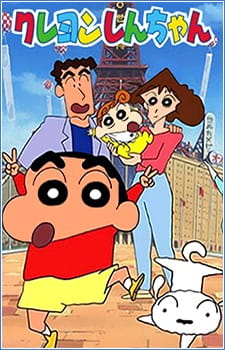
What carries the emotional register instead is the Nohara household. Misae's exhausted-housewife exasperation is written and voiced with the specificity of adult characterization — her small indulgences, her mortgage anxieties, the way Hiroshi's foot odor became one of the longest-running domestic gags in the medium. Hiroshi's salaryman fatigue is legible to any Japanese parent watching alongside their child, and the show grades it as devotion, not defeat. Shiro the dog carries more relational weight than most sidekicks in the demographic. The kindergarten friends — the Kasukabe Defense Force — remain thinner archetypes, and the Codex justification is right to flag that as a ceiling on the score.
The Story and Animation Numbers Are Not Being Undersold
The 6.5 on story is honest. The TV baseline is episodic gag comedy that resolves in a few minutes around a single premise, and there is no cumulative narrative accretion to speak of. Hima's arrival is a real emotional beat; the family's financial-strain episodes land; the seasonal specials occasionally reach for something bigger. But those are the exceptions the justification names, and they exist inside a structure that never asks the viewer to remember last week's episode.
The 6.8 on animation is similarly clear-eyed. The rounded designs and Shin-chan's iconic silhouette are built for economy, not for visual richness, and the weekly Shin-Ei production has been functional for decades — not bad, not lush. Where the direction does earn its number is in timing. The snap-and-pause rhythm of the elephant dance, the deadpan-stare beat before Shin-chan drops a line that mortifies Misae in public — those are directorial choices, not incidental animation, and they hold up as gag craft. The theatrical films carry the franchise's real visual ambition, which is the honest reading; the TV series is a delivery vehicle for jokes, and it does that job cleanly.
The Counter-Argument: A 9.5 Cultural Score Isn't a Free Pass
The strongest opposing case is that cultural saturation is a downstream metric, not an artistic one — that a show cannot be great because it aired for thirty years, and that letting a 9.5 on cultural drag a 6.5 on story into a respectable weighted number is the kind of category error the Codex is supposed to resist. This is a real objection. It is the same objection that keeps Blue Lock's cultural momentum from rescuing its animation number, and it is why the rubric refuses to let a merch phenomenon paper over a scripting problem.
The answer is that the rubric's per-genre weighting already accounts for this. Kodomomuke is scored with cultural weighted higher than it would be for a seinen thriller, because in a children's demographic, whether a show becomes part of the language of childhood is a substantial part of its artistic accomplishment. Shin-chan didn't earn the 9.5 by selling toys. It earned it by becoming the show a Spanish parent and an Indian parent and a Japanese parent all recognize their kids quoting, which is a genuinely rare achievement that a 6.5 story score does not — and should not — negate.
Verdict
The 7.36 is the honest number for a show whose writing is modest, whose animation is functional, and whose cultural footprint is a landmark. Shin-chan is not a great anime; it is a great institution, and the rubric is built to tell the difference without pretending the second thing doesn't count. The butt-dance travels farther than most masterpieces ever will, and that is what the 9.5 is for.
Featured in the Codex





More from The Codex
The Seven Deadly Sins Is a 6.60 Wearing a 7.60 Costume: A One-Point Gap Earned by Groping Gags and Convenient Flashbacks
The Seven Deadly Sins scores 6.60 on the Codex against MyAnimeList's 7.60 because the crowd is grading a Netflix breakout and a Ban-and-King friendship, not the 24 episodes A-1 Pictures actually broadcast in 2014.
The 10.0 That Built a Sunday: How Sazae-san's Cultural Score Carries a 6.58 Scorecard
Sazae-san is a case study in how a single criterion — cultural — can define how a show is remembered, and the 10.0 the Codex hands Eiken's 1969 institution is doing every bit of the heavy lifting its other five scores refuse to.
The Sebastian Problem: Why Black Butler Sits 1.10 Below Its MAL Line and the Crowd Refuses to Notice
Black Butler (Kuroshitsuji) posts a 1.10-point gap between MyAnimeList's 7.65 and the Codex 6.55 because the crowd is grading Sebastian's silhouette and a Phantomhive aesthetic, not the anime-original finale A-1 Pictures actually shipped in 2009.
Discussion
Set a display name above to post.
Loading discussion…