Is Neon Genesis Evangelion Worth Watching? An 8.83 That Earns Its Time on Character and Cultural Weight, Not on a Finale That Exists
Neon Genesis Evangelion clears the Codex rubric on the strength of its psychology and its footprint — provided you accept a story that refuses to end.
Neon Genesis Evangelion clears the Codex rubric on the strength of its psychology and its footprint — provided you accept a story that refuses to end.
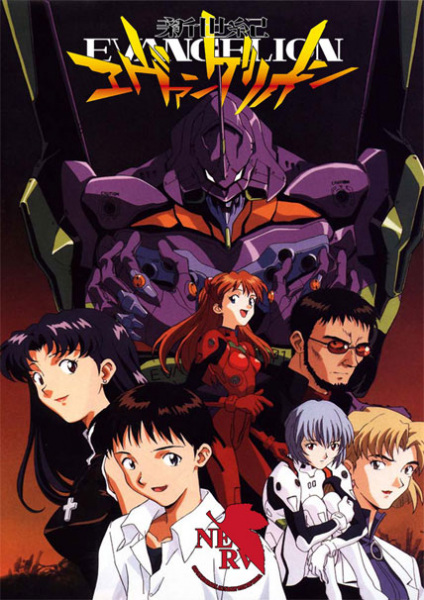
Watch it. Watch it now, watch it in order, watch it with the understanding that episodes 25 and 26 are not going to resolve the plot you have spent twenty-four episodes assembling. Anno's 1995 Gainax production scores 8.83 on the Codex rubric because two criteria carry it past every objection the other four can raise, and those two criteria happen to be the ones that decide whether a shonen title ages into canon or curdles into nostalgia.
Is Neon Genesis Evangelion Worth Watching in 2024? The Consensus Is Directionally Right and Analytically Lazy
Most people just want to know: is Neon Genesis Evangelion worth my time, and for whom? Answer that fast, then back it with the rubric. The MyAnimeList crowd scores it 8.37, which is the kind of number that tells you a show is beloved without telling you where the love actually lives. That figure lumps together the mecha battles, the Rei posters, the Rebuild films, the merchandise, and the vague sense that Evangelion is Important — and then averages the whole thing into a single decimal.
The Codex reads it at 8.83, higher than the crowd, but the delta is not the point. The point is where the score comes from. Evangelion is not a well-rounded 8. It is a 10, a 9.5, a 9.0, and then a set of trailing marks — including a story score that would sink a lesser show — held up by the strongest character and cultural criteria in the shonen wing of the catalogue. Understanding that shape is the difference between recommending the series and recommending it correctly.
The Character Score Is Why You Watch, and 9.5 Is Not a Round-Up
Shinji Ikari is the most honestly written adolescent protagonist in mecha, and the argument does not require agreement — it requires attention. His avoidance is not a phase the show intends to cure. Asuka's collapse in episode 22, when Arael's psychological assault strips her Unit-02 pilot bravado down to a child begging her dead mother for validation, is not a setback she then overcomes in the following arc. She stays broken. Misato's warmth toward Shinji is legibly performative — a woman using a teenager to reconstruct a relationship she could not have with her father — and the show never lets her off the hook for it. Rei, across her iterations, becomes less coherent as a self the closer she gets to what she actually is.
This is the 9.5, and it is the reason Evangelion earns its place regardless of what happens in the finale. Shonen almost never commits to characters who fail to overcome themselves. The genre's grammar is empowerment; Anno's grammar is regression, dissociation, and the specific horror of being fourteen and cornered. Few titles in the catalogue commit this fully — Anno's own Kare Kano attempt circled the same psychological register on a shoujo canvas before production collapsed around him, and the Codex reads that show at 7.83 partly because the character work never got to finish. Evangelion's character work does finish, in its own terrifying way, even when the plot does not.
Cultural Impact at 10.0 Is Not a Participation Trophy
The Codex hands out 10.0 on cultural impact sparingly. Evangelion earns it because the deconstruction is not a retrospective label — it is the operating principle of the show. Every psychological mecha since 1995, every meta-aware genre exercise, every studio willing to end a series on a protagonist's interior monologue rather than a final battle, is drawing on a debt to Anno and Gainax. The influence lines run directly to Bones, to Trigger, to any show that has ever tried to literalize interiority through a piloted machine. The AT Field is now shorthand for a concept the medium did not have vocabulary for before this show articulated it.
Compare this to shows that ride cultural weight to reputations their scorecards cannot defend — Digimon Adventure's 9.0 cultural score carrying a 7.60 rubric, or Doraemon's 9.5 doing the same work on a 7.69. Evangelion is the inverse case: the cultural score is a 10, and the rest of the rubric largely earns its own keep. That is what a foundational text looks like when you break it into criteria.
The Story Score Is 8.5 and That Is Generous
The monster-of-the-week Angel structure inverts, arc by arc, into a study of psychological collapse — this is the show's structural achievement, and it works. Escalation is real. The Human Instrumentality Project is a genuine endpoint. But episodes 25 and 26 abandon plot resolution for abstract introspection, and the reason is not artistic in origin — it is Gainax's budget and Anno's mental state, and the show wears both on its sleeve. The SEELE conspiracy is unresolved. Gendou's endgame is gestured at. The Angel mythology, with its Judeo-Christian and Kabbalistic scaffolding, stops being decoded and starts being felt.
An 8.5 on story is what happens when a strong throughline meets a deliberately withheld payoff. If you require your 26-episode commitments to close their loops, this is where the recommendation gets conditional. End of Evangelion and the Rebuild films exist for a reason, and that reason is that a substantial fraction of the audience — including, arguably, Anno — was not satisfied with what episodes 25 and 26 offered as an ending.
The Animation Is 8.5 and Half of That Is Direction, Not Drawing
Anno's direction is where the visual score comes from. The elevator sequence between Asuka and Rei, held on stillness and the sound of ventilation, is a masterclass in tension built out of nothing. The telephone-pole cuts, the prolonged silences, the repeated frames used as psychological punctuation — these are directorial choices that would work at any budget. Early Angel battles, Ramiel especially, are fluidly animated. Then the budget collapses. The finale resorts to still frames, recycled footage, and text-on-black. The 8.5 is Anno's direction dragging a compromised production across the line, and it is a real weakness the rubric refuses to pretend away.
The Steelman: This Show Is Overhyped by Its Own Legend
The strongest opposing case is that Evangelion's cultural mythology has outgrown the artifact — that people recommend it because they were told to, that the psychology reads as pretentious to viewers raised on shows that took its innovations and refined them, and that a 26-episode series with a broken finale should not be the entry point it once was. This is not a bad argument. Later psychological mecha have done cleaner work with more coherent endings. Cowboy Bebop's 8.71 demonstrates that a genre-defining 1990s series can stick its landing without a production meltdown.
The rubric reads it differently because the rubric does not grade against successors — it grades against the criteria as they present in the work. Evangelion's character writing is not diminished by having been imitated. Its cultural score is what it is because everything that came after acknowledges it. The finale is priced into the story score, honestly, at 8.5.
Verdict
Watch it. The 8.83 is real, it is earned on character and cultural weight, and the story score already accounts for the ending you have heard about. Come for Shinji and stay for what Anno's direction does with silence — and accept, before episode 25, that the plot resolution is not the point.
Featured in the Codex






More from The Codex
The Seven Deadly Sins Is a 6.60 Wearing a 7.60 Costume: A One-Point Gap Earned by Groping Gags and Convenient Flashbacks
The Seven Deadly Sins scores 6.60 on the Codex against MyAnimeList's 7.60 because the crowd is grading a Netflix breakout and a Ban-and-King friendship, not the 24 episodes A-1 Pictures actually broadcast in 2014.
The 10.0 That Built a Sunday: How Sazae-san's Cultural Score Carries a 6.58 Scorecard
Sazae-san is a case study in how a single criterion — cultural — can define how a show is remembered, and the 10.0 the Codex hands Eiken's 1969 institution is doing every bit of the heavy lifting its other five scores refuse to.
The Sebastian Problem: Why Black Butler Sits 1.10 Below Its MAL Line and the Crowd Refuses to Notice
Black Butler (Kuroshitsuji) posts a 1.10-point gap between MyAnimeList's 7.65 and the Codex 6.55 because the crowd is grading Sebastian's silhouette and a Phantomhive aesthetic, not the anime-original finale A-1 Pictures actually shipped in 2009.
Discussion
Set a display name above to post.
Loading discussion…