Anime Like KonoSuba~: 5 the Rubric Says You'll Love, Ranked by Critical Proximity
Fans of KonoSuba~ respond to its strongest criteria — character, cultural weight, and a world built to be laughed at — and these five picks deliver the same qualities, ranked by how close their critical profile sits to it, not by vibes.
Fans of KonoSuba~ respond to its strongest criteria — character, cultural weight, and a world built to be laughed at — and these five picks deliver the same qualities, ranked by how close their critical profile sits to it, not by vibes.
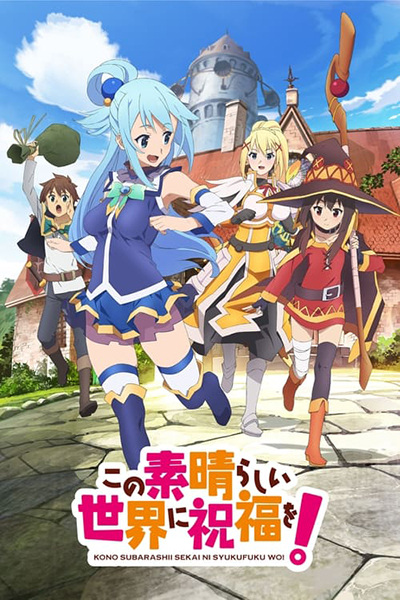
KonoSuba~ is a comedy about debt collection dressed as an isekai, and that's the entire trick. Studio Deen's 2016 ten-episode run doesn't clear the Demon King, doesn't level Kazuma into a power fantasy, and doesn't apologize for either. The Codex scores it 7.28 — a 0.81-point discount against MyAnimeList's 8.09 — because the rubric respects what it does (character 8.5, cultural 8.0, world 7.5) and refuses to award points it never tried to earn.
What KonoSuba~ Actually Wins On
The consensus read of KonoSuba~ is "it's funny, watch it," which flattens a much more specific achievement. Director Takaomi Kanasaki's decision to let Studio Deen's line work stay loose and rubbery isn't a budget excuse — it's a comic instrument, the reason Aqua's ugly-crying and Kazuma's deadpan glares hit at the tempo they do. The character score of 8.5 is doing the heaviest lifting: four leads whose flaws actively sabotage each other, so that Kazuma's petty pragmatism reads as competence only by comparison. The Beldia fight and the winter survival stretch are the two beats where the show flashes what it could be if it wanted momentum. It doesn't want momentum. That's the point, and it's also the reason story sits at 7.0 and themes at a deliberately shallow 6.0.
The 8.0 on cultural impact is the other pillar. KonoSuba~ is the show that proved parody could headline the isekai boom rather than sit beside it, and Megumin became a fandom object independent of the franchise she anchors. Anyone recommending anime like KonoSuba~ on vibes alone will hand you another isekai and call it a day. The rubric asks a harder question: which shows share KonoSuba~'s specific critical profile — ensemble character writing, a world built as a joke engine, a cultural weight that outruns its polish?
These five, in order of critical proximity.
1. Drifters — When the Ensemble Is the Whole Argument
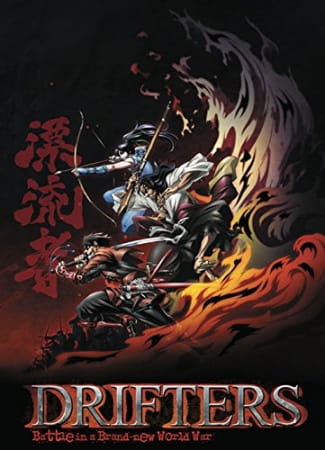
Drifters sits at 6.63 on the Codex, and yes, that's below KonoSuba's 7.28. It leads the list anyway because the shared criterion is the one KonoSuba fans respond to most: a party of misfits whose interplay is the entire show. Kouta Hirano's roster — Shimazu Toyohisa, Oda Nobunaga, Nasu no Yoichi — functions the way Kazuma's party does. Nobody in the frame is a straight-forward heroic archetype; every character is a specific historical or comedic angle bouncing off the others. Hoods Entertainment's 12-episode 2016 run is bloodier than KonoSuba~ and its story lands at 6.5, closer to KonoSuba's 7.0 than the score gap suggests. If you liked KonoSuba because four broken people made a fantasy world funnier than it had any right to be, Drifters is running the same play with katanas.
2. Sentenced to Be a Hero — The Anti-Epic Isekai, Graded Higher
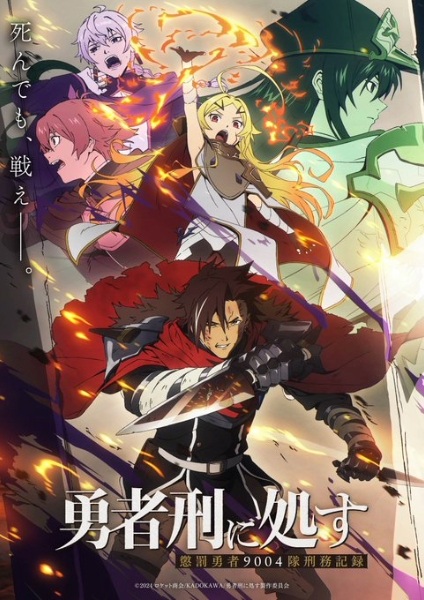
Sentenced to Be a Hero is the closest structural match on the list. Studio KAI's 2026 twelve-episode run scores 7.59 on the Codex — 0.31 above KonoSuba~ — and the criteria breakdown is where the resemblance becomes clinical. Story 7.5, character 7.8, world 8.0, themes 7.6: it's a scorecard shaped like KonoSuba's with the volume pushed up on world and story. The show shares KonoSuba's foundational instinct — the isekai world is not a power fantasy but a place where the mechanics work against you — and pushes it further, replacing the debt-collection running joke with an actual condemnation-narrative frame. Its cultural score of 6.5 is lower than KonoSuba's 8.0 because it's new; the criticism it earned on world-building is what a KonoSuba viewer will feel most immediately. Same instinct, sharper knife.
3. Genshiken — The Ensemble Comedy About Being the Kind of Person Who Watches KonoSuba~
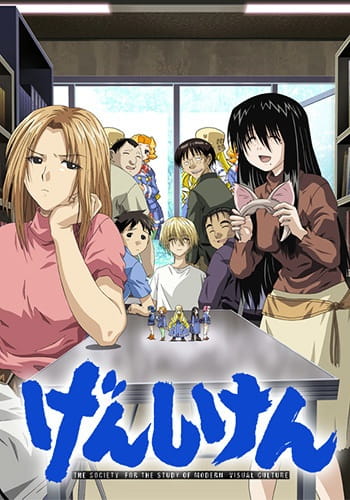
Genshiken is the metatextual pick, and the Codex numbers back the recommendation. Palm Studio's 2004 twelve-episode adaptation scores 7.53 — 0.25 above KonoSuba~ — with character at 8.0, themes at 8.0, world at 8.5, and cultural at 7.5. Read that scorecard next to KonoSuba's and the shared spine emerges: an ensemble whose flaws are the source of both the comedy and the observation, a world built with more specificity than the plot strictly requires, and a cultural footprint that outstripped the production's technical ceiling (animation sits at 6.0, the price of the era). Where KonoSuba parodies isekai from inside a fantasy world, Genshiken parodies fandom from inside a college club room. The mechanism — affectionate cataloguing of dysfunction — is identical. If KonoSuba~'s appeal for you is watching four people be terrible at something together, Genshiken is that with real emotional stakes and no explosions.
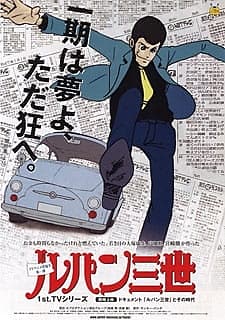
4. Lupin III Part 1 — The Cultural-Weight Comparison That Matters
Lupin III Part 1 lands at 7.26 on the Codex — a rounding-error gap of 0.02 below KonoSuba. The overlap is character (7.5) and cultural (9.0), and the second number is what earns the recommendation. TMS's 1971 twenty-three-episode run built the caper-ensemble template that everything from Cowboy Bebop to KonoSuba inherits — the way our Bebop scorecard breaks down that inheritance is worth reading alongside this. Lupin, Jigen, Goemon, Fujiko: a four-hander where the members' incompatibilities generate the plot. Kazuma's party is that ensemble with the crime-caper frame swapped for a fantasy-quest frame. Animation at 7.8 is remarkable for 1971 and speaks to why the cultural score is a 9.0. This is the ancestor. Watch it if you want to see the DNA.
5. Made in Abyss — The Contrarian Pick That the Rubric Insists On
Made in Abyss is the highest-scored show on this list at 8.60, and it's the last recommendation because tonal proximity is low — but the rubric puts it here for a specific reason. KonoSuba's 7.5 on world-building is one of its strongest criteria; Kinema Citrus's 2017 thirteen-episode adaptation posts a 9.5 on the same criterion, the highest world score in this comparison set. If what you responded to in KonoSuba was the pleasure of a fantasy setting whose rules are internally consistent and mechanically load-bearing — Aqua's useless divinity, Megumin's one-shot limit, the quest-guild economy — Made in Abyss is that instinct executed at the top of the rubric. It is not funny. It will hurt you. But the world-first design philosophy is the same, and it's the criterion the Codex says you actually care about.
The Counter-Argument
The obvious objection: recommending Made in Abyss to a KonoSuba~ viewer is tonal malpractice. Fair. If your appeal-vector is strictly comedy, the top three on this list cover it and the bottom two are stretches. But the brief here isn't "find shows that feel like KonoSuba~ at 2 a.m." The brief is critical proximity — which shows share the criteria KonoSuba~ actually wins on. Character ensembles that generate their own plot, worlds built with mechanical wit, cultural weight that survives the production limits of the moment. The rubric doesn't grade mood. It grades what's on the page.
Verdict
Rank these by how much you loved which part of KonoSuba~. If it was the party, start with Drifters and Sentenced to Be a Hero. If it was the fandom-aware voice, Genshiken. If it was the ensemble mechanics that made you laugh, Lupin III Part 1. If it was the world itself doing the work, Made in Abyss will show you the ceiling. Five shows, one scorecard, no vibes.
Featured in the Codex

More from The Codex
The Seven Deadly Sins Is a 6.60 Wearing a 7.60 Costume: A One-Point Gap Earned by Groping Gags and Convenient Flashbacks
The Seven Deadly Sins scores 6.60 on the Codex against MyAnimeList's 7.60 because the crowd is grading a Netflix breakout and a Ban-and-King friendship, not the 24 episodes A-1 Pictures actually broadcast in 2014.
The 10.0 That Built a Sunday: How Sazae-san's Cultural Score Carries a 6.58 Scorecard
Sazae-san is a case study in how a single criterion — cultural — can define how a show is remembered, and the 10.0 the Codex hands Eiken's 1969 institution is doing every bit of the heavy lifting its other five scores refuse to.
The Sebastian Problem: Why Black Butler Sits 1.10 Below Its MAL Line and the Crowd Refuses to Notice
Black Butler (Kuroshitsuji) posts a 1.10-point gap between MyAnimeList's 7.65 and the Codex 6.55 because the crowd is grading Sebastian's silhouette and a Phantomhive aesthetic, not the anime-original finale A-1 Pictures actually shipped in 2009.
Discussion
Set a display name above to post.
Loading discussion…