Kiteretsu Daihyakka Review: A 6.54 That Lives or Dies on Korosuke and an Edo-Era Notebook
Judged against one consistent rubric, Kiteretsu Daihyakka is best understood by which criteria carry it and which drag it down — not by a single number.
Judged against one consistent rubric, Kiteretsu Daihyakka is best understood by which criteria carry it and which drag it down — not by a single number.
Korosuke, not Kiteretsu, is the reason this show is remembered. That is a diagnostic sentence, not a compliment. When the more inventive character on your rubric is the sidekick robot rather than the boy genius the series is named after, you have a character-writing problem that no amount of Fujiko F. Fujio pedigree will paper over. And yet the show works — in the specific, limited ways the Anime Codex rubric can verify. It just doesn't work the way its MAL number suggests.
The Kiteretsu Daihyakka review the crowd hasn't written
MyAnimeList scores Kiteretsu Daihyakka at 6.94. Anime Codex arrives at 6.54, a 0.40-point gap that is smaller than the ones we've flagged on louder titles like Angel Beats! or Initial D, but which is still doing meaningful work. The MAL figure is a nostalgia dividend. It reflects a Japanese audience that grew up with Studio Gallop's 1988–1996 run on Fuji TV, absorbed the theme song into cultural muscle memory, and remembers Korosuke's nari verbal tic the way an older cohort remembers Doraemon's pocket. It is not, strictly, a grade on 331 episodes of television.
The Codex rubric is unsentimental about that. It weights six criteria — story, character, themes, world-building, animation, cultural impact — and the resulting 6.54 is the honest average of a show that has one genuinely original score (world-building at 7.2), one decent one (character at 6.8), and four criteria clustered between 6.0 and 6.5 that describe a competent but unambitious children's program. The gap with MAL is what happens when you separate the encyclopedia from the fondness for owning one.
World-building is the criterion doing the actual lifting
The 7.2 on world-building is the highest score on the card, and it is earned. The premise — a boy who rebuilds working inventions from the blueprints in an Edo-period ancestor's encyclopedia — is genuinely distinct within kodomomuke. Doraemon's gadgets arrive from a future pocket with no explanation demanded; Kiteretsu's arrive from a pseudo-historical text with a scholarly framing that anchors even the goofiest device in something like internal logic. When the time machine Kiteretsu builds himself takes the cast on excursions, it's extending that same premise: the past is where the show's IP originates, so of course the past is where the setting keeps returning.
The problem is that the internal logic is only nominally enforced. What a given gadget can and cannot do slides scene by scene when the gag requires it, which is standard kodomomuke behaviour but a real ceiling on the score. Fujiko F. Fujio's premise is doing more work than the writers' room chose to protect.
The story score is 6.5 because the formula does not evolve
Across 331 episodes, the story engine is: Kiteretsu builds a device from the ancestor's blueprint, Tongari or Buta Gorilla misuses it, Korosuke reacts, resolution by the closing eyecatch. That is a serviceable engine — it's the same reason KochiKame's 373-episode formula hums along on Japanese TV — but the Codex rubric penalises comfort viewing that refuses to grow. There are no longer arcs of consequence. There is no stakes escalation. The Edo-blueprint framing that gives each invention a clever hook in season one is still doing the same job, unmodified, hundreds of episodes later.
This is the criterion where the MAL crowd is most obviously grading a memory. If you watched Kiteretsu Daihyakka in weekly broadcast between 1988 and 1996, the formula was a feature — appointment television for children doesn't need arcs. Bingeing it as a critical exercise exposes the repetition immediately.
Korosuke is the character score, and Kiteretsu is the ceiling
The 6.8 on character is entirely Korosuke's doing. His archaic samurai speech register — the nari punctuating every declaration — gives him a specificity of voice that the actual protagonist lacks. Kiteretsu himself is a static unflappable genius, a design choice that removes the possibility of internal conflict. He does not doubt. He does not fail meaningfully. He does not change. Miyoko, Tongari, and Buta Gorilla are transparently the Shizuka, Suneo, and Gian archetypes with the serial numbers filed off — AniList's own synopsis concedes the Honekawa Suneo and Takeshi Goda parallels outright.
That is a defensible cast for kodomomuke — kids don't need Urasawa-tier interiority — but it is a hard ceiling on the score. Compare the ensemble that carries a stronger children's-adjacent title like Yo-kai Watch's cultural-first scorecard: even there, the characters function as merchandising icons more than dramatic engines. Kiteretsu doesn't have the merch machine, so its cast has to do more with less, and only Korosuke rises to it.
Gallop's animation is the honest 6.0
Studio Gallop's late-80s output is what you'd expect from Fuji TV's weekly children's block: on-model, rounded, appealing to the target demographic, and visually incurious. Korosuke's reaction animation is the one place the layouts come alive — expressive enough that his line reads land harder than the writing sometimes deserves. The rest is limited animation, flat staging, and blocking that could be lifted wholesale from any contemporary kodomomuke on the same schedule.
The interesting production footnote is that a young Masaaki Yuasa is credited on key animation for a run of early episodes — 9, 14, 19, 25, and on through the mid-60s. It is not enough to change the score. Yuasa's presence at that career stage is a curiosity, not a stylistic signature the show inherits. Hajime Watanabe's chief animation direction keeps the model sheets consistent; Shichirou Kobayashi's art direction gives the neighbourhood a warmth that suits the material. None of it is ambitious. All of it is adequate. 6.0 is exactly the right number.
The counter-argument: kodomomuke should be graded on its own terms
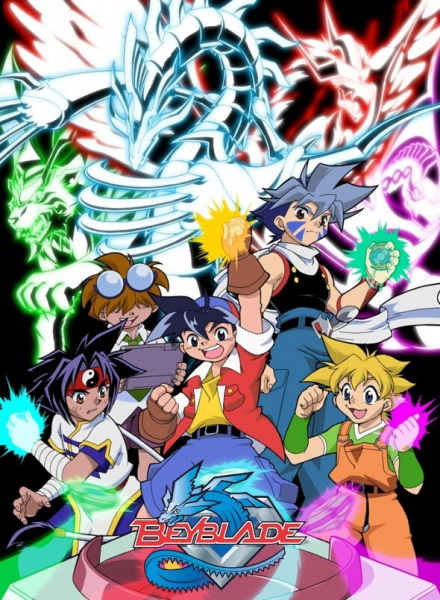
The strongest defence of the MAL 6.94 is that a rubric built to accommodate seinen character depth and sakuga peaks is structurally unkind to children's television, and that Kiteretsu Daihyakka should be graded against Doraemon and Sazae-san rather than against the medium at large. That argument has merit. It's the same defence available for Beyblade's cultural-lifting 6.60 and for most long-running kids' properties whose achievement is durability, not artistry.
The Codex rubric already accounts for this through its per-genre weighting — kodomomuke is not being asked to be Monster. What it is being asked to do is deliver the occasional emotional depth charge that separates the best children's anime from the merely comforting ones, and Kiteretsu doesn't. The themes score of 6.5 registers exactly this: curiosity, applied cleverness, crafted companionship between Kiteretsu and Korosuke — all present, all consistent, none of them ever escalated to a moment that would push the number higher. Fujiko F. Fujio's other adaptations have those moments. This one doesn't reach for them.
Verdict
Kiteretsu Daihyakka is a 6.54 because a 7.2 premise and a 6.8 sidekick cannot outrun a 6.0 production and a story engine that refuses to evolve across 331 episodes. The MAL 6.94 is grading a childhood and Korosuke's nari; the Codex is grading the show. Both are honest. Only one is a review.
Featured in the Codex






More from The Codex
The Seven Deadly Sins Is a 6.60 Wearing a 7.60 Costume: A One-Point Gap Earned by Groping Gags and Convenient Flashbacks
The Seven Deadly Sins scores 6.60 on the Codex against MyAnimeList's 7.60 because the crowd is grading a Netflix breakout and a Ban-and-King friendship, not the 24 episodes A-1 Pictures actually broadcast in 2014.
The 10.0 That Built a Sunday: How Sazae-san's Cultural Score Carries a 6.58 Scorecard
Sazae-san is a case study in how a single criterion — cultural — can define how a show is remembered, and the 10.0 the Codex hands Eiken's 1969 institution is doing every bit of the heavy lifting its other five scores refuse to.
The Sebastian Problem: Why Black Butler Sits 1.10 Below Its MAL Line and the Crowd Refuses to Notice
Black Butler (Kuroshitsuji) posts a 1.10-point gap between MyAnimeList's 7.65 and the Codex 6.55 because the crowd is grading Sebastian's silhouette and a Phantomhive aesthetic, not the anime-original finale A-1 Pictures actually shipped in 2009.
Discussion
Set a display name above to post.
Loading discussion…