KochiKame Is a National Monument and a 6.70: The 373-Episode Gag Reel Foreign Fans Are Grading by Reputation
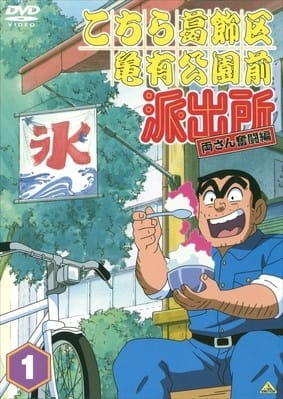
KochiKame: Tokyo Beat Cops posts a 1.22-point gap between MyAnimeList's 7.92 and the Codex 6.70 because the crowd is grading a Kameari statue and a 40-year Jump run, not the 373 formulaic episodes Studio Gallop actually shipped.
KochiKame: Tokyo Beat Cops posts a 1.22-point gap between MyAnimeList's 7.92 and the Codex 6.70 because the crowd is grading a Kameari statue and a 40-year Jump run, not the 373 formulaic episodes Studio Gallop actually shipped.
Ryoutsu Kankichi has a bronze statue in front of Kameari station. That statue is doing more work in KochiKame's 7.92 than any episode of Studio Gallop's 1996 anime is. The gap between the show's reputation and its rubric score is the story here — and the story is that the crowd is rewarding a cultural monument while grading it as television.
Is KochiKame: Tokyo Beat Cops Overrated? The 7.92 Is Grading the Manga
The MyAnimeList crowd scores it 7.92. The Codex lands at 6.70. That 1.22-point delta is not a rounding error; it is the exact width of the space between "Osamu Akimoto ran this manga in Weekly Shōnen Jump for 40 years and 201 volumes" and "Gallop animated 373 episodes of the same joke." The consensus position — that KochiKame is a warm, essential, endlessly rewatchable slice of Shitamachi Tokyo — is not wrong so much as it is scoring the wrong artifact. Ask a foreign viewer why they rate it 8, and the answer will be a cultural footprint they've read about, a nostalgic memory of the OP, or a single episode sampled from the middle of a run they will never finish. Ask them to defend the writing across the 373 episodes the catalogue actually credits, and the answer thins immediately.
This is the recurring failure mode Anime Codex tracks across long-running Jump adaptations — the same one that drags Dragon Ball's 291-episode Toei production below its 8.21 crowd number. The rubric is not impressed by tenure. It grades what the frames deliver.
The Formula Is the Ceiling
The story score is 6.5, and it earns that number honestly. Every KochiKame episode runs the same engine: Ryoutsu spots a fad, a scam, a gadget, or a shortcut to money; the scheme escalates with slapstick physics; the scheme collapses; Chief Ohara reprimands him; reset. Across 373 episodes there is no arc, no continuity of stakes, no accumulating cost. The gag premises themselves are genuinely inventive — the show functions as a real-time index of late-Showa and Heisei Japanese consumer culture, which is a legitimate creative achievement — but inventive premises are not the same as narrative. The structure is closer to a sketch program with a recurring lead than to serialized comedy in the vein of what Rumiko Takahashi's better adaptations achieve.
The consequence is mechanical: episodes are interchangeable. A viewer can sample episode 40, 200, or 350 and receive the same shape of experience. That is by design, and within the gag-manga tradition the design is competent. But the rubric does not reward "competent and consistent" the way a crowd score does. It reads 373 episodes of formula as 373 episodes of formula.
Ryoutsu Is Great. The Cast Is Frozen.
The 7.0 on character is the show's fair strength. Ryoutsu Kankichi is a genuine comic creation — greedy, lazy, hot-tempered, secretly competent, weirdly warm — and the contrast cast built around him works structurally. Nakagawa's aristocratic composure and Reiko's cool professionalism give the slapstick something to fracture against; the supporting bench, from Volterra to Honda the meek officer who becomes a maniac the moment he mounts a motorcycle, extends the ensemble's range without diluting the lead. This is craft.
But gag comedy imposes a hard ceiling that the rubric cannot ignore. Ryoutsu resets every episode. He learns nothing. He owes nothing. His relationships do not accumulate weight because weight would break the engine. Compare that to the way even a decorative show like Urusei Yatsura let Lum and Ataru's dynamic acquire ambient history across its run. KochiKame refuses that texture on purpose, and the rubric marks the refusal.
Gallop Is Serviceable, Not Distinguished
The 6.0 on animation is the second data point the crowd tends to over-forgive. Gallop reproduces Akimoto's round, exaggerated character work — Ryoutsu's connected eyebrows, the balloon-cheek reaction faces — with fidelity, and the elastic slapstick timing lands when it needs to. The physical-comedy set pieces are where directorial energy peaks. Elsewhere, the show is workmanlike TV anime built for volume: flat staging, reused cuts, the kind of consistent middle-of-the-road output a 373-episode order demands.
This is the same production math that drags Gallop's 1998 Initial D into its 6.83 — a studio doing exactly enough to ship the schedule, and no more. Nothing here approaches the compositional polish of the shows the rubric hands 8s and 9s to. The animation is a delivery system for jokes. The jokes are fine. The delivery system is not the point of praise.
Themes: Affection Is Not Resonance
The themes score of 6.0 is where the gap between cultural affection and critical weight is most visible. There is a genuine satirical thread here — the underpaid working-class cop chasing get-rich-quick schemes against a rigid institutional hierarchy is a live commentary on bubble-era and post-bubble salaryman frustration, and Ryoutsu's loyalty to the Kameari precinct carries real Shitamachi nostalgia. That undercurrent is what Japanese audiences recognize and love.
But the show prioritizes the laugh over the feeling in every single episode. The satirical bite is never allowed to draw blood; the nostalgia is decorative rather than argued. Nothing in the 373-episode run functions as a sustained thematic statement, because a sustained thematic statement would require Ryoutsu to change, and he cannot. Affection is not resonance. The rubric distinguishes.
The Steelman: The 8.0 Cultural Score Is Real
The strongest defense of the 7.92 is that KochiKame is not, in fact, a television show — it is a national institution, and the crowd is honestly registering that. The catalogue agrees, partially. The cultural score is 8.0, and it is earned: 40 years in Weekly Shōnen Jump, 201 tankōbon, over 157 million copies in circulation, the eighth best-selling manga in history, the Kameari statue, the enduring domestic brand presence. Ryoutsu is a mascot in the specific sense that Sazae-san's cast are mascots — woven into how a country remembers itself.
The rubric already grants this. What it refuses to do is let the 8.0 on cultural drag the story, themes, and animation scores upward by association. That is precisely the arithmetic error the MyAnimeList crowd makes. A show can be a heavyweight cultural artifact and a formulaic 6.5 on story simultaneously — those facts do not cancel each other out, and the weighted score is designed to hold both truths at once.
Verdict
KochiKame at 6.70 is not an insult; it is an accurate description of a competent, warm, culturally colossal gag comedy that scores exactly where its formula allows it to score. The 7.92 is what happens when a foreign audience grades a statue and a 40-year serialization instead of the 373 episodes Gallop actually broadcast. Sample it. Don't marathon it. And don't confuse a monument for a masterpiece.
Featured in the Codex





More from The Codex
The Seven Deadly Sins Is a 6.60 Wearing a 7.60 Costume: A One-Point Gap Earned by Groping Gags and Convenient Flashbacks
The Seven Deadly Sins scores 6.60 on the Codex against MyAnimeList's 7.60 because the crowd is grading a Netflix breakout and a Ban-and-King friendship, not the 24 episodes A-1 Pictures actually broadcast in 2014.
The 10.0 That Built a Sunday: How Sazae-san's Cultural Score Carries a 6.58 Scorecard
Sazae-san is a case study in how a single criterion — cultural — can define how a show is remembered, and the 10.0 the Codex hands Eiken's 1969 institution is doing every bit of the heavy lifting its other five scores refuse to.
The Sebastian Problem: Why Black Butler Sits 1.10 Below Its MAL Line and the Crowd Refuses to Notice
Black Butler (Kuroshitsuji) posts a 1.10-point gap between MyAnimeList's 7.65 and the Codex 6.55 because the crowd is grading Sebastian's silhouette and a Phantomhive aesthetic, not the anime-original finale A-1 Pictures actually shipped in 2009.
Discussion
Set a display name above to post.
Loading discussion…