JoJo's Bizarre Adventure at 7.55: The Themes Score That Explains Why Stardust Crusaders Ages Into a Meme Reel
David Production's 2014 adaptation clears MyAnimeList by nothing and the Codex by less — because a 6.5 on themes drags a scorecard the rest of the rubric wants to celebrate.
David Production's 2014 adaptation clears MyAnimeList by nothing and the Codex by less — because a 6.5 on themes drags a scorecard the rest of the rubric wants to celebrate.
Stardust Crusaders is the season everyone quotes and nobody rewatches for the writing. That's not a slight against David Production's craftsmanship or Araki's ability system — both survive the rubric in fine shape. It's a diagnosis of what happens when a 24-episode shonen leans on bloodline destiny and stoic mortality without the connective tissue to make either land as more than a slogan on a poster.
The MyAnimeList consensus, and where the rubric parts company
The MyAnimeList crowd scores JoJo's Bizarre Adventure at 8.11. The Codex weighted score comes in at 7.55, and the gap isn't a rounding error — it's a specific argument about which criteria the crowd rewards and which criteria the rubric refuses to wave through. The consensus reads Stardust Crusaders as a top-shelf shonen because it delivers on the two dimensions the internet grades hardest: the Stand system (world 9.0) and the meme afterlife (cultural 9.0). Those scores are earned. What the crowd is not scoring — and what pulls the aggregate down — is themes at 6.5, and to a lesser extent character at 6.8.
This isn't the first time the Codex has flagged a shonen where thematic thinness gets papered over by spectacle; see the Code Geass write-up, where a similar pattern shows up under different production values. JoJo is a case study in how a single criterion — themes — can define how a show is remembered. The scorecard is neither a hit piece nor a puff piece. It credits what works. It refuses to grade on a curve for what doesn't.
What the 6.5 on themes actually means
The series has themes. That is different from the series developing them. Stardust Crusaders declares its ideological register in its first hour — the Joestar bloodline versus DIO, generational vendetta encoded as literal DNA — and then spends 24 episodes not so much exploring that register as staging Stand fights adjacent to it. Kakyouin's dying clock-message in the final Cairo stretch is a genuine gut-punch. Avdol's willingness to die for the group, repeatedly, is real dramatic weight. These moments hit. They just don't accumulate.
The problem is architectural. When your travelogue is structured as monster-of-the-week — the crew disembarks, meets a Tarot-named assassin, resolves the fight in one to two episodes, moves on — every thematic beat has to be self-contained. There is no room for a slow-burn interrogation of what the Joestar legacy costs the people carrying it, because the next episode has to introduce Devo's revenge doll or the Sun Stand or Death Thirteen's dream logic. The bloodline theme functions as a frame for the show, not a subject of the show. DIO isn't examined; he's a destination.
Joutarou is a wall the theme bounces off
Character at 6.8 is downstream of the same problem. Joutarou is a magnificently designed icon of cool and a deliberately flat interiority. He does not change across 24 episodes in any way the rubric can register. His grandfather dies in front of him and he processes it in roughly the same posture he processed everything else. That's a directorial choice — Araki wanted a stoic, and Kenichi Suzuki delivered a stoic — but it means the show's central theme of resolve-in-the-face-of-mortality has no reflective surface at its center. The theme exists around Joutarou. It never runs through him.
Compare the ensemble work: Joseph's veteran wit gives the show its only reliable register-shift, Polnareff's sister-vengeance arc is the closest thing to a sustained personal throughline, and Kakyouin's slow drift from antagonist to loyalist earns its final scene. But these are archetypes doing archetype work. The rubric grades them at 6.8 because they're memorable, not because they evolve. When Toradora's character score clears 8.5 on 25 episodes, it's because Taiga and Ryuuji are demonstrably different people at the end. Joutarou is the same person, and that's the point, and the rubric marks it down for exactly that reason.
The Stand system is doing thematic work the writing won't
Here is where the score gets interesting. World-building at 9.0 is not a consolation prize — it's the criterion carrying the show, and it's doing double duty because Araki's ability framework is smuggling in the meaning the script won't articulate. Hanged Man existing only in mirrors, Death Thirteen operating only in dreams, the entire puzzle-combat logic of condition-based Stands — this is genuinely original design, applied with rigid internal consistency, and it produces a version of shonen combat where cleverness beats power. That is a thematic position. It's just embedded in the mechanics rather than spoken by the characters.
The trouble is that the rubric grades themes and world-building separately, and it should. World-building is what a show constructs. Themes are what a show is about. You can have a masterpiece of the former and a functional gesture at the latter, and Stardust Crusaders is exactly that. The 9.0 on world is why the show survives its own thematic thinness. The 6.5 on themes is why 7.55 is where it lands, not 8.3.
The counter-argument: the deaths, and the finale
The strongest defense of Stardust Crusaders' themes is that the final Cairo stretch retroactively earns the emotional stakes the middle acts couldn't sustain. Iggy's death, Avdol's second and permanent one, Kakyouin's clock-message, and the DIO confrontation with The World mirroring Star Platinum — this run of episodes is the show at its most thematically legible. Mortality stops being a monster-of-the-week hazard and becomes the actual subject.
This is real, and the rubric credits it. Story at 7.5 reflects exactly this — the back half tightens, the finale is a genuine escalation, the time-stop staging is a directorial highlight. But themes at 6.5 measures cumulative weight, not spikes. Five great episodes at the end of a 24-episode run cannot retroactively theme the 19 that preceded them. The Devo fight and the orangutan ship Stand are not secretly about bloodline destiny. They are Stand puzzles, executed with varying degrees of cleverness, and the show's inability to weave them into a sustained emotional throughline is what the score is grading. The pattern the Codex flagged in Digimon Adventure's cultural-weight-carrying-everything scorecard is the same shape here — one criterion doing the memory work while others quietly hold the number down.
Verdict
JoJo's Bizarre Adventure at 7.55 is a show whose Stand system, animation confidence, and meme afterlife are all doing exactly what the crowd thinks they're doing — and whose thematic architecture is thinner than 24 episodes should permit. The 6.5 is not a hit piece. It's the rubric refusing to grade bloodline destiny as a developed idea when it functions as a premise. Watch it for the world. Remember it for the finale. Don't confuse either with depth.
Featured in the Codex
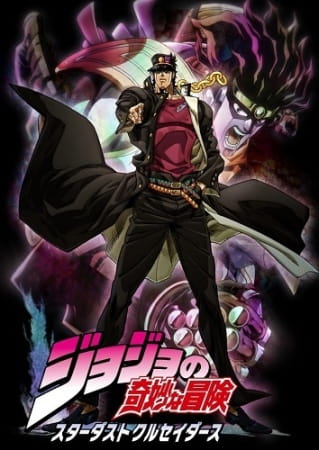
More from The Codex
The Seven Deadly Sins Is a 6.60 Wearing a 7.60 Costume: A One-Point Gap Earned by Groping Gags and Convenient Flashbacks
The Seven Deadly Sins scores 6.60 on the Codex against MyAnimeList's 7.60 because the crowd is grading a Netflix breakout and a Ban-and-King friendship, not the 24 episodes A-1 Pictures actually broadcast in 2014.
The 10.0 That Built a Sunday: How Sazae-san's Cultural Score Carries a 6.58 Scorecard
Sazae-san is a case study in how a single criterion — cultural — can define how a show is remembered, and the 10.0 the Codex hands Eiken's 1969 institution is doing every bit of the heavy lifting its other five scores refuse to.
The Sebastian Problem: Why Black Butler Sits 1.10 Below Its MAL Line and the Crowd Refuses to Notice
Black Butler (Kuroshitsuji) posts a 1.10-point gap between MyAnimeList's 7.65 and the Codex 6.55 because the crowd is grading Sebastian's silhouette and a Phantomhive aesthetic, not the anime-original finale A-1 Pictures actually shipped in 2009.
Discussion
Set a display name above to post.
Loading discussion…