Is Code Geass Overrated? A 8.10 That Rides Taniguchi's Direction and Pays for It on Theme
Sunrise's 2006 mecha melodrama scores 8.10 on the Codex against MyAnimeList's 8.71 — a 0.61 gap explained by a crowd rewarding spectacle where the rubric wants rigor.
Sunrise's 2006 mecha melodrama scores 8.10 on the Codex against MyAnimeList's 8.71 — a 0.61 gap explained by a crowd rewarding spectacle where the rubric wants rigor.
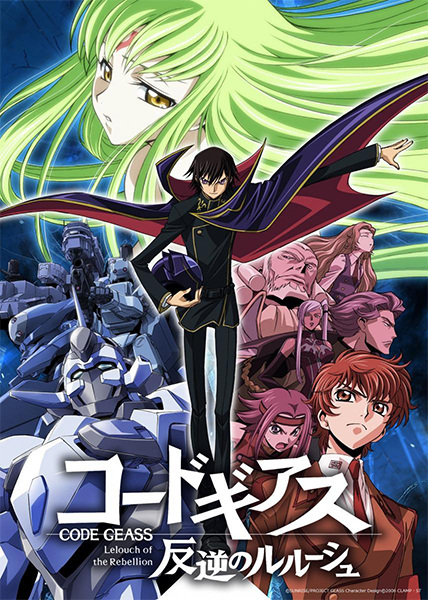
Lelouch vi Britannia is a great character trapped inside a show that keeps rewriting its own rules to keep him interesting. That sentence is the entire argument for why Code Geass, twenty years on, sits below its reputation. The gap between Code Geass's reputation and its rubric score is the story — and the job of this piece is to name what the crowd is rewarding that the rubric won't.
The Consensus, Stated Plainly
The MyAnimeList crowd scores Code Geass 8.71. That is a canon-shelf number, roughly where Cowboy Bebop sits, and it treats Goro Taniguchi's 25-episode 2006 Sunrise production as a top-tier work across the board. The Codex disagrees, landing at 8.10. That is not a dismissal — 8.10 is a genuinely strong seinen score — but it is a meaningful 0.61-point correction, and the correction is not evenly distributed. Two criteria carry the show. Two criteria fail it. The rest are competent but not exceptional. The consensus is grading the peaks and quietly rounding up the troughs.
This is the same pattern the Codex has flagged elsewhere. It's the Dr. Stone problem, where the crowd scores the premise and forgets the cast. It's the Yu Yu Hakusho problem, where nostalgia and one great villain outrun what the actual finale delivers. Code Geass is the melodrama variant: the crowd is scoring Zero's speeches and the Euphemia reveal, and it is not scoring the coherence of the world those events supposedly take place in.
Where the Rubric Actually Rewards the Show
Two criteria carry Code Geass, and both deserve their marks. Taniguchi's direction earns the 8.5 on animation almost single-handedly. The dutch angles during Zero's public addresses, the color-saturated theatrical staging of the Geass activations, the elongated CLAMP silhouettes that give Sunrise's Knightmare Frames their unmistakable reads in motion — this is a director working at the top of his register, treating melodrama as a formal problem to be solved rather than a mode to be endured. The Narita mountain landslide sequence is the clearest evidence. It is a tactical set piece that also functions as visual argument: Lelouch collapses the terrain under an entire Britannian battalion, and the direction sells both the strategic elegance and the human cost in the same frames.
The 9.0 on cultural impact is the other pillar, and it is uncontroversial. Lelouch entered the antihero pantheon. Geass — the concept, not the show — became shorthand across a decade of power-system anime discourse. The franchise has continued to metastasize into films and spinoffs. Nobody serious contests the footprint.
The problem is that these two criteria account for the crowd's entire emotional relationship with the show, and the Codex weights the other four.
Story: The Convenient-Coincidence Problem
The 8.5 on story is generous, and it is generous on purpose — the first season really is a masterclass in escalating political stakes, and the momentum of Zero's rebellion against Area 11 has few peers in mid-2000s mecha. The Suzaku-Lelouch dialectic, with Suzaku piloting the Lancelot as the ideological negation of everything Zero represents, is genuine structural craft from Ichirō Ōkouchi. The Euphemia massacre in the back half of R1 is one of the most effective gut-punches in the medium, precisely because it dramatizes the show's actual thesis: that absolute power corrupts even good intentions the moment the mechanism slips.
But the plot leans on convenience the way an aging boxer leans on a jab. Lelouch and Suzaku's paths cross at Ashford Academy, on battlefields, in Britannian palaces, at rates that stop reading as fate and start reading as writers' room panic. The Geass's rules — one command per person, only via eye contact, permanent — are introduced as constraints and then bent whenever the plot needs a new shock. This is what the Codex means when it says the rules "expand as the narrative demands." The show is a political thriller that keeps borrowing from urban fantasy to escape corners it wrote itself into.
World and Theme: Where the 0.61 Actually Lives
The 7.5 on world-building and the 7.5 on themes are where the Codex parts company with MyAnimeList most sharply. The alternate-history Britannian empire is a genuinely textured setting — the Area 11 colonial framework has real geopolitical weight, and the Knightmare Frame combat doctrine is consistent enough to support the tactical writing. But the Geass itself, the supernatural engine that drives every major turn, is not internally coherent. It is a plot device dressed as a power system.
The thematic score is the more damning one. Code Geass wants to be a serious interrogation of ends-versus-means, of how liberators become tyrants, of colonial violence and its reproduction. The Euphemia incident is the clearest expression of this — a well-intentioned princess's proposal for a Japanese special zone collapses into massacre because Lelouch's Geass slips at exactly the wrong moment. That is a real thematic climax. But the show's operatic register — the constant escalation, the theatrical villain speeches, the shock-per-episode pacing — actively works against the philosophical rigor the premise demands. You cannot sustain a meditation on the corrupting weight of power while also engineering a cliffhanger every twenty-two minutes. The show chooses spectacle. That choice costs it a full point on themes against what the setup promises.
Character: Lelouch Carries a Cast That Isn't There
The 8.0 on character is Lelouch and Suzaku, and almost nothing else. C.C. and Kallen are strong presences with real interior life. Everyone else — the Black Knights as an organization, the Ashford student ensemble, Shirley's entire tragic function, Mao's exists-to-be-killed arc — is furniture. The show knows this. It leverages Shirley emotionally when it needs a beat and moves on. Nunnally is a symbol Lelouch acts on, not a person with agency. This is defensible in a show built around one great antihero. It is not the character writing of a 8.71.
The Steelman
The strongest defense of the consensus score is that Code Geass is doing something the rubric structurally undervalues: sustained melodramatic escalation across 25 episodes without losing momentum. That is genuinely rare. Most shows that try this pacing collapse by the midpoint. Ōkouchi and Taniguchi don't. If you weight momentum and iconic imagery — Zero's mask, the chess metaphors, the Geass sigil — the way the crowd does, 8.71 is coherent. The rubric simply doesn't. It asks whether the world holds together under pressure and whether the themes survive their own delivery mechanism, and on both questions Code Geass answers less confidently than its reputation suggests.
Verdict
Code Geass is a 8.10, and the 8.10 is the honest number: two criteria at 8.5-plus, a cultural 9.0 that will not decay, and a soft middle on world and theme that the melodrama papers over but cannot fix. The crowd is scoring Lelouch's silhouette against a burning sky. The rubric is scoring the rules of the world he's setting on fire — and those rules were never as tight as the show wanted you to believe.
Featured in the Codex



More from The Codex
The Seven Deadly Sins Is a 6.60 Wearing a 7.60 Costume: A One-Point Gap Earned by Groping Gags and Convenient Flashbacks
The Seven Deadly Sins scores 6.60 on the Codex against MyAnimeList's 7.60 because the crowd is grading a Netflix breakout and a Ban-and-King friendship, not the 24 episodes A-1 Pictures actually broadcast in 2014.
The 10.0 That Built a Sunday: How Sazae-san's Cultural Score Carries a 6.58 Scorecard
Sazae-san is a case study in how a single criterion — cultural — can define how a show is remembered, and the 10.0 the Codex hands Eiken's 1969 institution is doing every bit of the heavy lifting its other five scores refuse to.
The Sebastian Problem: Why Black Butler Sits 1.10 Below Its MAL Line and the Crowd Refuses to Notice
Black Butler (Kuroshitsuji) posts a 1.10-point gap between MyAnimeList's 7.65 and the Codex 6.55 because the crowd is grading Sebastian's silhouette and a Phantomhive aesthetic, not the anime-original finale A-1 Pictures actually shipped in 2009.
Discussion
Set a display name above to post.
Loading discussion…